
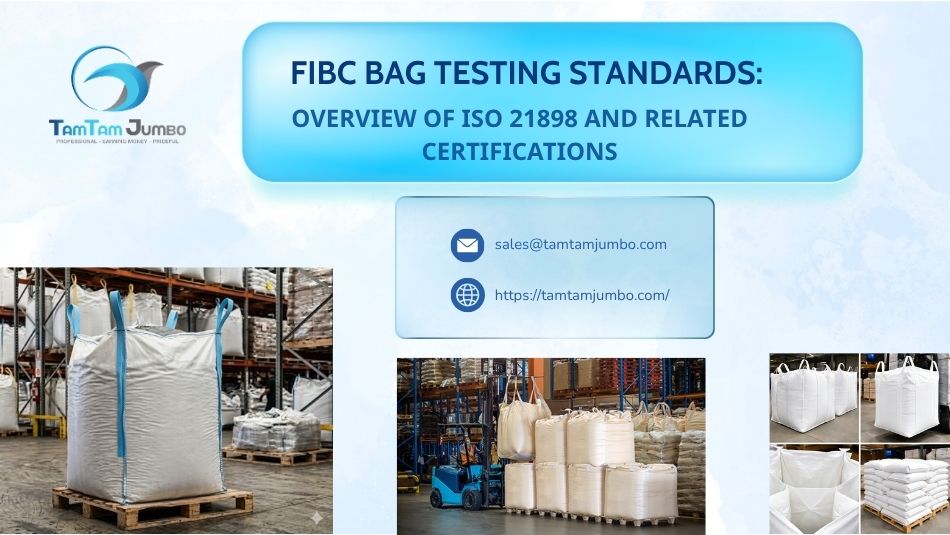
A single FIBC bag can be subject to several completely different testing standards depending on what it carries and where it is used, and buyers often assume one certification covers everything a bag needs to prove. It usually does not. This guide maps out the main standards that apply to FIBC bags, what each one actually tests, and how they combine when a single application, such as a dangerous, combustible, food-grade powder, ends up needing more than one certification at once.
Why FIBC Bags Are Covered by Multiple, Not One, Testing Standard
Each standard relevant to FIBC bags addresses a different risk. Mechanical failure, dangerous goods transport, static discharge ignition, food contamination, and UV degradation are separate hazards with separate test methods developed by different standards bodies. A bag rated for one does not automatically meet the requirements of another, which is why a buyer’s actual application, not just the product category, determines which certifications genuinely matter.
ISO 21898: General Mechanical Performance for Non-Dangerous Goods
ISO 21898 is the baseline standard for FIBC bags carrying non-dangerous goods, covering safe working load testing through top lift, drop, and stacking tests, along with labeling and traceability requirements. This is the standard most general industrial and commodity bulk bags are tested against, and it forms the foundation most other application-specific standards build on top of rather than replace.
Read more: FIBC Safe Working Load: What a Big Bag 1000kg Actually Means
UN Manual of Tests and Criteria: Dangerous Goods Transport
Bags transporting substances classified as dangerous goods need approval under the UN Model Regulations, tested according to the UN Manual of Tests and Criteria, Part III, Section 3. This includes similar mechanical tests to ISO 21898, top lift, drop, and stacking, but conducted specifically against the bag’s UN packing group rating, with an approval reference number issued by a certifying authority rather than a general mechanical compliance statement.
Read more: UN Rated FIBC Bags: How They Are Approved for Dangerous Goods Transport
IEC 61340-4-4: Electrostatic Protection
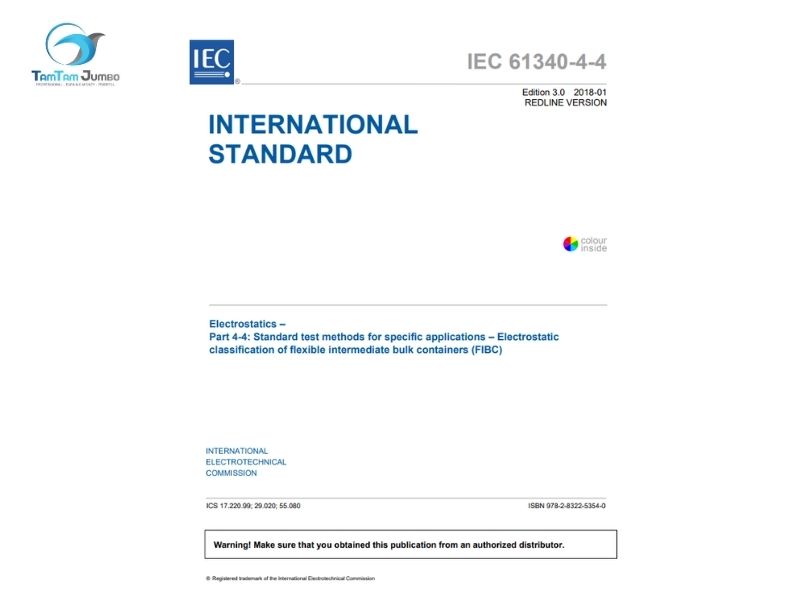
For combustible powders or use in explosive atmospheres, IEC 61340-4-4 defines testing for a bag’s static discharge classification, Type A through Type D, verifying conductive path resistance for Type C FIBC bags and breakdown voltage limits for Type B FIBC bags. This standard addresses ignition risk specifically and is entirely separate from mechanical SWL testing, meaning a bag can pass ISO 21898 mechanical testing while having no static protection classification at all unless IEC 61340-4-4 testing is also performed.
Read more: Anti-Static Bulk Bags: How a Type C Bag Prevents Ignition Risk
BRC Global Standard for Packaging: Food Safety
Food-grade FIBC bags are certified under the BRC Global Standard for Packaging Materials, which audits the manufacturing facility itself rather than testing a specific bag design, covering hygiene practices, contamination control, and traceability systems. This is a facility and process certification rather than a mechanical or chemical test, which means a food-grade bag still needs separate mechanical SWL testing under ISO 21898 or an equivalent standard alongside its BRC certification.
Read more: Food Grade FIBC Bags: What a BRC Certificate Actually Confirms
Accelerated Weathering Standards: UV and Environmental Resistance
UV resistance claims are typically supported by accelerated weathering test methods such as ISO 4892 or ASTM G154, which are not part of ISO 21898 and are not automatically included when a bag is described as ISO 21898 compliant. Buyers needing bags for extended outdoor storage should request this testing separately rather than assuming mechanical compliance implies UV performance verification.
Read more: ISO 21898 and UV Stabilization: What FIBC Testing Actually Covers
How These Standards Overlap for a Single Bag
A single application can require several of these standards simultaneously. A combustible chemical powder classified as a dangerous good, for example, might need UN Manual of Tests approval for transport classification, IEC 61340-4-4 Type C testing for static discharge protection, and standard ISO 21898-equivalent mechanical testing as the underlying construction basis, all documented separately even though they apply to the same physical bag.
| Standard | What It Tests | Applies When |
| ISO 21898 | Mechanical SWL performance | Always, as the baseline for non-dangerous goods |
| UN Manual of Tests and Criteria | Dangerous goods transport approval | Cargo is classified as a dangerous good |
| IEC 61340-4-4 | Static discharge and ignition risk | Combustible dust or explosive atmosphere present |
| BRC Global Standard | Facility hygiene and food safety | Bag is used for food-contact packaging |
| ISO 4892 or ASTM G154 | UV and weathering resistance | Extended outdoor storage is expected |
A Buyer’s Checklist for Matching Standards to Application
- Confirm whether the product is classified as a dangerous good requiring UN approval.
- Determine whether the product or environment presents a combustible dust or explosive atmosphere risk requiring IEC 61340-4-4 testing.
- Confirm whether the bag will contact food products, requiring BRC-certified manufacturing.
- Assess expected outdoor storage duration to determine whether UV testing documentation is needed.
- Request separate documentation for each applicable standard rather than assuming one certificate covers all relevant risks.
How Tam Tam Packaging Tests Against Multiple Standards
Tam Tam Packaging tests and documents each applicable standard separately for orders requiring more than one certification, whether combining UN dangerous goods approval with Type C static protection, or BRC food-grade manufacturing with standard mechanical SWL testing. Specification sheets clearly indicate which standards apply and which test reports support each claim, so buyers can verify coverage against their actual application risks.
Common Mistakes When Evaluating Supplier Certifications
- Assuming a single certification, such as ISO 21898, covers dangerous goods, static protection, or food safety requirements it was never designed to address.
- Not identifying all the hazards relevant to a specific application before requesting certification documentation.
- Accepting a general compliance statement without requesting the specific test report behind each individual standard claimed.
- Overlooking that facility-level certifications like BRC do not substitute for bag-specific mechanical or safety testing.
Applications in the Chemical Industry
Chemical products frequently intersect multiple standards at once, since combustible powders classified as dangerous goods may require UN approval and IEC 61340-4-4 static protection simultaneously, while hygroscopic products needing long-term outdoor storage add UV testing considerations on top of standard mechanical certification. Buyers in this sector benefit most from working through the full standards checklist rather than assuming a single certification addresses every risk their specific product presents.
Frequently Asked Questions
Does ISO 21898 cover dangerous goods transport?
No. ISO 21898 covers general mechanical performance for non-dangerous goods. Dangerous goods require separate approval under the UN Manual of Tests and Criteria.
Can a bag be both UN rated and anti-static?
Yes, and this combination is common for combustible dangerous goods, but each certification is tested and documented separately rather than being combined into a single approval.
Does BRC certification replace the need for mechanical SWL testing?
No. BRC certifies the manufacturing facility’s hygiene and food safety practices, while mechanical performance still needs to be verified separately under ISO 21898 or an equivalent standard.
How do I know which standards apply to my product?
By assessing the specific hazards involved, dangerous goods classification, combustible dust risk, food contact, and expected storage conditions, then matching each hazard to its relevant standard rather than assuming one certification covers all of them.
Should I request test reports for each standard separately?
Yes. Each standard uses a different test method and produces its own documentation, so requesting the specific report behind each claim confirms what has actually been verified.
Conclusion
FIBC testing standards each address a specific risk, mechanical failure, dangerous goods transport, static ignition, food contamination, or UV degradation, and no single certification covers all of them. Buyers who map their product’s actual hazards against this list, rather than assuming broad compliance from one certificate, get a much clearer picture of what a bag has genuinely been verified to do.
Tam Tam Packaging Co. tests and documents FIBC bags against ISO 21898, UN, IEC 61340-4-4, and BRC standards as needed for your specific application. Contact our team to confirm the right certifications for your product.
Contact Us
Tam Tam Packaging Co.
Email: sales@tamtamjumbo.com
Website: https://tamtamjumbo.com/
Read more

FIBC Bags for Flour: Why Allergen Status Change the Specification
Flour shares the fine-particle and combustible dust characteristics of other food powders, but wheat’s status...
Aug
FIBC Bag for Starch Powder: Dustproof Bag Needs Antistatic
Starch powder occupies an unusual position in FIBC specification: it is a common food and...
Aug
FIBC Bags for Animal Feed: What Actually Makes a Clean Bulk Bag
FIBC bags for animal feed mean something more specific than a bag that looks unused....
Aug
FIBC Bag for PET Flakes: Why UV Resistance Matter More Than It
Recycled PET flakes share a base polymer with virgin resin pellets, but the two behave...
Aug
FIBC Bags for Plastic Resin: PP Fabric Packaging PP Pellets
There is a certain irony in shipping polypropylene resin pellets inside a bag woven from...
Aug
FIBC Bags for the Food Industry: Building a Food Grade Bag
Food manufacturers sourcing bulk ingredient packaging are working from a different starting point than a...
Aug