
Recycled PET flakes share a base polymer with virgin resin pellets, but the two behave very differently once they reach a bulk bag. Flakes have sharp, irregular edges instead of a smooth pellet shape; they often carry residual moisture from the washing process, and they typically sit outdoors at sorting and reprocessing facilities far longer than resin destined for immediate manufacturing use. This guide covers what actually matters when specifying FIBC bag for PET flakes, with UV resistance carrying more weight here than it typically does for other plastics packaging.
How PET Flakes Differ From Virgin Resin Pellets as an FIBC Application
Virgin resin pellets are round, dry, and generally move quickly from production into processing, keeping outdoor exposure and abrasive wear relatively limited concerns. PET flakes are cut or ground into irregular pieces with sharp edges, frequently retain moisture from washing during the recycling process, and commonly sit in outdoor storage at sorting and baling facilities for extended periods before reprocessing, all of which shift the specification priorities meaningfully compared to resin pellet packaging.
Read more: FIBC Bags for Plastic Resin: PP Fabric Packaging PP Pellets
Abrasive Flake Edges and Fabric Wear
The irregular, sometimes sharp edges of PET flakes create a different wear pattern on fabric than either round resin pellets or granular sand, causing localized abrasion and, in some cases, small puncture points where flake edges repeatedly contact the same area of fabric during handling and transport. Fabric weave density and tape yarn quality both contribute to resistance against this wear pattern, and multi-trip bags used repeatedly in recycling operations benefit from fabric specified with this in mind.
Read more: FIBC Bag GSM Guide: How Fabric Weight Determines Strength
Moisture From the Washing Process
PET flakes are typically washed as part of the recycling process to remove labels, adhesive residue, and contaminants, and this washing step leaves flakes with residual moisture even after mechanical drying. Similar to wet sand, this moisture affects fill weight calculations and may call for fabric that allows some drainage or airflow rather than a fully sealed, moisture-proof construction, depending on how dry the flakes are at the point of bagging.
Read more: FIBC Bags for Sand: A Specification Guide Across Bulk Bag Industry
UV Resistance for Extended Outdoor Storage at Recycling Facilities
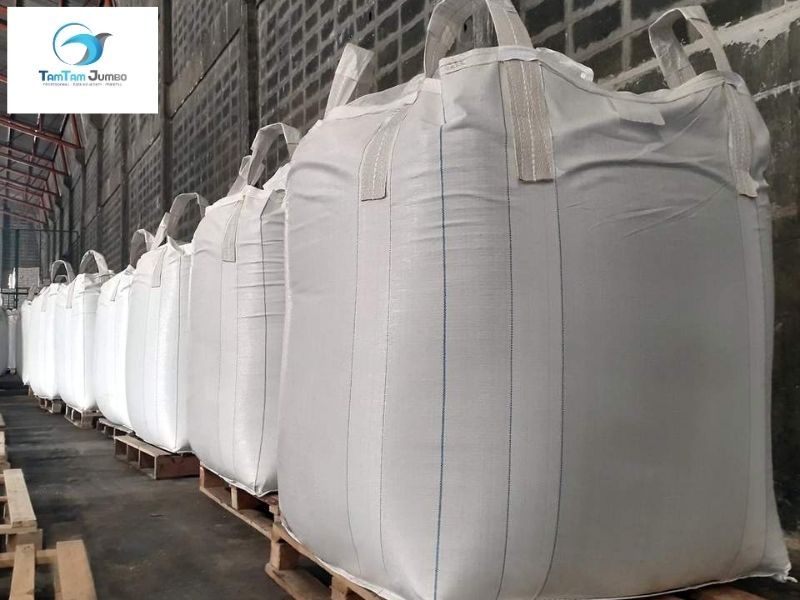
Recycling and reprocessing facilities frequently stockpile baled or bagged PET flakes outdoors for months while awaiting further processing or shipment, exposing bags to far more cumulative UV exposure than most other bulk material applications see. This makes UV stabilization one of the more consequential specification decisions for PET flake bags specifically, since a bag that loses strength to sun exposure during a long outdoor storage period risks failure well before the flakes are actually processed.
Read more: FIBC UV Protection: What Outdoor Bag Storage Actually Requires
Food-Contact Grade rPET: When Additional Certification Applies
PET flakes destined for bottle-to-bottle recycling into food-contact packaging require their own resin-level certification chain, and the bags transporting food-contact grade rPET flakes between processing stages may need food grade sourcing to maintain hygiene chain-of-custody, particularly at the stage closest to final food-contact resin production.
Read more: Food Grade FIBC Bags: What a BRC Certificate Actually Confirms
Standard Capacity and Construction for PET Flake Handling
PET flakes commonly move in 1000kg bags at recycling and reprocessing facilities, matched to standard forklift and conveyor handling equipment. Circular or baffled construction is typical, balancing cost efficiency against the container and storage space efficiency benefits that matter for high-volume recycling operations moving large quantities of flake material.
Read more: FIBC Bag Construction Types: Circular, U and 4 Panel Compared
Building a Complete PET Flake FIBC Specification
Bringing these factors together, a complete PET flake specification typically addresses abrasion-resistant fabric for sharp flake edges, a decision on drainage versus moisture sealing based on flake wash and dry status, UV stabilization matched to realistic outdoor storage duration, and food grade certification where the flakes feed into food-contact resin production.
Common PET Flake FIBC Specification Combinations
| Flake Type or Stage | Typical Specification Combination |
| Freshly washed, still-damp flakes | Drainage-permitting fabric, abrasion-resistant weave, weight margin for moisture |
| Dried flakes for long outdoor storage | High UV stabilization, abrasion-resistant fabric, standard 1000kg capacity |
| Food-contact grade rPET flakes | BRC certified facility, virgin fabric, high UV stabilization for yard storage |
| Mixed color or lower-grade flake stock | Standard abrasion-resistant fabric, moderate UV stabilization, cost-focused circular construction |
How Tam Tam Packaging Specifies Bags for PET Flakes
Tam Tam Packaging builds PET flake bag specifications around abrasion-resistant fabric, UV stabilization matched to expected outdoor storage duration at the buyer’s facility, and drainage or moisture sealing decisions based on flake wash status. Food grade certification is addressed separately for flakes feeding into food-contact resin production.
Common Mistakes When Sourcing FIBC Bags for Pet Flakes
- Underestimating UV exposure duration for flakes stockpiled outdoors at recycling facilities for months at a time.
- Using standard fabric without accounting for the abrasive wear pattern specific to sharp flake edges.
- Sealing bags fully when flakes are still damp from washing, trapping moisture rather than allowing drainage.
- Not confirming food grade requirements for flakes destined for bottle-to-bottle food-contact recycling.
- Assuming PET flake bags can use the same specification as virgin resin pellet bags without adjustment.
Applications in the Recycling and Environmental Industry
PET flake handling sits within the broader recycling and environmental materials recovery industry, where extended outdoor storage, variable moisture content, and abrasive material characteristics are common across many recovered material streams, not just PET. Facilities processing multiple recycled material types benefit from applying the same UV, abrasion, and moisture assessment framework used for PET flakes to other recovered plastics and materials moving through similar storage and handling conditions.
Frequently Asked Questions
Why does UV resistance matter more for PET flakes than for virgin resin?
PET flakes commonly sit outdoors at recycling and reprocessing facilities for months awaiting further processing, exposing bags to far more cumulative UV exposure than resin pellets moving quickly into manufacturing use.
Do PET flake bags need to be moisture-proof?
Not necessarily. Freshly washed flakes may benefit from drainage-permitting fabric rather than a fully sealed construction, depending on how dry the flakes are at the time of bagging.
Why are PET flakes more abrasive on fabric than resin pellets?
Flakes are cut or ground into irregular pieces with sharp edges, unlike smooth round pellets, creating a different and often more concentrated wear pattern on bag fabric.
Do all PET flakes need food grade bags?
Only flakes destined for food-contact resin production, such as bottle-to-bottle recycling, typically require food grade bag sourcing to maintain hygiene chain-of-custody.
What capacity is typical for PET flake FIBC bag?
1000kg is common, matched to standard forklift and conveyor handling equipment at recycling and reprocessing facilities.
Conclusion
PET flakes demand a different FIBC specification than virgin resin pellets, with UV resistance, abrasion resistance, and moisture drainage decisions carrying more weight given how these materials are actually stored and handled at recycling facilities. Matching the specification to real flake condition and storage duration, rather than defaulting to a standard plastics packaging approach, protects bag performance across the extended timelines common in recycling operations.
Tam Tam Packaging Co. builds FIBC specifications for PET flakes addressing UV resistance, abrasion resistance, and moisture handling together. Contact our team to work through the right specification for your recycling operation.
Contact Us
Tam Tam Packaging Co.
Email: sales@tamtamjumbo.com
Website: https://tamtamjumbo.com/
Read more
FIBC Bags for Pharmaceutical Powders: What Sets a Pharma Bag
Pharmaceutical powder handling sits at the far end of the specification spectrum from general industrial...
Sep
FIBC Bags for Hazardous Material: How to Classify Bags Required
A UN certificate confirms a bag’s packing group and maximum weight, but it doesn’t tell...
Sep
FIBC Bags for Recycling Industry: Bulk Bag Across Material Stream
Recycling operations move an unusually wide range of material through FIBC packaging, plastic flakes, metal...
Sep
FIBC Bags for Construction: A Complete Guide Across Materials
Walk onto almost any construction site or materials yard and the bulk bags you see...
Aug
FIBC Bags for Flour: Why Allergen Status Change the Specification
Flour shares the fine-particle and combustible dust characteristics of other food powders, but wheat’s status...
Aug
FIBC Bag for Starch Powder: Dustproof Bag Needs Antistatic
Starch powder occupies an unusual position in FIBC specification: it is a common food and...
Aug