
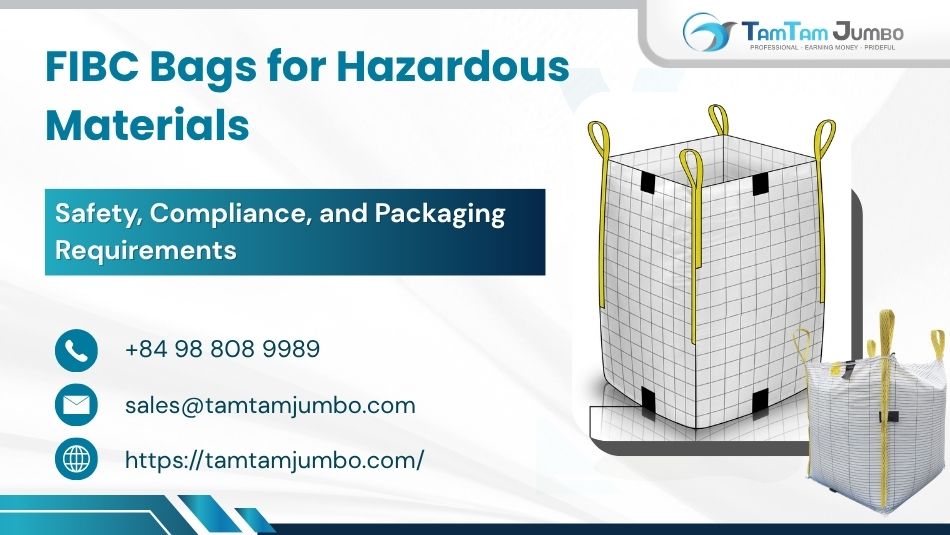
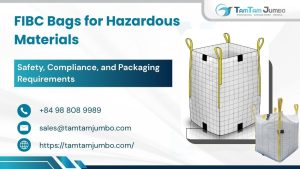
A UN certificate confirms a bag’s packing group and maximum weight, but it doesn’t tell the whole story of what a specific hazardous material actually needs from its packaging. A flammable solid, an oxidizer, a corrosive substance, and a toxic material all carry the same possibility of UN classification, yet each presents a different practical risk that the bag construction should account for beyond the certificate itself. This guide breaks down what changes by hazard class, not just packing group.
Beyond Packing Group: Why Hazard Class Also Shapes the Specification
Packing group, I, II, or III, indicates how severe a hazard is within its class, while hazard class itself, flammable, oxidizing, toxic, corrosive, or environmentally hazardous, indicates what kind of hazard is actually present. A UN certificate documents both, but the practical bag specification, liner material, static protection, containment redundancy, often depends more on which class applies than on packing group severity alone.
Read more: UN Rated FIBC Bags: How They Are Approved for Dangerous Goods Transport
Class 4: Flammable Solids and Substances Liable to Spontaneous Combustion
Class 4 materials, including flammable solids and substances prone to spontaneous heating or combustion, frequently warrant anti-static bag construction on top of UN rating, since ignition risk is central to why the material is classified this way in the first place. Fabric and liner materials should also be assessed for chemical compatibility with the specific substance to avoid degradation that could compromise containment.
Read more: Anti-Static Bulk Bags: How a Type C Bag Prevents Ignition Risk
Class 5: Oxidizing Substances and Material Compatibility
Oxidizing substances can react with organic materials, including some liner films or fabric coatings, in ways that raise fire risk beyond what the substance would present on its own. Liner material selection for Class 5 substances needs specific chemical compatibility confirmation, since a standard polyethylene liner suitable for one hazard class is not automatically safe for an oxidizer.
Class 6: Toxic Substances and Containment Redundancy
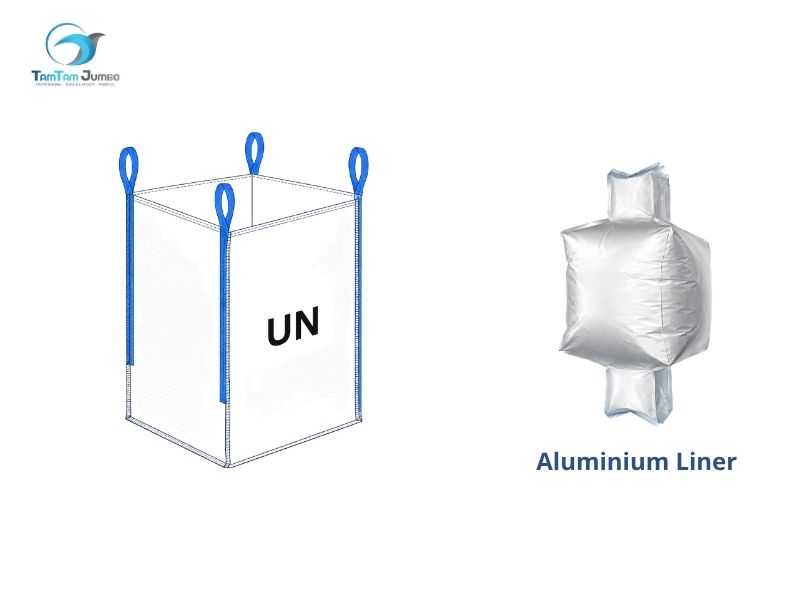
Toxic substances place a premium on containment redundancy, since a containment failure risks direct human exposure rather than just product loss. This often means specifying a sealed liner in addition to standard UN rated fabric and seams, with liner closure method given particular attention to avoid a false sense of security from a liner that isn’t actually sealed against the specific substance’s physical form.
Class 8: Corrosive Substances and Liner Chemical Resistance
Corrosive substances can degrade standard liner materials over time, meaning liner chemical resistance needs to be confirmed against the specific substance rather than assumed from general liner specifications. A liner that holds up against one corrosive material may fail against another with different chemical properties, making this one of the more substance-specific decisions in hazardous material FIBC specification.
Class 9: Environmentally Hazardous Substances
Class 9 covers a broad range of substances hazardous to the environment without necessarily presenting the acute physical or health hazards of other classes, meaning the bag specification often centers more on preventing spillage or leakage during transport than on the more severe containment measures needed for toxic or corrosive materials, though this still depends on the specific substance’s characteristics.
Combining Hazard Class Requirements With Combustible Dust Risk
Some hazardous materials present both a UN classification and an independent combustible dust risk if the substance is fine enough to become airborne during handling, meaning UN rating and anti-static protection may both apply simultaneously and should be documented as separate, individually tested requirements rather than assumed to be covered by a single certificate.
Read more: FIBC Bag Testing Standards: A Complete Overview of ISO 21898
Building a Complete Hazardous Materials FIBC Specification
Bringing these considerations together, a complete hazardous material specification typically starts with UN packing group and weight rating, then layers on hazard class-specific requirements, static protection for flammable classes, liner chemical compatibility for oxidizers and corrosives, and containment redundancy for toxic substances, based on the substance’s actual classification.
Read more: UN Certified Bulk Bags: What the Jumbo Bag Certificate Actually Covers
Common Hazardous Material FIBC Specification Combinations
| Hazard Class | Typical Specification Addition Beyond UN Rating |
| Class 4: Flammable solids | Type C anti-static construction, chemically compatible liner |
| Class 5: Oxidizers | Liner material confirmed compatible, avoiding reactive coatings |
| Class 6: Toxic substances | Sealed liner with verified closure, containment redundancy |
| Class 8: Corrosives | Liner chemical resistance confirmed against the specific substance |
How Tam Tam Packaging Specifies Bags by Hazard Class
Tam Tam Packaging works from the specific UN hazard class and packing group together, rather than treating dangerous goods as a single category, to determine whether anti-static construction, specific liner chemistry, or additional containment redundancy applies. Documentation for each applicable requirement is provided separately alongside the UN certificate.
Common Mistakes When Sourcing Hazardous Material FIBC Bags
- Treating UN certification as sufficient on its own without assessing hazard class-specific needs like static protection or liner compatibility.
- Using a standard liner material without confirming chemical compatibility with the specific substance’s hazard class.
- Not recognizing when a fine hazardous material also presents an independent combustible dust risk requiring separate anti-static testing.
- Assuming packing group severity alone determines the full specification, without considering which hazard class applies.
- Overlooking containment redundancy needs for toxic substances where exposure risk, not just product loss, is the concern.
Applications Across Hazardous Material Handling
Hazardous material FIBC applications span chemical manufacturing, mineral processing reagents, and specialty industrial substances, each requiring the buyer to identify not just whether UN certification is needed, but which specific hazard class applies, since that classification drives the practical bag features that actually matter beyond the certificate itself.
Read more: FIBC Bags for Chemicals: Building the Right Bulk Bag Specification
Frequently Asked Questions
Does a UN certificate cover every risk a hazardous material presents?
No. The certificate confirms packing group and weight rating, but hazard class-specific needs like static protection, liner chemical compatibility, or containment redundancy often need to be addressed separately.
Why do flammable solids often need anti-static bags in addition to UN rating?
Because ignition risk is central to why these materials are classified as flammable, making static discharge control a practical necessity beyond the mechanical UN approval.
Can a standard liner be used for any hazardous material?
No. Liner chemical compatibility needs to be confirmed against the specific substance, since materials like oxidizers and corrosives can degrade standard liner films that work fine for other hazard classes.
What does containment redundancy mean for toxic substances?
It typically means adding a sealed liner with verified closure on top of standard UN rated fabric and seams, since exposure risk rather than just product loss is the primary concern.
Can a material need both UN rating and anti-static protection?
Yes, when a substance is both classified as dangerous goods and fine enough to present an independent combustible dust risk, both requirements should be tested and documented separately.
Conclusion
A UN certificate is the starting point for hazardous material FIBC bags, not the complete specification. Hazard class, flammable, oxidizing, toxic, corrosive, or environmentally hazardous, determines what else the bag genuinely needs, from static protection to liner chemistry to containment redundancy, and should be assessed alongside packing group rather than treated as already covered by certification alone.
Tam Tam Packaging Co. builds FIBC specifications addressing both UN packing group rating and hazard class-specific requirements. Contact our team to work through the right specification for your hazardous material.
Contact Us
Tam Tam Packaging Co.
Email: sales@tamtamjumbo.com
Website: https://tamtamjumbo.com/
Read more
Bulk Bags for Export: What to Ask a Big Bag Supplier in Vietnam
A bag that performs perfectly in short domestic truck transport can still fail on a...
Sep
FIBC Bags for Seed Packaging: Choosing Right Liner for Viability
Seed packaging has a goal most other bulk commodities don’t share: keeping the product alive....
Sep

FIBC Bags for Sugar Packaging: What to Look for in Bag Suppliers
Sugar is deceptively demanding to package well in bulk. It is highly hygroscopic, fine enough...
Sep
FIBC Bags for Carbon Black: When a BRC Certificate Applies
Carbon black is overwhelmingly an industrial material, used as a reinforcing filler in tire and...
Sep
FIBC Bags for Pharmaceutical Powders: What Sets a Pharma Bag
Pharmaceutical powder handling sits at the far end of the specification spectrum from general industrial...
Sep
FIBC Bags for Hazardous Material: How to Classify Bags Required
A UN certificate confirms a bag’s packing group and maximum weight, but it doesn’t tell...
Sep