

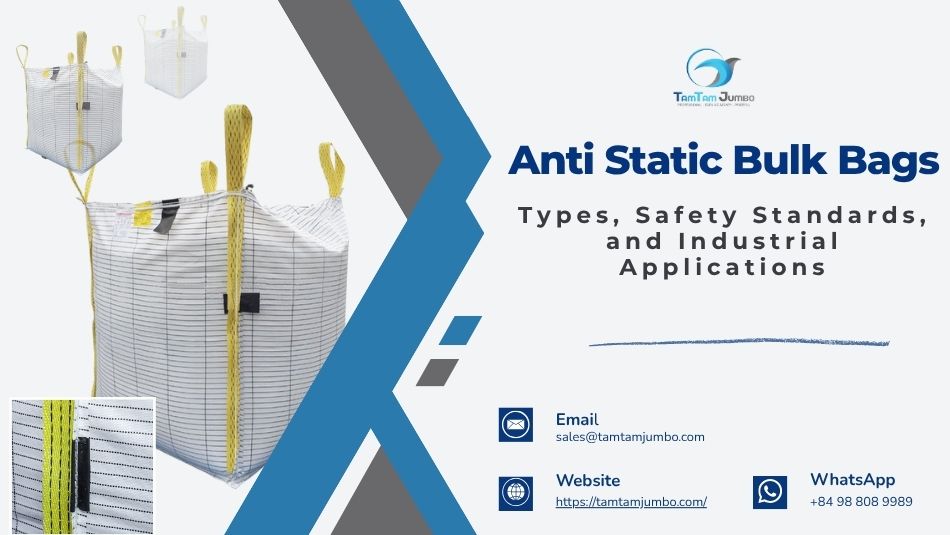
Filling and emptying an FIBC bag generates static charge as powder moves against fabric, and in the presence of flammable dust or solvent vapor, that charge can discharge as a spark capable of igniting an explosive atmosphere. An anti-static bulk bags, most commonly a Type C bag, is engineered specifically to control this risk through a conductive fabric structure that must be grounded during use. This article explains how Type C construction works, how it differs from the other static protection categories, and what buyers need to get right for the protection to actually function.
What Anti-Static Means for an FIBC Bag
Anti-static protection in FIBC bags refers to fabric engineered to control how static charge builds up and discharges during filling, transport, and emptying. Standard woven polypropylene is an electrical insulator, meaning charge can accumulate on its surface with no path to dissipate safely, which becomes dangerous when the bag contains combustible powder or is used in an area where flammable vapors may be present.
The Type A Through Type D Classification System
FIBC bags are classified into four categories based on how they manage static charge, defined under IEC 61340-4-4.
Type A: No Static Protection
Type A bags use standard woven polypropylene fabric with no conductive elements. They are suitable only for non-flammable, non-combustible products where static discharge poses no ignition risk.
Type B: Limited Breakdown Voltage
Type B bags use fabric with a controlled breakdown voltage low enough to prevent propagating brush discharges, a specific and more dangerous type of static discharge. They do not require grounding but are only suitable for combustible dust with no flammable solvent vapors present.
Type C: Fully Conductive and Groundable
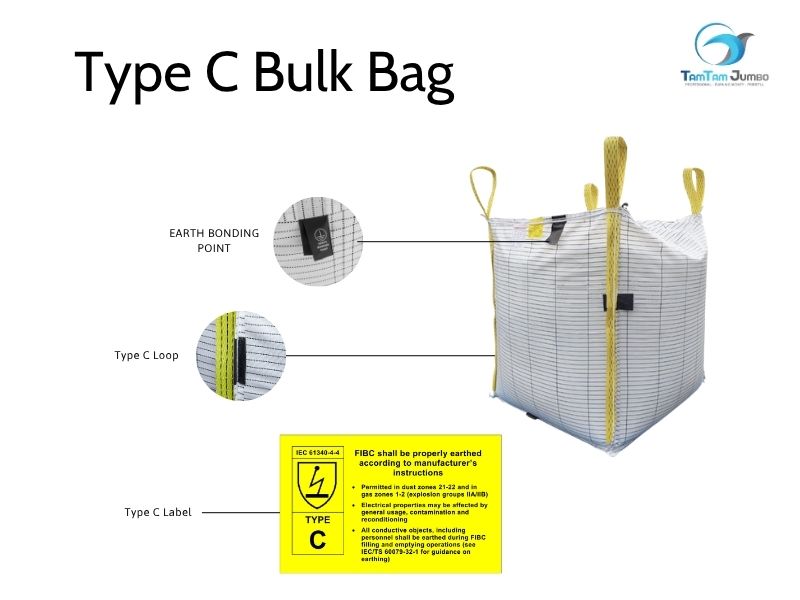
Type C bags incorporate a grid of conductive threads woven through the fabric, interconnected and terminating at a grounding point or tag. When properly grounded during filling and discharge, this conductive network provides a continuous path for static charge to dissipate safely to earth.
Type D: Static Dissipative Without Grounding
Type D bags use fabric engineered to dissipate static through corona discharge without requiring a grounding connection, offering a practical option where grounding infrastructure is not available. The bags are generally not considered a substitute for Type C in the highest-risk explosive atmosphere classifications, and the specific application should be reviewed against the relevant hazard classification before substituting one for the other.
How Type C Bags Are Constructed
Conductive Thread Grid
A Type C bag conducts conductive threads woven into the body fabric in a grid pattern with spacing tight enough to keep any point on the bag surface within a safe distance of a conductive path. These threads are electrically interconnected across the entire bag body, base, and often the liner interface, so charge generated anywhere on the bag has a route to the grounding point.
Grounding Point or Tag
Every Type C bag has a dedicated grounding point, typically a conductive tag or lug, where an earthing clamp or cable connects the bag to a verified ground during filling and discharge. This connection is what completes the discharge path; without it, the conductive grid inside the bag has nowhere to send accumulated charge, and the bag provides no more protection than an ungrounded Type A bag despite having Type C construction.
Why Grounding Is Mandatory for Type C Bags
The conductive fabric in a Type C bag only functions as intended when connected to earth. An unconnected Type C bag can actually pose a different hazard: an isolated conductor can accumulate charge and later discharge as a spark if it comes into contact with a grounded object. This is why site procedures for Type C bags must include verified grounding at both the filling and discharge stages, not just at one point in the process.
Read more: UN Rated FIBC Bags: How They Are Approved for Dangerous Goods Transport
When Type C Construction Is Required
Type C bags are typically required when handling combustible powders in the presence of flammable solvent vapors, in facilities classified under hazardous area regulations such as ATEX in Europe, or wherever a site’s hazard assessment identifies a risk of propagating brush discharge. Buyers should confirm the specific area classification and dust or vapor hazard rating for their site rather than assuming Type B protection is sufficient by default.
IEC 61340-4-4 Testing and Verification
IEC 61340-4-4 defines the test methods used to verify a Type C bag’s conductive path resistance and grounding continuity. Testing confirms that resistance between any point on the conductive grid and the grounding tag remains within the specified range, and that this performance holds after the bag has been folded, handled, and subjected to typical wear. A Type C certificate or test report should reference this standard specifically, rather than a generic anti-static claim without supporting test data.
Common Grounding Mistakes That Void Type C Protection
- Filling or discharging a Type C bag without connecting the grounding tag to a verified earth point.
- Assuming a bag resting on a metal pallet or conductive floor is automatically grounded without a direct connection.
- Using a grounding clamp on painted or coated metal surfaces that do not provide genuine electrical continuity to earth.
- Reusing a Type C bag after fabric damage that has severed part of the conductive thread grid.
- Confusing Type B and Type C bags due to similar appearance, resulting in inadequate protection for the actual hazard present.
How Tam Tam Packaging Manufactures Type C Anti-Static Bags
Tam Tam Packaging manufactures Type C bags with an interconnected conductive thread grid tested to IEC 61340-4-4, terminating at a clearly marked grounding point on each bag. Fabric weight, thread spacing, and grounding tag placement are confirmed with the buyer before production, and test documentation is provided alongside each order so the conductive path performance can be verified independently of the supplier’s own claim.
Specification Details to Confirm Before Ordering
- Test certification referencing IEC 61340-4-4 specifically for the Type C classification.
- Conductive thread grid spacing and interconnection across body, base, and liner interface.
- Grounding tag or point location and compatibility with the site’s earthing clamp equipment.
- Whether an internal liner is required, and if so, whether the liner itself needs to be conductive or dissipative to maintain the bag’s overall static protection rating.
- Combined requirements where the bag must also be UN rated for dangerous goods transport in addition to Type C static protection.
Read more: UN Certified Bulk Bags: What the Jumbo Bag Certificate Actually Covers
Applications in the Chemical Industry
Type C anti-static bulk bags are widely used across the chemical industry for pigments, resins, and powder intermediates that carry both a combustible dust hazard and the presence of flammable solvent residue from upstream processing. Facilities handling these materials typically operate under hazardous area classification, making grounded Type C protection a standard procurement requirement rather than an optional upgrade. Chemical manufacturers frequently specify combined Type C and UN rated construction for products that are both combustible and classified as dangerous goods for transport.
Frequently Asked Questions
What is a Type C bag?
A Type C bag is an FIBC bag with a conductive thread grid woven into the fabric, connected to a grounding point, providing a controlled path for static charge to dissipate to earth when properly grounded.
Do Type C bags need to be grounded every time they are used?
Yes. The conductive grid only functions as protection when connected to a verified earth point during both filling and discharge; an ungrounded Type C bag does not provide the intended protection.
What is the difference between Type B and Type C bags?
Type B bags limit breakdown voltage to prevent propagating brush discharge but do not require grounding, while Type C bags use a conductive grid that must be grounded and are required where flammable vapors are present alongside combustible dust.
Can a Type C bag also be UN rated for dangerous goods?
Yes, provided the specific construction combining conductive thread grid and UN rated fabric and seams has been tested and approved for both classifications.
How is Type C protection tested?
Testing follows IEC 61340-4-4, verifying that the resistance of the conductive path between the fabric grid and the grounding tag falls within the specified range.
Conclusion
Anti-static bulk bags, particularly Type C construction, are engineered to manage a specific ignition risk that standard bags cannot address. That protection depends entirely on grounding being connected correctly at every stage of use, not just on the bag’s conductive fabric existing. Buyers handling combustible powders in the presence of flammable vapors should confirm both the test certification and the site’s grounding procedure before relying on Type C bags as their control measure.
Tam Tam Packaging Co. manufactures Type C anti-static bulk bags tested to IEC 61340-4-4, with grounding tag placement confirmed to match your site equipment. Contact our team to confirm the right specification for your application.
Contact Us
Tam Tam Packaging Co.
Email: sales@tamtamjumbo.com
Website: https://tamtamjumbo.com/
Read more

FIBC Bags for Flour: Why Allergen Status Change the Specification
Flour shares the fine-particle and combustible dust characteristics of other food powders, but wheat’s status...
Aug
FIBC Bag for Starch Powder: Dustproof Bag Needs Antistatic
Starch powder occupies an unusual position in FIBC specification: it is a common food and...
Aug
FIBC Bags for Animal Feed: What Actually Makes a Clean Bulk Bag
FIBC bags for animal feed mean something more specific than a bag that looks unused....
Aug
FIBC Bag for PET Flakes: Why UV Resistance Matter More Than It
Recycled PET flakes share a base polymer with virgin resin pellets, but the two behave...
Aug
FIBC Bags for Plastic Resin: PP Fabric Packaging PP Pellets
There is a certain irony in shipping polypropylene resin pellets inside a bag woven from...
Aug
FIBC Bags for the Food Industry: Building a Food Grade Bag
Food manufacturers sourcing bulk ingredient packaging are working from a different starting point than a...
Aug