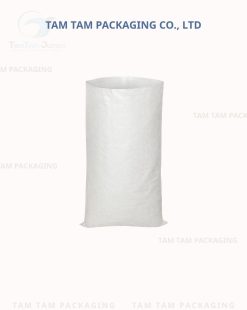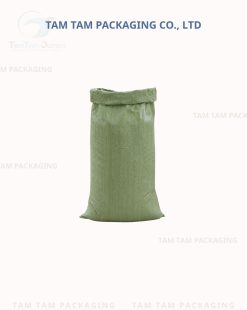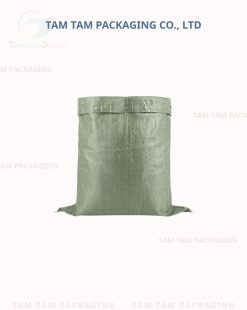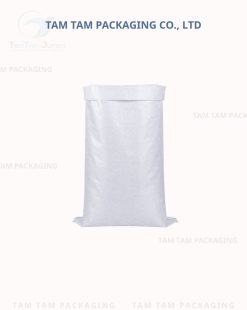

PP Woven Bags — Polypropylene Woven Sacks
PP woven bags — polypropylene woven sacks — are the most widely used packaging format in global commodity trade. Woven from high-tenacity polypropylene tapes into a strong, flexible fabric, these bags deliver the combination of load capacity, moisture resistance, print quality, and cost efficiency that makes them the standard choice for packaging rice, grains, cement, fertiliser, animal feed, and hundreds of other bulk materials. Over 100 billion PP woven bags are produced globally every year — a scale that reflects their role as the default packaging format for commodity trade across Asia, Africa, the Middle East, and Latin America.
At Tam Tam Packaging, we manufacture PP woven bags across the full specification range — from plain uncoated sacks for basic industrial applications to premium BOPP laminated bags with photographic printing for branded retail markets. With production capacity covering 25 kg, 50 kg, and custom sizes, valve and open-mouth closures, laminated and non-laminated constructions, and food-grade certification options, we supply buyers across the United States, United Kingdom, Australia, South Korea, Canada, and Europe with consistent quality and reliable lead times from our ISO-certified factory in Vietnam.
Why Choose Tam Tam Packaging for PP Woven Bags?
- 100% virgin polypropylene — consistent tensile strength, tear resistance, and colour consistency across every production run
- In-house extrusion lamination and BOPP lamination — moisture barrier and print quality managed under one roof
- Up to 10-colour BOPP rotogravure printing — photographic-quality brand graphics for retail and export markets
- Food-grade production zone — FDA 21 CFR and EC No. 10/2011 compliant bags with full documentation
- ISO 9001 certified production with SGS quality inspection on every order
- Full closure range — open mouth sewn, heat seal, sleeve valve, pinch bottom, block bottom
- Competitive FOB Vietnam pricing with standard lead time of 25–35 days
Production Capabilities at a Glance
| Capacity Range | 5 kg – 50 kg standard; custom sizes on request |
| Fabric Weight (GSM) | 60 – 140 gsm (specified by application and load) |
| Construction Types | Plain woven / PP laminated / BOPP laminated |
| Lamination Options | PP extrusion lamination (15–30 micron) / BOPP film (18–28 micron) |
| Print Process | Flexographic up to 8-colour (PP lami) / Rotogravure up to 10-colour (BOPP) |
| Closure Options | Open mouth sewn / Heat seal / Sleeve valve / Pinch bottom / Block bottom |
| Gusset Options | Flat / Side gusset / Block bottom (brick shape) |
| Food Grade | Available — FDA 21 CFR / EC No. 10/2011; dedicated production zone |
| UV Stabilisation | Available — rated to 2,500 hours outdoor exposure |
| Inner Liner | Optional PE tube liner for moisture-sensitive products |
| MOQ | 10,000 bags per specification; samples from 500 bags |
| Lead Time | 25–35 days (first order); 20–25 days (reorders) |
| Certifications | ISO 9001; SGS Quality Inspection; food contact COC available |
| Markets Supplied | US, UK, Australia, South Korea, Canada, EU, Middle East, Southeast Asia |
PP Woven Bag Types — Which Construction Is Right for You?
The three main PP woven bag constructions differ in moisture protection level and print quality. Choosing the right construction for your product avoids both over-specifying (paying for barrier performance you do not need) and under-specifying (using a bag that cannot protect your product through your supply chain).
| Construction | Moisture Barrier | Best For |
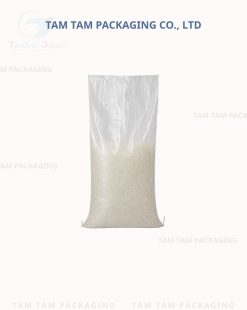
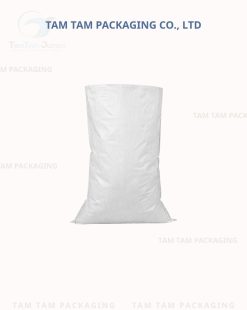
| Plain Woven (Uncoated) | None — breathable fabric | Dry, non-moisture-sensitive goods: aggregate, animal feed, paddy rice, waste |
| PP Laminated | Good — continuous PP film barrier | Moisture-sensitive goods: fertiliser, cement, flour, sugar, chemical powders |
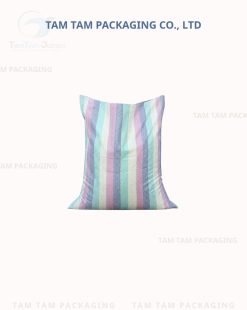
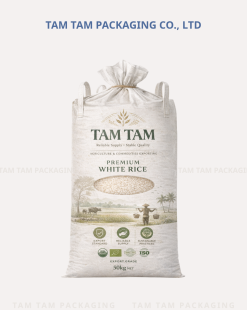
| BOPP Laminated | Excellent — BOPP film barrier + print | Branded retail packaging: rice, pet food, food ingredients, premium fertiliser |
| 💡 Not sure whether you need laminated or uncoated bags? If your product is moisture-sensitive, can cake, or needs to maintain a dry state through sea freight or tropical warehouse storage — specify laminated. If your product breathes or is not affected by humidity, uncoated bags are more cost-effective. |