
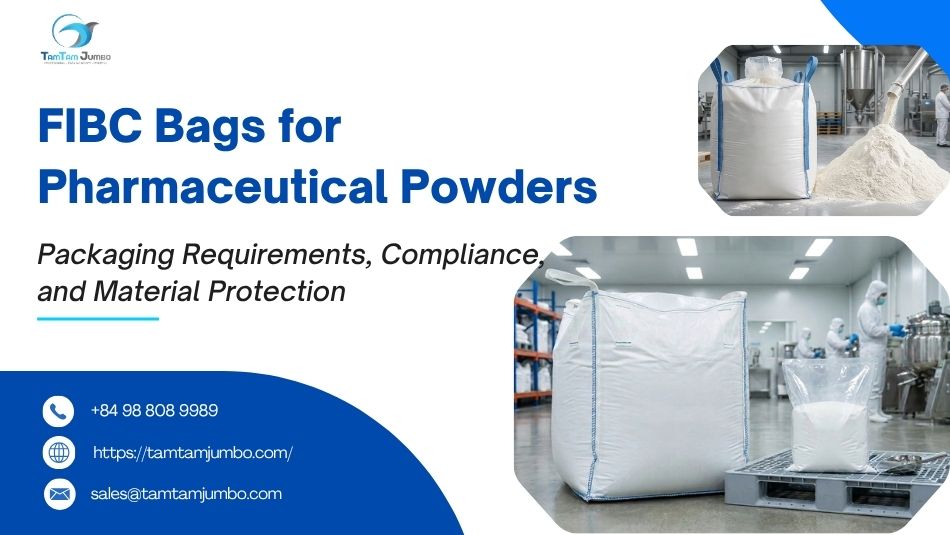
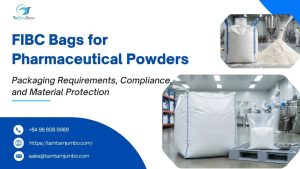
Pharmaceutical powder handling sits at the far end of the specification spectrum from general industrial FIBC use, with requirements that go beyond what food grade or standard chemical bag sourcing addresses. FIBC Bags for Pharmaceutical Powders intended for an active pharmaceutical ingredient, an excipient, or a bulk drug substance needs to be evaluated against GMP documentation, containment level, and cross-contamination prevention in ways that are specific to pharmaceutical manufacturing. This guide covers what actually changes, and where general FIBC suppliers fit into the picture versus where specialized pharmaceutical packaging expertise becomes necessary.
Why Pharmaceutical Powder Packaging Sits Apart From Food and Industrial FIBC Use
Food grade and standard chemical FIBC sourcing both have well-established certification pathways, BRC for food, standard hygiene documentation for industrial chemicals, that a general FIBC manufacturer can reasonably support. Pharmaceutical manufacturing operates under its own regulatory framework, with Current Good Manufacturing Practice requirements enforced by agencies like the FDA and EMA, which extends into packaging materials in ways that go beyond general hygiene certification.
Read more: FIBC Bags for Chemicals: Building the Right Bulk Bag Specification
GMP Compliance and Documentation Requirements
GMP compliance for pharmaceutical packaging materials typically requires documented material traceability, validated cleaning and manufacturing processes, and change control procedures that exceed what standard BRC or general industrial quality documentation provides. Buyers sourcing bags for GMP-regulated pharmaceutical products should confirm a supplier’s documentation practices specifically against pharmaceutical industry expectations rather than assuming general food or chemical grade certification is equivalent.
Containment Levels for Potent and Cytotoxic Compounds
Some active pharmaceutical ingredients are potent or cytotoxic enough that operator exposure during handling presents a genuine occupational health risk, classified under Occupational Exposure Band systems that determine how much containment a handling process requires. High-containment applications typically call for specialized transfer systems designed specifically for this purpose, which sit outside the scope of standard woven polypropylene bulk bag construction and generally require suppliers with dedicated pharmaceutical containment engineering expertise.
Continuous Liner and Split Butterfly Valve Systems
Higher-containment pharmaceutical powder transfer often uses continuous liner systems or split butterfly valve connections that allow material to move between processing steps without exposing the powder, or an operator, to the surrounding environment. These are specialized engineered systems rather than a standard FIBC liner and spout configuration, and buyers requiring this level of containment should work with suppliers who specifically design and validate these systems for pharmaceutical use.
Single-Use Requirements and Cross-Contamination Prevention
Cross-contamination prevention in pharmaceutical manufacturing is generally stricter than the batch segregation practices covered for food and feed applications, since different active ingredients must never cross-contaminate, and validated cleaning between reuse is often more burdensome to document and prove than simply defaulting to single-use bags for higher-risk products. This mirrors the same logic applied to medicated animal feed carryover, but with less regulatory tolerance for reuse given the direct human health stakes involved.
Read more: FIBC Bags for Animal Feed: What Actually Makes a Clean Bulk Bag
Cleanroom-Compatible Bag Construction
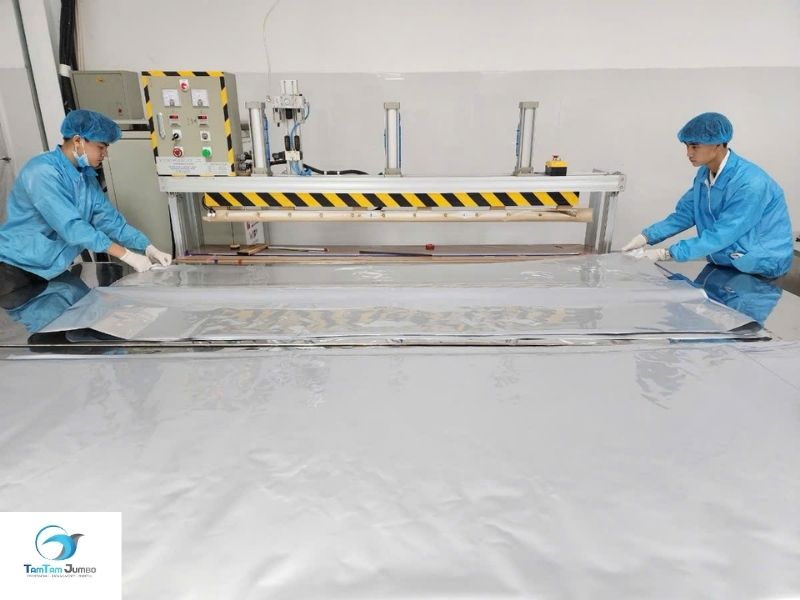
Bags used within cleanroom or controlled manufacturing environments may need construction and surface finishing that limits particle shedding and is compatible with cleanroom gowning and handling procedures, a more specific requirement than the general food-contact fiber shedding concern covered for resin packaging. This is an area where standard industrial FIBC construction generally needs modification or specialized design to meet pharmaceutical cleanroom expectations.
Building a Complete Pharmaceutical Powder FIBC Specification
A complete specification for pharmaceutical powder packaging typically starts with confirming the required GMP documentation level, then addresses containment requirements based on the specific compound’s Occupational Exposure Band, single-use versus validated reuse policy, and cleanroom compatibility where the bag will be used within a controlled manufacturing environment.
Common Pharmaceutical FIBC Specification Combinations
| Application | Typical Specification Direction |
| Bulk pharmaceutical excipients, low potency | GMP documentation, single-use or validated cleaning policy, standard bulk bag construction |
| API intermediate, moderate containment need | GMP documentation, sealed liner, single-use policy, cleanroom-compatible finishing |
| Potent or cytotoxic API, high containment need | Specialized continuous liner or split valve system, dedicated pharmaceutical containment supplier |
| Non-GMP pharmaceutical-adjacent industrial powder | Standard food or chemical grade specification may be sufficient |
How Tam Tam Packaging Approaches Pharmaceutical Powder Applications
Tam Tam Packaging manufactures standard and food-grade FIBC bags suited to lower-risk pharmaceutical-adjacent applications, bulk excipients and non-potent intermediates where GMP documentation and single-use policy can be addressed within a standard bulk bag framework. For high-containment applications involving potent or cytotoxic compounds requiring continuous liner or split butterfly valve systems, we work openly with buyers to clarify whether their containment requirement falls within our standard capability or would be better served by a supplier specializing in pharmaceutical containment engineering.
Common Mistakes When Sourcing FIBC Bags for Pharmaceutical Powders
- Assuming general food grade or chemical grade certification satisfies GMP documentation expectations without confirming directly.
- Underestimating the containment level required for a potent compound based on its Occupational Exposure Band classification.
- Defaulting to standard bulk bag construction for applications that actually require a continuous liner or split valve transfer system.
- Reusing bags across different active ingredients without validated cleaning documentation appropriate to pharmaceutical standards.
- Not distinguishing between low-risk pharmaceutical-adjacent products and genuinely high-containment potent compounds when selecting a supplier.
Applications Across Pharmaceutical Manufacturing
FIBC Bags for Pharmaceutical powders applications range from bulk excipient handling that overlaps considerably with standard food and chemical grade practices to highly specialized potent compound transfer that requires dedicated containment engineering well beyond standard woven bulk bag construction. Identifying where a specific product and process falls on this range is the first and most important step in sourcing the right packaging.
Frequently Asked Questions
Is a standard food grade bag suitable for pharmaceutical powder?
It depends on the specific product and GMP documentation requirements. Lower-risk excipients may be suitable, but buyers should confirm documentation expectations directly rather than assuming equivalence to food grade certification.
What does Occupational Exposure Band mean for packaging?
It classifies how potent or hazardous a compound is to handle, which determines how much containment the packaging and transfer process needs, ranging from standard bulk bag handling to specialized high-containment systems.
What is a continuous liner system?
A specialized engineered liner and transfer mechanism that allows powder to move between processing steps without exposing the material or operators to the surrounding environment, used for higher-containment pharmaceutical applications.
Can FIBC Bags for pharmaceutical powders be reused?
Generally only with validated cleaning documentation meeting pharmaceutical standards, and many manufacturers default to single-use for higher-risk products given the stricter cross-contamination tolerance in pharmaceutical manufacturing.
Does every pharmaceutical powder need high-containment packaging?
No. Many bulk excipients and lower-potency intermediates can be handled with standard, appropriately GMP-documented bulk bag construction, while only potent or cytotoxic compounds typically require specialized high-containment systems.
Conclusion
Pharmaceutical powder packaging spans a wide range, from bulk excipients that overlap with standard food and chemical grade practices to potent compounds requiring specialized containment engineering. Identifying where a specific product falls on that range, and working with the right supplier for that level, matters more than treating pharmaceutical FIBC sourcing as a single category.
Tam Tam Packaging Co. supports pharmaceutical-adjacent bulk bag applications with GMP-appropriate documentation and works openly with buyers to identify when a specialized containment supplier is the better fit. Contact our team to discuss your specific product and containment requirement.
Contact Us
Tam Tam Packaging Co.
Email: sales@tamtamjumbo.com
Website: https://tamtamjumbo.com/
Read more
How to Store FIBC Bags: Getting the Most From UV Additive
A bag manufactured with a strong UV additive package can still fail early if it’s...
Sep
Bulk Bags for Export: What to Ask a Big Bag Supplier in Vietnam
A bag that performs perfectly in short domestic truck transport can still fail on a...
Sep
FIBC Bags for Seed Packaging: Choosing Right Liner for Viability
Seed packaging has a goal most other bulk commodities don’t share: keeping the product alive....
Sep

FIBC Bags for Sugar Packaging: What to Look for in Bag Suppliers
Sugar is deceptively demanding to package well in bulk. It is highly hygroscopic, fine enough...
Sep
FIBC Bags for Carbon Black: When a BRC Certificate Applies
Carbon black is overwhelmingly an industrial material, used as a reinforcing filler in tire and...
Sep
FIBC Bags for Pharmaceutical Powders: What Sets a Pharma Bag
Pharmaceutical powder handling sits at the far end of the specification spectrum from general industrial...
Sep