

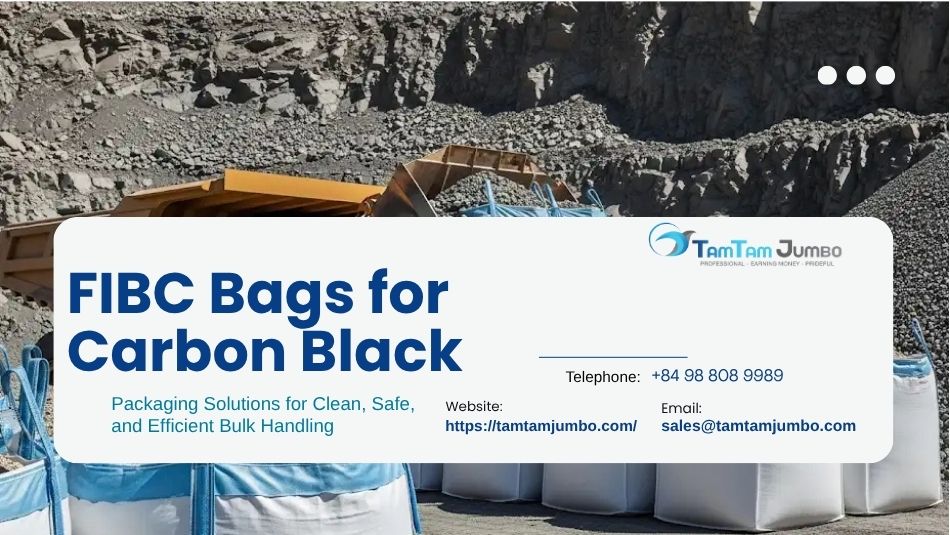
Carbon black is overwhelmingly an industrial material, used as a reinforcing filler in tire and rubber manufacturing, a pigment in plastics and inks, and a conductive additive in various compounds. Its FIBC packaging priorities center on extreme dust containment, cross-contamination staining prevention, and combustible dust risk, not food safety. A BRC certificate is relevant only in a narrow set of circumstances, which this guide addresses honestly alongside the considerations that actually apply to nearly every carbon black application.
Why Carbon Black Presents a Different Handling Profile Than Most Industrial Powders
Carbon black particles are extremely fine, often finer than typical mineral or chemical powders, and the material’s intense black color means even small amounts of dust or residue create highly visible contamination on equipment, facilities, and other products. This combination of particle fineness and staining visibility shapes carbon black packaging priorities more than any food safety consideration does for the vast majority of applications.
Staining and Cross-Contamination Between Color Batches
Facilities handling carbon black alongside other pigments or fillers need to prevent cross-contamination that could discolor a lighter-colored product, since even trace carbon black residue is visually obvious in a way that many other cross-contamination issues are not. This makes dedicated equipment, thorough seam and interior fabric cleanliness, and often single-trip bag use practical necessities for facilities producing multiple colored product lines.
Combustible Dust and Anti-Static Considerations
Fine carbon black dust suspended in air presents a combustible dust risk in facilities where it becomes airborne in sufficient concentration, particularly during high-speed filling and discharge. Anti-static bag construction is a common specification where a facility’s dust hazard assessment identifies this risk, following the same logic applied to other fine combustible industrial powders.
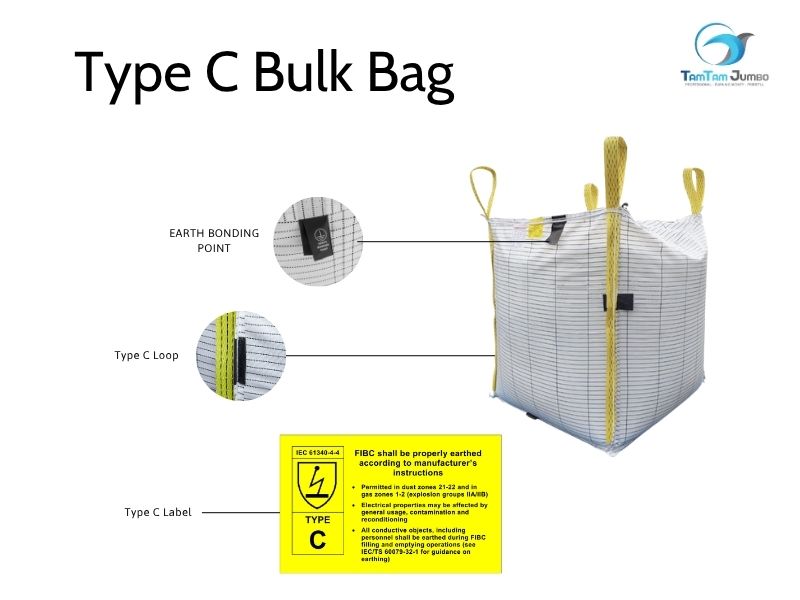
Read more: Anti-Static Bulk Bags: How a Type C Bag Prevents Ignition Risk
Dust Containment During Filling and Discharge
Carbon black’s extreme fineness means standard seam construction is generally inadequate, making folded and double-stitched sift and dust proof seams a near-universal requirement. Discharge spout design deserves particular attention, since a visible dust cloud during discharge is both a product loss issue and a workplace cleanliness and safety concern given the material’s staining visibility.
Read more: Dust Proof Bulk Bags: Controlling Exposure Standard Sift Proofing
Does Carbon Black Ever Require Food Grade or BRC Certification?
For the overwhelming majority of carbon black applications, tire and rubber manufacturing, plastics compounding, ink and coating production, food grade or BRC certification is not relevant, since these are industrial, non-food-contact uses. The narrow exception is food grade vegetable carbon, a specific colorant sometimes designated E153 in food labeling systems, used in limited food and cosmetic coloring applications. Buyers should not assume BRC certification is a standard requirement for carbon black packaging unless their specific product is this food-grade colorant variant, in which case the same BRC verification steps that apply to any food grade FIBC bag become relevant.
Read more: Food Grade FIBC Bags: What a BRC Certificate Actually Confirms
Fabric and Liner Selection for Carbon Black
Fabric weave density should be specified with carbon black’s particle fineness in mind, and a liner is common practice for buyers wanting an additional barrier against both dust escape and moisture, since some carbon black grades are moisture sensitive depending on their surface treatment and intended application.
Building a Complete FIBC Bags for Carbon Black Specification
A complete carbon black specification typically addresses dust proof seam construction, anti-static protection where a dust hazard assessment identifies combustible risk, dedicated or single-trip bag use to prevent staining cross-contamination, and food grade or BRC certification only for the narrow food-grade colorant exception.
Common Carbon Black FIBC Specification Combinations
| Application | Typical Specification Combination |
| Tire and rubber grade carbon black | Dust proof seams, Type C anti-static if dust hazard confirmed, dedicated single-trip use |
| Plastics compounding pigment grade | Dust proof seams, sealed discharge spout, standard capacity |
| Conductive or specialty industrial grade | Dust proof seams, anti-static construction, liner for moisture-sensitive grades |
| Food grade vegetable carbon colorant (E153) | BRC certified facility, virgin fabric, dust proof seams |
How Tam Tam Packaging Specifies Bags for Carbon Black
Tam Tam Packaging builds carbon black specifications around dust proof seam construction and anti-static protection where relevant, treating staining cross-contamination prevention as a standard consideration for facilities handling multiple pigment or filler products. BRC certification is addressed specifically for the food grade colorant exception rather than applied as a default across all carbon black orders.
Common Mistakes When Sourcing Carbon Black FIBC Bags
- Requesting BRC or food grade certification for industrial carbon black where it adds cost without functional relevance.
- Using standard seam construction inadequate for carbon black’s extreme particle fineness.
- Overlooking combustible dust risk assessment for facilities handling significant bulk volumes.
- Reusing bags across different colored products without accounting for visible staining cross-contamination.
- Not confirming whether a specific carbon black grade is moisture sensitive before deciding on liner requirements.
Applications in the Rubber, Plastics, and Ink Industry
Carbon black FIBC applications span tire and rubber manufacturing, where it serves as a reinforcing filler, plastics compounding for pigmentation and UV protection in the finished product, and ink and coating manufacturing for color and conductivity properties. Across all of these, dust containment and staining prevention remain the consistent specification priorities, with food grade considerations relevant only to the narrow colorant exception.
Frequently Asked Questions
Does carbon black need food grade or BRC certified bags?
Generally no. The overwhelming majority of carbon black is used in industrial, non-food-contact applications. BRC certification is only relevant for the narrow food grade vegetable carbon colorant exception.
Why does carbon black need such careful dust containment?
Its extremely fine particle size and intense color mean even small amounts of dust create highly visible staining, in addition to standard product loss and combustible dust considerations.
Is carbon black a combustible dust hazard?
Fine carbon black dust can present a combustible dust risk when airborne in sufficient concentration, which facilities should assess formally rather than assume based on general industrial powder handling.
Can carbon black bags be reused across different colored products?
Generally not recommended without dedicated equipment or thorough verified cleaning, since even trace carbon black residue is visually obvious as staining on lighter-colored products.
What is E153 in relation to carbon black?
It refers to food grade vegetable carbon, a specific colorant variant used in limited food and cosmetic applications, which is the narrow case where food grade and BRC certification genuinely apply to a carbon black product.
Conclusion
Carbon black FIBC specification should be built around dust containment, combustible dust risk assessment, and staining cross-contamination prevention, the considerations relevant to nearly every application. Food grade and BRC certification apply only to the narrow vegetable carbon colorant exception, and buyers should confirm which category their product falls into before requesting or paying for certification that doesn’t apply to their use case.
Tam Tam Packaging Co. builds FIBC bags for carbon black, addressing dust containment, staining prevention, and anti-static needs. Contact our team to work through the right specification for your grade and application.
Contact Us
Tam Tam Packaging Co.
Email: sales@tamtamjumbo.com
Website: https://tamtamjumbo.com/
Read more
How to Store FIBC Bags: Getting the Most From UV Additive
A bag manufactured with a strong UV additive package can still fail early if it’s...
Sep
Bulk Bags for Export: What to Ask a Big Bag Supplier in Vietnam
A bag that performs perfectly in short domestic truck transport can still fail on a...
Sep

FIBC Bags for Seed Packaging: Choosing Right Liner for Viability
Seed packaging has a goal most other bulk commodities don’t share: keeping the product alive....
Sep

FIBC Bags for Sugar Packaging: What to Look for in Bag Suppliers
Sugar is deceptively demanding to package well in bulk. It is highly hygroscopic, fine enough...
Sep
FIBC Bags for Carbon Black: When a BRC Certificate Applies
Carbon black is overwhelmingly an industrial material, used as a reinforcing filler in tire and...
Sep
FIBC Bags for Pharmaceutical Powders: What Sets a Pharma Bag
Pharmaceutical powder handling sits at the far end of the specification spectrum from general industrial...
Sep