
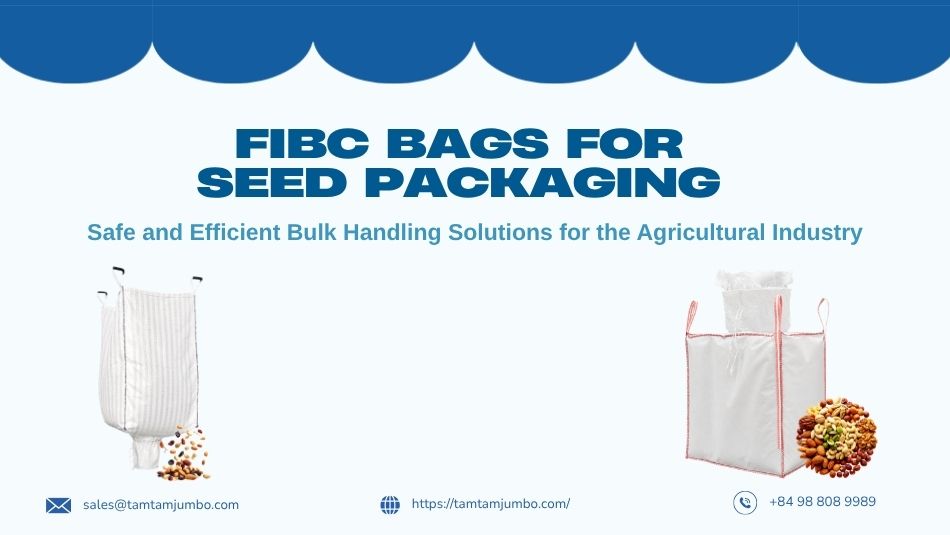
Seed packaging has a goal most other bulk commodities don’t share: keeping the product alive. A grain shipment that loses some moisture resistance mainly risks spoilage and reduced feed or food value, but a seed shipment that loses viability simply won’t grow, regardless of how intact the seed looks on arrival. This guide covers what that difference means for FIBC liner choice, and the seed-specific requirements around treated product labeling and varietal purity that general agricultural packaging guidance doesn’t fully address.
Why Seed Packaging Prioritizes Viability, Not Just Containment
A seed is a living, dormant organism, and its ability to germinate depends on moisture content, temperature exposure, and storage duration staying within ranges specific to that seed variety. Packaging decisions for seed need to be evaluated against germination rate outcomes, not just against whether the seed physically arrived intact and free of visible damage.
Read more: FIBC Bags for Agriculture: Matching Specification to Product Category
Treated Seed: Why These Bags Must Not Be Food or Feed Grade
Seed treated with fungicides, insecticides, or other seed treatment chemicals is frequently toxic if consumed by humans or livestock, which is the opposite situation from the food and feed grade sourcing covered for other agricultural products. Regulations in many markets require treated seed to be visibly dyed and packaging to carry explicit warning labeling indicating the contents are not for human or animal consumption. Buyers sourcing bags for treated seed should confirm the bag specification and labeling explicitly support this warning requirement rather than defaulting to a general agricultural bag template.
Read more: FIBC Label Requirements: Reading 5:1 vs 6:1 Markings Correctly
Varietal Purity and Cross-Contamination Between Seed Lots
Seed companies need to prevent different varieties or hybrid lines from mixing during bagging and handling, since even small amounts of cross-variety contamination can compromise the genetic purity a farmer is paying for, particularly for hybrid seed where specific parent line characteristics matter directly to crop performance. This calls for dedicated equipment or thoroughly verified cleaning between different seed lots, similar in principle to allergen segregation in food packaging but centered on genetic purity rather than food safety.
Choosing the Right FIBC Liner for Seed Moisture and Viability
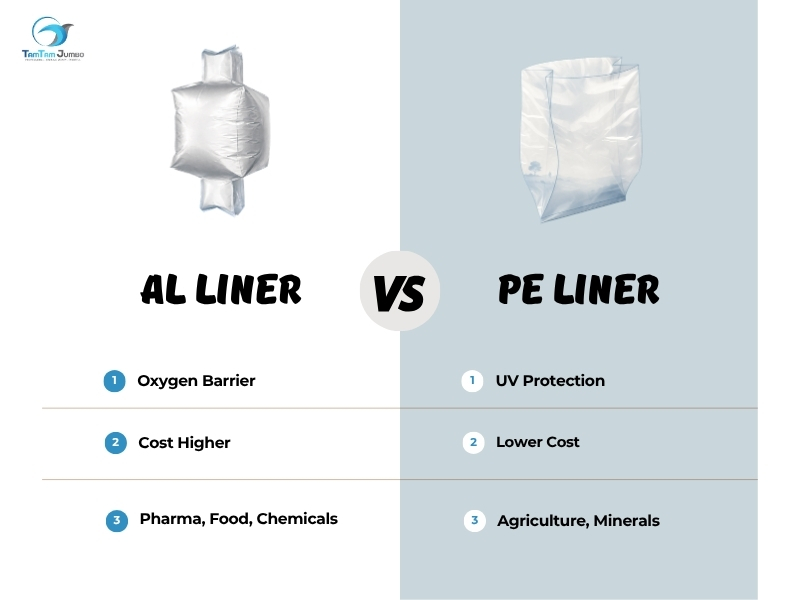
Liner choice for seed is not simply a matter of maximum moisture exclusion, since some seed varieties are living tissue that continues to respire in storage and can be damaged by condensation forming inside a fully sealed, non-breathable liner. Certain seed types benefit from a liner that manages moisture within a target range rather than excluding it entirely, while others, particularly seed intended for long-term storage, benefit from a stronger vapor barrier liner similar to those used for hygroscopic chemical powders. The right liner depends specifically on the seed variety’s storage physiology, which is a detail general moisture protection guidance doesn’t capture.
Temperature and Storage Duration Effects on Seed Viability
Seed viability degrades faster at higher temperatures and over longer storage durations, meaning packaging decisions should account for the realistic time between bagging and planting, not just the physical transit conditions. Buyers storing seed for extended periods between harvest seasons should weigh liner and UV protection choices against this realistic storage timeline rather than a generic agricultural default.
Read more: FIBC UV Protection: What Outdoor Bag Storage Actually Requires
Building a Complete Seed Packaging FIBC Specification
A complete seed specification typically addresses liner type matched to the specific seed variety’s moisture and respiration characteristics, treated seed warning labeling where applicable, varietal purity procedures preventing cross-lot contamination, and UV or extended storage protection based on realistic time to planting.
Common Seed FIBC Specification Combinations
| Seed Type | Typical Specification Combination |
| Untreated food or feed grade grain seed | Food or feed grade sourcing, moisture proof liner, standard capacity |
| Chemically treated seed | Explicit non-consumption warning labeling, standard liner, no food or feed grade sourcing |
| Hybrid seed with genetic purity requirements | Dedicated or verified-clean equipment, varietal batch traceability, standard liner |
| Seed for extended off-season storage | Vapor barrier liner, UV stabilization, batch traceability |
How Tam Tam Packaging Specifies Bags for Seed
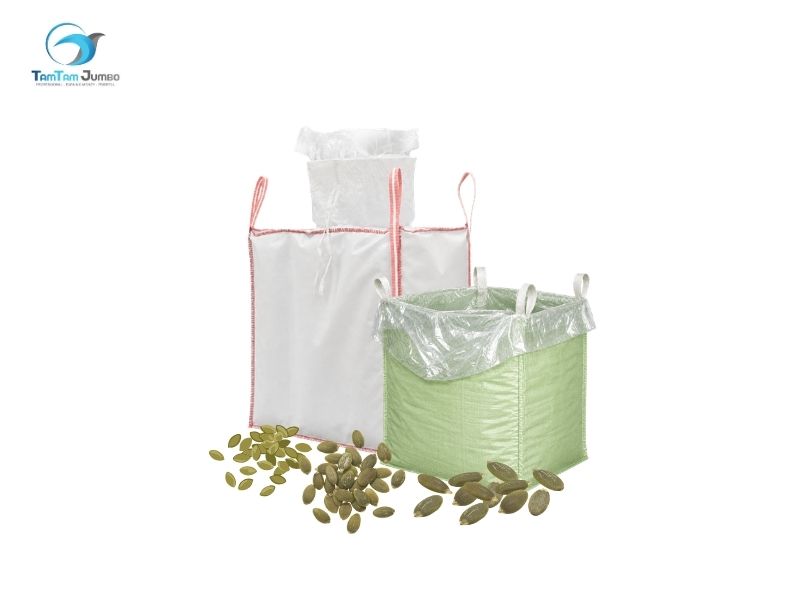
Tam Tam Packaging works with seed buyers to match liner type to the specific seed variety’s moisture and respiration needs, applying explicit non-consumption warning labeling for treated seed and supporting varietal purity procedures for hybrid seed lots. Specification sheets document liner type, labeling, and traceability details individually for each order.
Common Mistakes When Sourcing Seed FIBC Bags
- Applying a fully sealed, non-breathable liner to a seed variety that needs some moisture exchange to avoid condensation damage.
- Sourcing food or feed grade certification for treated seed, which should instead carry explicit non-consumption warnings.
- Overlooking varietal purity procedures when a facility bags multiple hybrid seed lines through shared equipment.
- Not accounting for realistic storage duration to planting when specifying UV protection or liner barrier strength.
- Assuming all seed varieties share the same moisture and liner requirements as general grain.
Applications Across the Seed Industry
Seed FIBC packaging spans commercial seed production and processing, hybrid seed companies managing multiple proprietary lines, and farm-level bulk seed storage between harvest and planting seasons, each layering viability protection, purity control, and, for treated seed, safety labeling in ways that differ meaningfully from general grain or feed packaging.
Frequently Asked Questions
Why does seed packaging need different liners than grain packaging?
Seed is living tissue that can continue to respire in storage, and a fully sealed liner appropriate for grain can trap condensation and damage seed viability, so liner choice needs to match the specific seed variety’s moisture behavior.
Why can’t treated seed be packaged as food or feed grade?
Treated seed is frequently toxic if consumed, and regulations in many markets require explicit non-consumption warning labeling rather than food or feed grade sourcing.
What is varietal purity and why does it matter for seed bags?
It refers to preventing different seed varieties or hybrid lines from mixing during bagging, since cross-contamination can compromise the genetic characteristics a farmer is paying for.
Does seed need UV protection?
Seed stored outdoors or for extended periods between harvest and planting benefits from UV stabilization, matched to the realistic storage duration involved.
Can the same bag specification work for treated and untreated seed?
No. Treated seed needs explicit non-consumption warning labeling and should not carry food or feed grade certification, while untreated seed intended for food or feed use follows standard food grade sourcing.
Conclusion
Seed packaging centers on preserving germination viability, which shifts liner selection toward the specific seed variety’s moisture and respiration needs rather than maximum barrier protection by default. Treated seed requires the opposite of food grade sourcing, explicit warning labeling instead, and varietal purity procedures matter as much as physical containment for hybrid seed lines.
Tam Tam Packaging Co. builds FIBC specifications for seed addressing liner selection for viability, treated seed labeling, and varietal purity together. Contact our team to work through the right specification for your seed product.
Contact Us
Tam Tam Packaging Co.
Email: sales@tamtamjumbo.com
Website: https://tamtamjumbo.com/
Read more
FIBC Bags for Seed Packaging: Choosing Right Liner for Viability
Seed packaging has a goal most other bulk commodities don’t share: keeping the product alive....
Sep

FIBC Bags for Sugar Packaging: What to Look for in Bag Suppliers
Sugar is deceptively demanding to package well in bulk. It is highly hygroscopic, fine enough...
Sep
FIBC Bags for Carbon Black: When a BRC Certificate Applies
Carbon black is overwhelmingly an industrial material, used as a reinforcing filler in tire and...
Sep
FIBC Bags for Pharmaceutical Powders: What Sets a Pharma Bag
Pharmaceutical powder handling sits at the far end of the specification spectrum from general industrial...
Sep
FIBC Bags for Hazardous Material: How to Classify Bags Required
A UN certificate confirms a bag’s packing group and maximum weight, but it doesn’t tell...
Sep
FIBC Bags for Recycling Industry: Bulk Bag Across Material Stream
Recycling operations move an unusually wide range of material through FIBC packaging, plastic flakes, metal...
Sep