

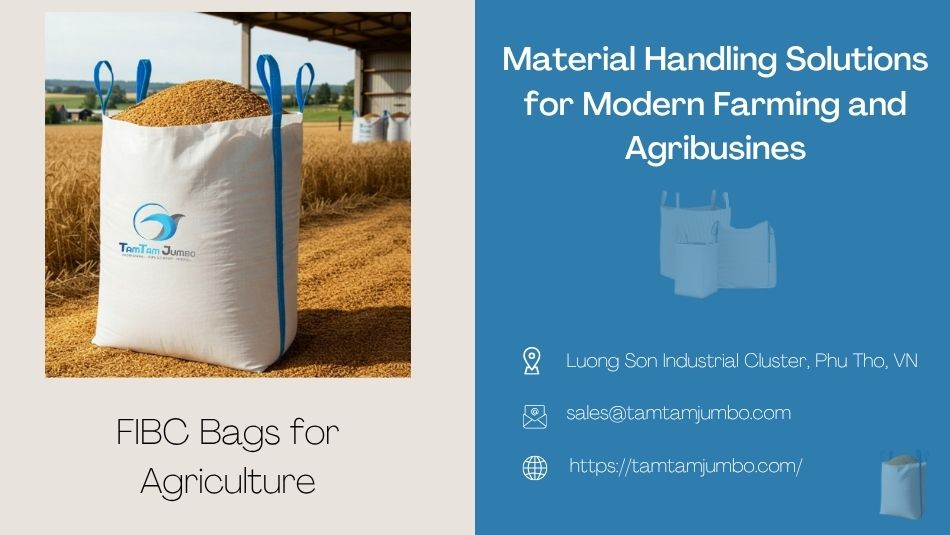
Agriculture is not a single FIBC application the way dangerous goods or food-grade chemicals often are. Grain, fresh produce, fertilizer, and animal feed each place different demands on a bag, and treating agricultural packaging as one generic category tends to produce a specification that fits none of them particularly well. This guide breaks down what actually matters for each major agricultural product type, including when a food grade bulk bag is genuinely required and when it isn’t.
Why Agricultural FIBC Needs Differ by Product Category
The core specification questions, food contact status, moisture sensitivity, ventilation needs, and outdoor storage duration- land differently depending on whether the product is a stored grain, a respiring fresh vegetable, a hygroscopic fertilizer, or a processed feed ingredient. Working through the right category first narrows the specification considerably before getting into fabric weight or construction type.
Grain and Seed: Food Grade and Moisture Protection
Grain and seed moving into food or feed supply chains typically require a food grade bulk bag manufactured under documented hygiene controls, with BRC certification increasingly requested as a standard procurement condition by downstream buyers. Moisture protection matters as well, since grain and seed can spoil or lose viability if exposed to humidity during storage or transit, making coated fabric or a liner a common addition alongside food grade sourcing.
Read more: Food Grade FIBC Bags: What a BRC Certificate Actually Confirms
Fresh Produce: Ventilated and Breathable Construction
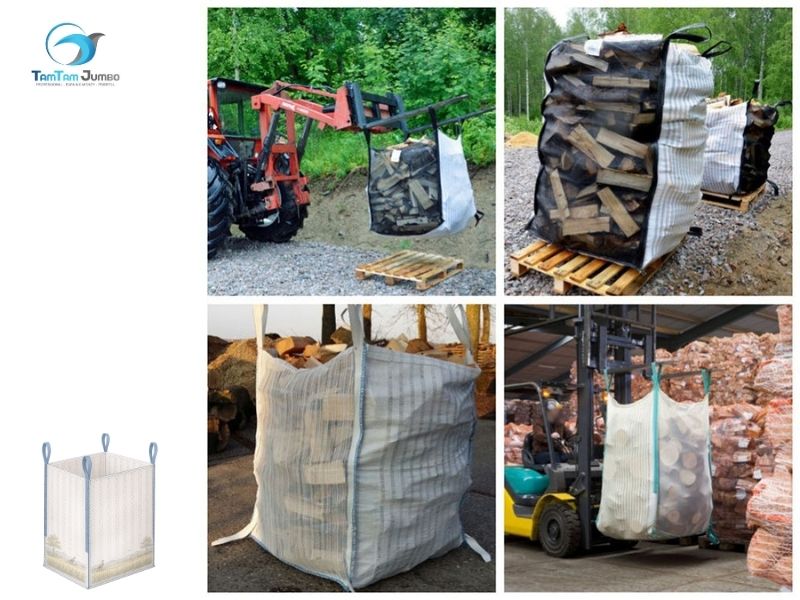
Onions, potatoes, garlic, and other fresh produce continue to respire after harvest, generating heat and moisture that a sealed bag traps rather than releases. These products need ventilated or breathable construction using leno weave mesh fabric, with mesh gauge matched to the specific produce size to balance airflow against product containment.
Read more: Ventilated Bulk Bags: When a Breathable Bag Matters for Agriculture
Fertilizer: Moisture Protection and UV Stabilization
Many fertilizer products are highly hygroscopic, absorbing moisture readily and caking or degrading as a result, making moisture protection a central specification requirement. Fertilizer bags also frequently sit outdoors at distribution points and farm storage between application seasons, adding UV stabilization to the list of practical requirements alongside moisture control.
Read more: FIBC UV Protection: What Outdoor Bag Storage Actually Requires
Animal Feed: Food and Feed Grade Considerations
Animal feed sits in a middle category, not always requiring the same food-contact documentation as human food products, but frequently still specified with food or feed grade hygiene standards depending on the destination market’s regulations and the buyer’s own supply chain requirements. Moisture protection remains relevant for feed ingredients prone to spoilage or mold growth during storage.
Capacity and Construction Type Across Agricultural Products
Capacity commonly falls in the 500kg to 1000kg range for grain and seed, aligning with standard farm and mill handling equipment, while produce bags are often sized around typical harvest lot quantities. Construction type varies by product density and handling method, with 4 panel or baffled construction offering container efficiency benefits for higher-volume grain export operations.
Read more: FIBC Bag Sizes Explained: Matching SWL to Common Capacity
Building a Complete Agricultural FIBC Specification
Once the product category is identified, a complete specification typically addresses food or feed grade certification status, moisture protection approach, ventilation requirements if applicable, UV stabilization for expected outdoor storage, and capacity and construction type matched to farm, mill, or export handling equipment.
Common Agricultural FIBC Specification Combinations
| Product Category | Typical Specification Combination |
| Export grain or seed | Food grade BRC certification, moisture proof liner, 1000kg capacity, standard or baffled construction |
| Onions, potatoes, garlic | Ventilated mesh construction, mesh gauge matched to produce, UV stabilization for outdoor handling |
| Granular fertilizer | Moisture proof coated fabric and liner, UV stabilization, standard capacity |
| Processed animal feed | Food or feed grade hygiene standards, moisture protection, standard capacity |
How Tam Tam Packaging Specifies FIBC Bags for Agriculture
Tam Tam Packaging works through product category first, grain, produce, fertilizer, or feed, before finalizing food grade certification, moisture protection, ventilation, and UV stabilization requirements, rather than applying a single standard agricultural bag template. Specification sheets document each relevant requirement individually so buyers can confirm the bag matches their specific product.
Common Mistakes When Sourcing Agricultural FIBC Bags
- Requesting a food grade bulk bag for a fertilizer or non-food product where the certification adds cost without functional benefit.
- Using sealed, non-ventilated construction for fresh produce that actually needs airflow to prevent spoilage.
- Overlooking moisture protection for hygroscopic fertilizer or feed products prone to caking or degradation.
- Assuming a single agricultural bag specification fits both grain storage and fresh produce handling.
- Not confirming BRC certification scope when food grade status is genuinely required for downstream food supply chains.
Applications Across the Agriculture Industry
Agricultural FIBC use spans farm-level storage, mill and processing facility handling, and international export supply chains, each adding its own layer of requirements on top of the base product category needs. Export-focused operations in particular tend to layer food grade certification, moisture protection, and UV stabilization together, since bags in these supply chains face longer transit times and more variable storage conditions than domestic distribution alone.
Frequently Asked Questions
Do all agricultural FIBC bags need to be food grade?
No. Food grade certification is relevant for products entering human food or animal feed supply chains, but non-food agricultural products like some fertilizers do not require it.
Why do fresh produce bags need ventilation?
Produce like onions and potatoes continues to respire after harvest, generating heat and moisture that a sealed bag traps, accelerating spoilage without adequate airflow.
Does grain need moisture protection even if it isn’t classified as food grade?
Yes. Moisture protection addresses spoilage and viability loss independent of food grade certification, which is a separate hygiene and contact-safety requirement.
What capacity is typical for agricultural FIBC bags?
500kg to 1000kg is common for grain and seed, aligning with standard farm and mill handling equipment, though this varies by specific product and operation scale.
Can one bag specification cover both grain and fresh produce?
Generally no, since grain benefits from moisture-sealed construction while produce needs ventilated construction, which are largely incompatible requirements in a single design.
Conclusion
FIBC bags for agriculture need to be specified around the actual product category, grain, fresh produce, fertilizer, or feed, since each carries genuinely different requirements around food grade certification, moisture protection, and ventilation. Identifying the right category first, rather than defaulting to a generic agricultural bag, produces a specification that actually fits the product.
Tam Tam Packaging Co. builds FIBC specifications across agricultural product categories, from food grade grain bags to ventilated produce bags. Contact our team to work through the right specification for your product.
Contact Us
Tam Tam Packaging Co.
Email: sales@tamtamjumbo.com
Website: https://tamtamjumbo.com/
Read more
FIBC Bags for Flour: Why Allergen Status Change the Specification
Flour shares the fine-particle and combustible dust characteristics of other food powders, but wheat’s status...
Aug
FIBC Bag for Starch Powder: Dustproof Bag Needs Antistatic
Starch powder occupies an unusual position in FIBC specification: it is a common food and...
Aug
FIBC Bags for Animal Feed: What Actually Makes a Clean Bulk Bag
FIBC bags for animal feed mean something more specific than a bag that looks unused....
Aug
FIBC Bag for PET Flakes: Why UV Resistance Matter More Than It
Recycled PET flakes share a base polymer with virgin resin pellets, but the two behave...
Aug
FIBC Bags for Plastic Resin: PP Fabric Packaging PP Pellets
There is a certain irony in shipping polypropylene resin pellets inside a bag woven from...
Aug
FIBC Bags for the Food Industry: Building a Food Grade Bag
Food manufacturers sourcing bulk ingredient packaging are working from a different starting point than a...
Aug