

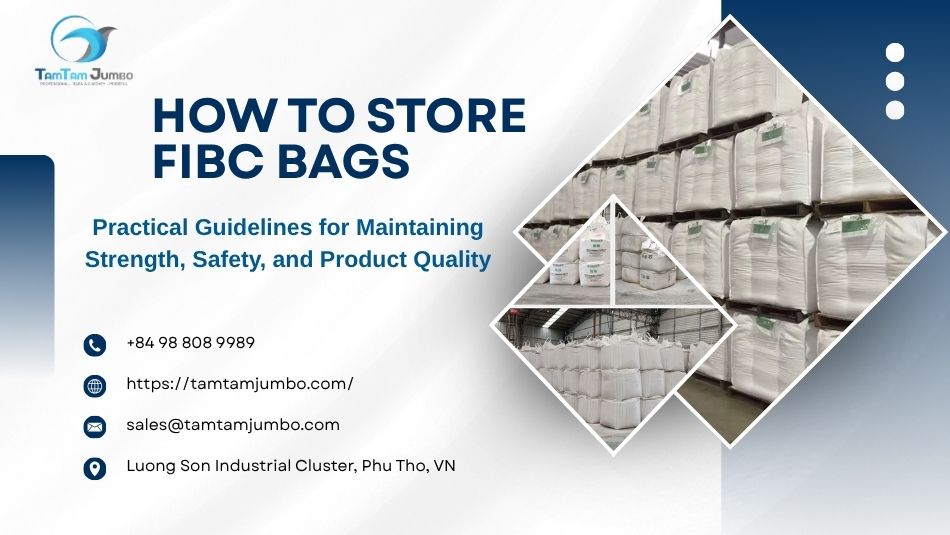
A bag manufactured with a strong UV additive package can still fail early if it’s stored poorly, and a bag with only basic stabilization can outlast its rated exposure window if storage practice minimizes unnecessary sun and ground contact. UV additive level and storage practice work together, not separately. This guide covers the practical side, how to actually set up and manage storage for both empty and filled FIBC bags to get the service life the fabric was built for.
Why Storage Practice Matters as Much as UV Additive Level
UV additive level determines how much cumulative sun exposure a fabric can withstand before losing meaningful strength, but that’s a ceiling, not a guarantee. Poor storage practice, direct ground contact, unnecessary sun exposure for bags that don’t need to be outdoors, or overcrowded stacking that blocks airflow, can undermine even a well-stabilized bag’s realistic performance.
Read more: FIBC UV Protection: What Outdoor Bag Storage Actually Requires
Storing Empty Bags Before Use
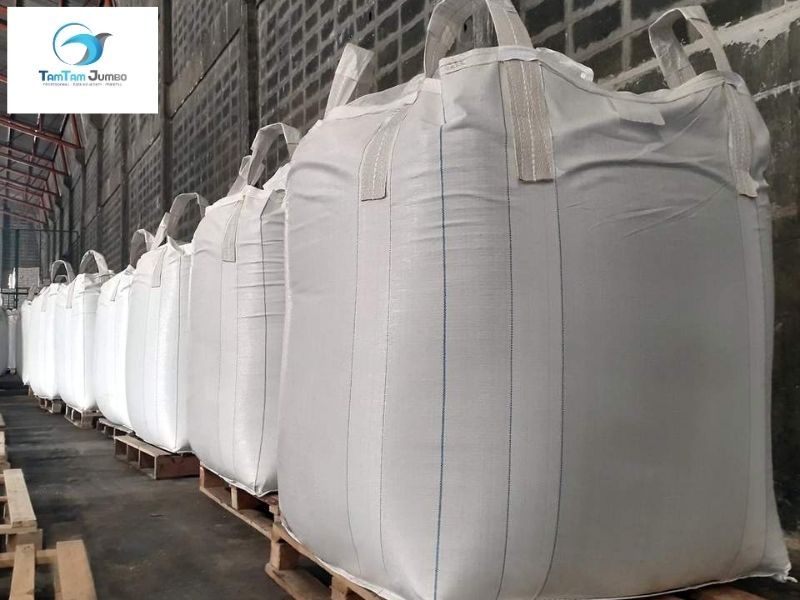
Empty bags should be stored indoors or under solid cover whenever possible, since there’s no reason to expend a bag’s UV additive allowance before it’s even been filled. Bags should be kept folded flat on pallets rather than piled loosely on the ground, which protects against moisture wicking and physical damage as much as sun exposure.
Storing Filled Bags: Site Selection and Ground Contact
Filled bags awaiting further transport or use should sit on pallets or a raised platform rather than directly on soil or pavement, since ground contact adds moisture wicking and abrasion wear on top of whatever UV exposure the site involves. Where possible, choosing a storage location with partial natural shade, or planning to relocate bags under cover during the longest expected storage stretch, meaningfully extends practical service life.
Stacking Height and Pattern for Stability and Airflow
Stacking height should stay within the bag’s rated stacking load, and stacking pattern should avoid leaning loads that concentrate stress unevenly on lower bags. For ventilated or mesh bags specifically, stacking pattern also needs to preserve airflow through the mesh panels, since bags pressed tightly against each other lose much of their ventilation benefit regardless of how well they were designed.
Read more: Ventilated Bulk Bags: When a Breathable Bag Matters for Agriculture
Covering and Shading Without Blocking Ventilation
Tarping or covering stored bags reduces direct UV exposure and is a practical low-cost supplement to fabric UV additive, but covers need to be arranged so they don’t trap moisture against the bags or, for ventilated bags, block the airflow the mesh construction is meant to provide. A cover that shades from direct sun while still allowing some air circulation underneath generally works better than a fully sealed tarp in humid climates.
Rotation: First In, First Out Inventory Management
Tracking approximately when each batch of bags entered outdoor storage, and using older stock first, keeps any individual bag’s cumulative UV exposure within a predictable and manageable range. Facilities storing bags for unpredictable or extended periods benefit from a simple dated tracking system rather than treating all stored stock as interchangeable regardless of how long it’s actually been sitting outside.
Protecting Bags From Forklift and Handling Damage During Storage
Storage areas should allow enough clearance for forklift access without repeated contact against stacked bags, since punctures or abrasion damage from handling equipment compromise a bag’s integrity independent of anything related to UV exposure. Damaged bags identified during storage should be set aside and assessed before use rather than left in the working stock rotation.
Pest and Rodent Considerations During Extended Storage
Extended outdoor or warehouse storage, particularly for agricultural products, invites pest and rodent activity that can damage bags independent of UV or weather exposure. Tighter fabric weave provides some incidental resistance, but proper site pest management remains the primary control measure, and storage areas should be included in a facility’s broader pest control program rather than treated as a separate concern.
Matching Your Storage Duration to the Bag’s UV Additive Level
Before committing to an extended outdoor storage plan, check the bag’s specified UV additive level and rated exposure duration against your realistic timeline, including any buffer for delays. A facility planning for three months of storage should specify bags rated for meaningfully longer than three months, since real-world timelines routinely run longer than initial planning assumes.
Read more: FIBC Bag GSM Guide: How Fabric Weight Determines Strength
Applications in Construction Site Storage
Construction sites and materials yards are a common setting where these storage practices matter most, since cement, sand, and aggregate bags routinely sit outdoors for weeks or months between delivery and use, often with less controlled site conditions than a dedicated warehouse. Pallet use, stacking discipline, and rotation tend to be the most commonly skipped practices at active job sites, largely because storage space and organization are secondary priorities to the construction work itself, which is exactly why building these habits into standard site procedure pays off over time.
Read more: FIBC Bags for Construction: A Complete Guide Across Materials
Signs a Stored Bag May No Longer Be Safe to Use
- Visible fading or a chalky, powdery residue on the fabric surface.
- Fabric that feels stiff or brittle rather than flexible when handled.
- Small cracks or splits appearing at fold lines or stress points.
- Any bag that has clearly exceeded its rated UV exposure duration based on storage tracking records.
- Visible pest damage, punctures, or abrasion wear from prolonged ground or equipment contact.
How Tam Tam Packaging Can Help You Plan Storage-Appropriate Specifications
Tam Tam Packaging works with buyers to match UV additive level to realistic storage timelines before an order is placed, so the bags arriving at your facility are already specified for how you actually plan to store them rather than a generic default. We’re happy to talk through your specific storage setup and site conditions as part of the specification process.
Common Storage Mistakes
- Storing empty bags outdoors unnecessarily before they’ve even been filled.
- Stacking bags directly on the ground without pallets or a raised platform.
- Using fully sealed tarps that trap moisture or block ventilation on mesh bags.
- Treating all stored stock as interchangeable without tracking how long individual batches have actually been outside.
- Not accounting for realistic delays when estimating storage duration against a bag’s UV rating.
Frequently Asked Questions
Should empty FIBC bags be stored outdoors?
No, not if avoidable. Empty bags should be stored indoors or under solid cover, since there’s no reason to use up UV exposure allowance before the bag is even filled.
How high can filled bags be safely stacked?
Within the bag’s rated stacking load, avoiding leaning loads that concentrate stress unevenly, and this limit should be confirmed against the specific bag’s specification rather than assumed.
Do covered or tarped bags still need UV-stabilized fabric?
Yes. Covering reduces exposure and extends practical service life, but it’s a supplement to UV additive protection, not a substitute for it, since covers can shift, tear, or leave gaps.
How do I know if stored bags have exceeded their safe UV exposure?
Track approximately when each batch entered outdoor storage against the bag’s rated exposure duration, and watch for visible signs like fading, chalking, or brittleness as a secondary check.
Does stacking pattern affect ventilated bags differently than standard bags?
Yes. Ventilated bags need stacking and covering arrangements that preserve airflow through the mesh panels, since bags pressed tightly together lose much of their ventilation benefit.
Conclusion
A bag’s UV additive level sets the outer limit of what it can withstand, but storage practice determines how much of that allowance actually gets used well. Keeping bags off the ground, tracking storage duration, covering appropriately without blocking ventilation, and matching UV additive specification to realistic timelines together get the full service life the fabric was built to provide.
Tam Tam Packaging Co. specifies UV additive levels matched to your realistic storage timeline and site conditions. Contact our team to talk through the right specification for how you actually store your bags.
Contact Us
Tam Tam Packaging Co.
Email: sales@tamtamjumbo.com
Website: https://tamtamjumbo.com/
Read more
How to Store FIBC Bags: Getting the Most From UV Additive
A bag manufactured with a strong UV additive package can still fail early if it’s...
Sep
Bulk Bags for Export: What to Ask a Big Bag Supplier in Vietnam
A bag that performs perfectly in short domestic truck transport can still fail on a...
Sep
FIBC Bags for Seed Packaging: Choosing Right Liner for Viability
Seed packaging has a goal most other bulk commodities don’t share: keeping the product alive....
Sep

FIBC Bags for Sugar Packaging: What to Look for in Bag Suppliers
Sugar is deceptively demanding to package well in bulk. It is highly hygroscopic, fine enough...
Sep
FIBC Bags for Carbon Black: When a BRC Certificate Applies
Carbon black is overwhelmingly an industrial material, used as a reinforcing filler in tire and...
Sep
FIBC Bags for Pharmaceutical Powders: What Sets a Pharma Bag
Pharmaceutical powder handling sits at the far end of the specification spectrum from general industrial...
Sep