

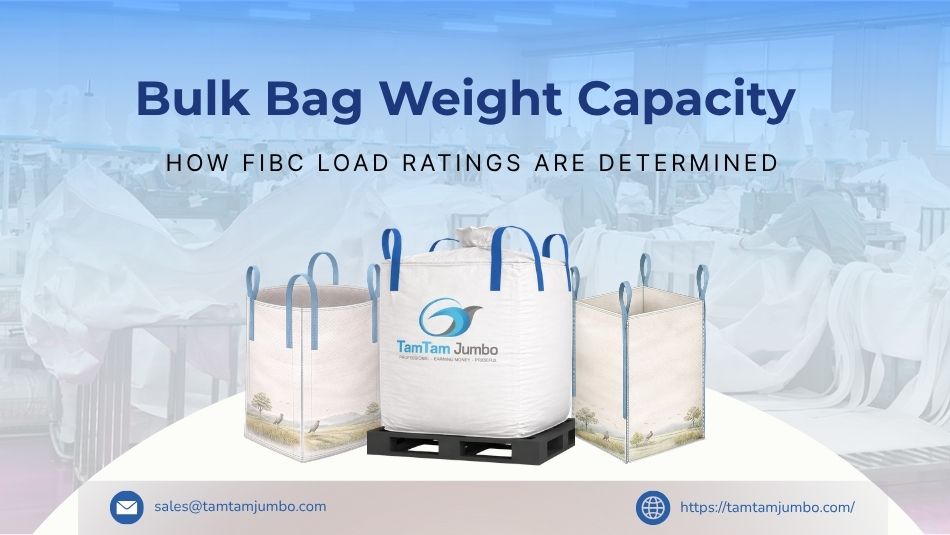
Buyers comparing a baffled bag to a standard circular or U panel FIBC bag sometimes assume the baffles themselves increase how much weight the bag can carry, since baffled bags look more substantial and hold a more solid, cube-like shape once filled. That assumption is not quite accurate. This guide explains what baffles actually change, what genuinely determines a bulk bag’s weight capacity, and how the two considerations interact when specifying a bag.
Does Baffle Construction Increase Weight Capacity?
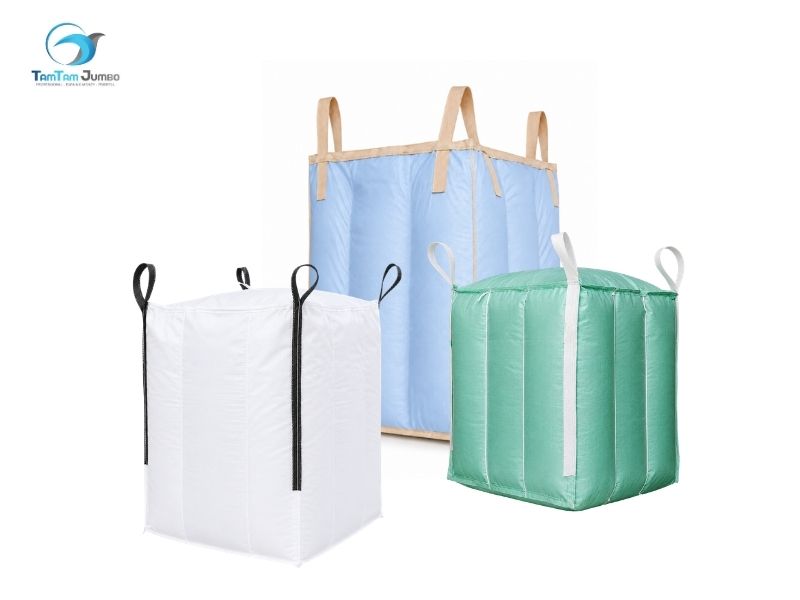
Not directly. Baffles are internal fabric panels sewn into the corners of a circular or U panel bag that restrict outward bulging during filling, producing a more cubic shape. This is primarily a fill-shape and container efficiency feature rather than a load-bearing upgrade. A bag’s safe working load is determined by its fabric GSM, seam construction, base design, and loop rating, tested as a complete assembly, not by the presence of baffles alone.
Read more: FIBC Bag Construction Types: Circular, U and 4 Panel Compared
What Baffles Actually Change
Fill Shape
The primary function of baffles is controlling how the bag expands during filling, keeping the corners from bulging outward the way an unbaffled circular or U panel FIBC bag naturally would. This improves pallet and container space efficiency without the full fabric and labor cost of 4 panel construction.
Fabric and Seam Additions
Baffles do add fabric and stitching to the bag’s internal structure, and in some designs this additional material can contribute modestly to overall structural support. However, this incidental effect is not the same as the bag being engineered and tested for a higher SWL rating, and buyers should not assume a baffled bag automatically carries more weight than a non-baffled bag of the same base fabric and seam specification.
How Baffled Bags Are Tested for Weight Capacity
Baffled bags go through the same SWL testing process as any other construction, including top lift, drop, and stacking tests conducted on the complete assembly at the target fill weight and required safety factor. The baffles are present during testing as part of the full construction, but the resulting SWL rating reflects the complete bag, not an assumed bonus attributed to the baffles specifically.
Read more: FIBC Safe Working Load: What a Big Bag 1000kg Actually Means
Weight Capacity Considerations Beyond Baffle Construction
Fabric GSM
Fabric weight remains the primary driver of tensile strength regardless of whether the bag includes baffles, and a baffled bag built with light fabric will not out-lift a non-baffled bag built with heavier fabric.
Read more: FIBC Bag GSM Guide: How Fabric Weight Determines Strength
Seam and Loop Rating
Seam construction and loop configuration determine how load transfers through the bag during lifting, and these ratings are independent of whether baffles are present, meaning a baffled bag still needs properly specified seams and loops to achieve a given SWL.
Base Construction
Base seam design carries the full weight of the filled bag and needs to be rated appropriately for the target capacity, a requirement that applies equally to baffled and non-baffled constructions.
Baffled vs Non-Baffled Bags at the Same Rated Capacity
Two bags, one baffled and one standard circular or U panel construction, can both be rated for the same SWL if their fabric, seams, and loops are specified to the same standard. The practical difference between them shows up in fill shape and space efficiency, not in how much weight each is certified to carry. Buyers choosing baffled construction are generally optimizing for container and pallet utilization, not seeking a capacity increase.
When Baffles Are Worth Specifying for Your Capacity Needs
- When container loading efficiency matters enough to justify the added fabric and labor cost of baffle construction.
- When warehouse storage benefits from a more predictable, stackable bag shape at the target fill weight.
- When the product density is such that an unbaffled bag would bulge significantly and waste container space at the required SWL.
- When the buyer wants shape control between circular or U panel cost and full 4 panel cost.
Specification Details for Baffle FIBC Bags
- Target SWL and safety factor, specified and tested independently of the baffle feature itself.
- Fabric GSM for both the main body and baffle panels.
- Base and loop construction rated for the target capacity.
- Baffle placement and sizing, confirmed against the product’s expected fill behavior.
How Tam Tam Packaging Builds Baffled Bags to Capacity
Tam Tam Packaging engineers baffled bags to the buyer’s target SWL using the same fabric, seam, and loop specification process applied to any other construction, with baffle placement and sizing addressed as a fill-shape feature rather than a substitute for proper capacity engineering. Test documentation for baffled bags confirms SWL for the complete assembly, consistent with how any other construction type is rated.
Common Misconceptions About Baffles and Capacity
- Assuming baffled bags automatically carry more weight than non-baffled bags of similar size.
- Choosing baffle construction as a substitute for confirming adequate fabric GSM and seam rating for the target capacity.
- Overlooking that baffles primarily address container efficiency, not load-bearing performance.
- Assuming all baffled bags on the market are tested and rated to the same rigor simply because they share the baffle feature.
Applications in Mining
Baffle FIBC bags are common in mining and mineral processing for dense concentrate and processed mineral products, where the combination of high fill weight and container space efficiency matters for export logistics. Buyers in this sector should confirm SWL testing independently of the baffle feature, since dense mineral products place significant demand on fabric and seam strength regardless of whether the bag uses baffled, circular, or panel construction.
Read more: FIBC Bag Sizes Explained: Matching SWL to Common Capacity Ratings
Frequently Asked Questions
Do baffles increase how much weight a bulk bag can carry?
Not directly. Baffles primarily improve fill shape and container space efficiency, while weight capacity is determined by fabric GSM, seam construction, base design, and loop rating, tested as a complete assembly.
Are baffled bags tested differently than non-baffled bags?
No. Baffled bags go through the same SWL testing process, including top lift, drop, and stacking tests, with the baffles present as part of the complete construction being tested.
Can a baffled bag and a non-baffled bag have the same SWL rating?
Yes, if their fabric, seams, and loops are specified to the same standard, the two can share the same rated capacity despite differing in fill shape and container efficiency.
Why would I choose baffled construction if it doesn’t increase capacity?
Baffle FIBC bags improve container and pallet space efficiency compared to unbaffled circular or U panel bags, which can reduce shipping costs and improve warehouse stacking predictability.
What actually determines a bulk bag’s weight capacity?
Fabric GSM, seam and stitch type, base construction, and loop configuration, tested together as a complete assembly against the target fill weight and required safety factor.
Conclusion
Baffle construction and bulk bag weight capacity are related but separate considerations. Baffles improve fill shape and container efficiency, while capacity is determined by fabric, seam, and loop specification tested as a complete assembly. Buyers should specify and verify SWL independently of whether a bag includes baffles, rather than assuming the feature itself provides a capacity benefit.
Tam Tam Packaging Co. engineers baffled bags to your target SWL with fabric, seam, and loop specifications tested as a complete assembly. Contact our team to confirm the right specification for your application.
Contact Us
Tam Tam Packaging Co.
Email: sales@tamtamjumbo.com
Website: https://tamtamjumbo.com/
Read more
FIBC Bags for Flour: Why Allergen Status Change the Specification
Flour shares the fine-particle and combustible dust characteristics of other food powders, but wheat’s status...
Aug
FIBC Bag for Starch Powder: Dustproof Bag Needs Antistatic
Starch powder occupies an unusual position in FIBC specification: it is a common food and...
Aug
FIBC Bags for Animal Feed: What Actually Makes a Clean Bulk Bag
FIBC bags for animal feed mean something more specific than a bag that looks unused....
Aug
FIBC Bag for PET Flakes: Why UV Resistance Matter More Than It
Recycled PET flakes share a base polymer with virgin resin pellets, but the two behave...
Aug
FIBC Bags for Plastic Resin: PP Fabric Packaging PP Pellets
There is a certain irony in shipping polypropylene resin pellets inside a bag woven from...
Aug
FIBC Bags for the Food Industry: Building a Food Grade Bag
Food manufacturers sourcing bulk ingredient packaging are working from a different starting point than a...
Aug