
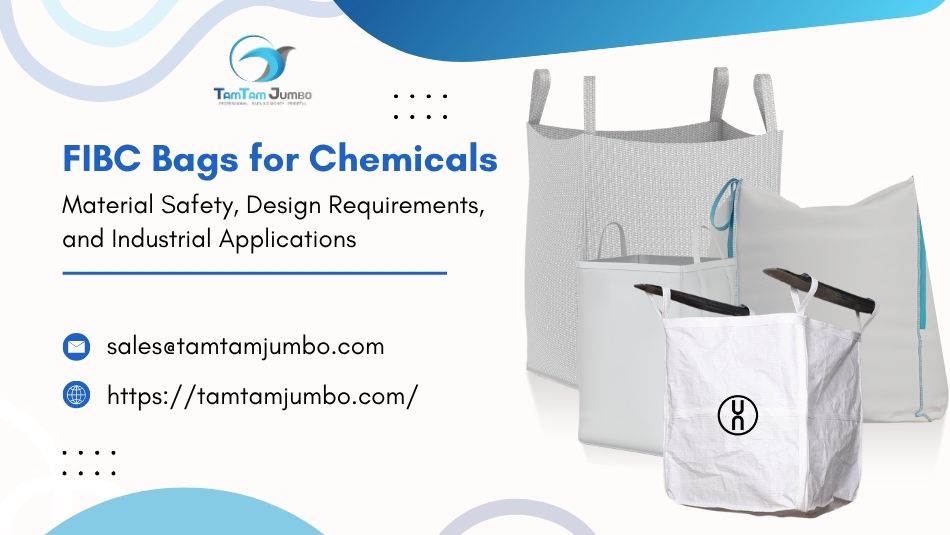
Chemical products place more demands on FIBC packaging than most other bulk commodities, since a single product can simultaneously present a transport hazard classification, a combustible dust risk, and a moisture sensitivity issue, each requiring its own part of the specification. This guide walks through the decision process for building a complete bulk bag specification for a chemical product, step by step, rather than treating chemical FIBC sourcing as a single generic product category.
Why Chemical Products Need a Different Specification Approach
Unlike general commodities such as grain or construction aggregate, chemical products frequently require the specification to address several independent risk factors at once. Getting the sourcing process right means working through each risk factor deliberately rather than defaulting to a standard industrial bag and hoping it covers what the specific product needs.
Read more: FIBC Bag Testing Standards: A Complete Overview of ISO 21898
Step 1: Classify the Product’s Transport Hazard
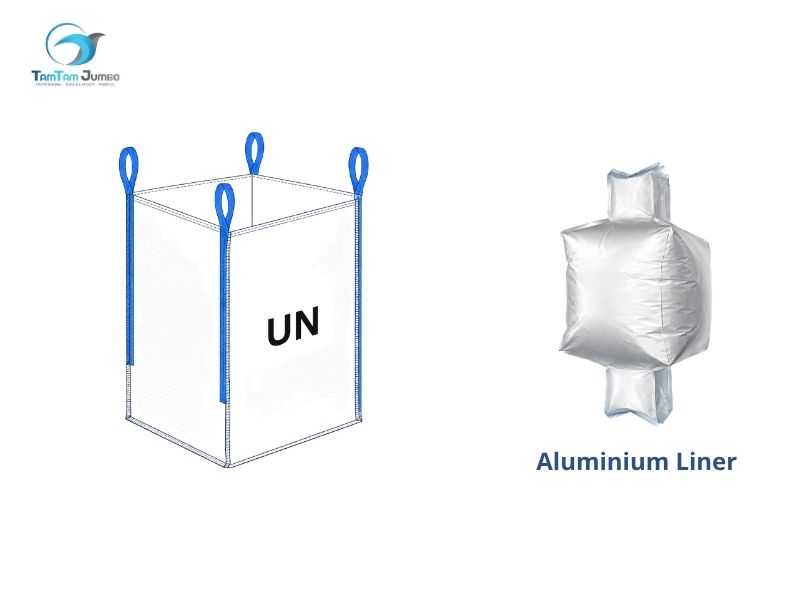
The first question is whether the product is classified as a dangerous good under the UN Model Regulations. If it is, the bag needs to be UN rated to the correct packing group and maximum gross weight, tested and approved as a specific construction rather than assumed compliant based on general bag quality. If the product is not classified as dangerous, standard ISO 21898 mechanical testing is the relevant baseline instead.
Read more: UN Rated FIBC Bags: How They Are Approved for Dangerous Goods Transport
Step 2: Assess Combustible Dust and Static Discharge Risk
Independent of dangerous goods classification, the product should be assessed for combustible dust risk and whether it will be handled in an environment with flammable solvent vapors. Products presenting this risk need anti-static construction, Type B or Type C depending on the specific hazard classification, with Type C requiring a grounded conductive thread grid for genuine protection.
Read more: Anti-Static Bulk Bags: How a Type C Bag Prevents Ignition Risk
Step 3: Evaluate Moisture Sensitivity
Hygroscopic chemical powders that degrade, cake, or clump when exposed to humidity need moisture protection built into the specification, typically through coated fabric, an appropriate liner, and sealed seams working together. The right liner material, PE or PE/AL, depends on how sensitive the product is and how long it will spend in transit or storage.
Read more: Moisture Proof FIBC Bags: What Triple Proofed Construction Actually Combines
Step 4: Determine Fill Weight and Construction Type
Fill weight and safe working load should be established based on the product’s bulk density and the buyer’s handling equipment, not defaulted to a standard 1000kg specification without confirmation. Construction type, circular, U panel, or 4 panel, should reflect how much container and pallet efficiency matters against unit cost for the specific shipping volumes involved.
Read more: FIBC Safe Working Load: What a Big Bag 1000kg Actually Means
Step 5: Confirm Fabric Grade and Contamination Requirements
Fabric GSM should be matched to the product’s density and abrasiveness rather than assumed from a generic weight range, and buyers should confirm whether the application requires virgin polypropylene fabric for contamination control, particularly for specialty or high-purity chemical products where recycled content in the fabric could introduce quality concerns.
Read more: FIBC Bag GSM Guide: How Fabric Weight Determines Strength
Building a Complete Bulk Bag Specification for a Chemical Product
Once each risk factor has been assessed individually, the complete specification brings the results together into a single document covering hazard classification and UN rating if applicable, static protection type if applicable, moisture protection and liner requirements, fill weight and safety factor, construction type, fabric GSM, and seam and loop specification.
Common Chemical FIBC Specification Combinations
Certain combinations recur often enough across chemical applications to serve as useful starting reference points, though every specification should still be confirmed against the actual product.
| Product Example | Typical Specification Combination |
| Combustible pigment or resin powder | Type C anti-static construction, standard ISO 21898 mechanical rating, virgin PP fabric |
| Hygroscopic fertilizer intermediate | PE/AL liner, coated fabric, sealed seams, standard mechanical rating |
| UN-classified industrial salt | UN rated construction matched to packing group, appropriate fabric GSM for fill weight |
| Combustible dangerous goods chemical | UN rated plus Type C anti-static construction combined, tested and documented separately |
How Tam Tam Packaging Specifies Bags for Chemical Buyers
Tam Tam Packaging works through hazard classification, static risk, and moisture sensitivity with chemical buyers before finalizing a specification, rather than applying a single standard chemical bag template. Combined requirements, such as UN-rated construction paired with Type C static protection, are engineered and tested together, with documentation provided for each applicable standard.
Common Mistakes When Sourcing Chemical FIBC Bags
- Assuming a bag rated for one risk factor, such as UN dangerous goods approval, automatically covers other risks like static discharge or moisture.
- Not assessing combustible dust risk separately from dangerous goods classification, since the two are independent considerations.
- Defaulting to standard fabric GSM without confirming it matches the product’s actual density and abrasiveness.
- Overlooking contamination control requirements for high-purity chemical products where recycled fabric content matters.
- Working through specification requirements sequentially rather than confirming all applicable risk factors before finalizing an order.
Applications Across the Chemical Industry
Chemical manufacturers and distributors handle an unusually broad range of product risk profiles within the same general industry category, from inert mineral fillers requiring only standard mechanical testing to combustible, moisture-sensitive dangerous goods requiring three or more certifications combined. Working through each specification step deliberately, rather than assuming a single chemical industry standard bag exists, is what actually protects buyers across this range of products.
Frequently Asked Questions
What is the first thing to check when sourcing FIBC bags for a chemical product?
Whether the product is classified as a dangerous good under the UN Model Regulations, since this determines whether UN rated construction is required as the foundation of the specification.
Do all chemical products need anti-static bags?
No. Anti-static construction is needed specifically when the product presents a combustible dust risk or will be handled where flammable vapors may be present, which should be assessed independently of dangerous goods classification.
Can a single bag be both UN rated and anti-static?
Yes, and this combination is common for combustible dangerous goods, with each requirement engineered and tested as part of the same construction.
How do I know if my chemical product needs moisture protection?
If the product is hygroscopic and degrades, cakes, or clumps when exposed to humidity, moisture protection through coated fabric, an appropriate liner, and sealed seams should be part of the specification.
Should fabric GSM be the same for every chemical product?
No. GSM should be matched to the specific product’s bulk density and abrasiveness rather than applied uniformly across different chemical products.
Conclusion
Sourcing FIBC bags for chemicals works best as a step-by-step process, hazard classification, static risk, moisture sensitivity, fill weight, and fabric grade, rather than a single product selection. Buyers who work through each factor individually end up with a specification that actually matches their product’s real risk profile instead of a generic bag that happens to be marketed toward chemical use.
Tam Tam Packaging Co. builds complete bulk bag specifications for chemical products, addressing hazard classification, static protection, and moisture sensitivity together. Contact our team to work through the right specification for your product.
Contact Us
Tam Tam Packaging Co.
Email: sales@tamtamjumbo.com
Website: https://tamtamjumbo.com/
Read more
FIBC Bags for Construction: A Complete Guide Across Materials
Walk onto almost any construction site or materials yard and the bulk bags you see...
Aug
FIBC Bags for Flour: Why Allergen Status Change the Specification
Flour shares the fine-particle and combustible dust characteristics of other food powders, but wheat’s status...
Aug
FIBC Bag for Starch Powder: Dustproof Bag Needs Antistatic
Starch powder occupies an unusual position in FIBC specification: it is a common food and...
Aug
FIBC Bags for Animal Feed: What Actually Makes a Clean Bulk Bag
FIBC bags for animal feed mean something more specific than a bag that looks unused....
Aug
FIBC Bag for PET Flakes: Why UV Resistance Matter More Than It
Recycled PET flakes share a base polymer with virgin resin pellets, but the two behave...
Aug
FIBC Bags for Plastic Resin: PP Fabric Packaging PP Pellets
There is a certain irony in shipping polypropylene resin pellets inside a bag woven from...
Aug