

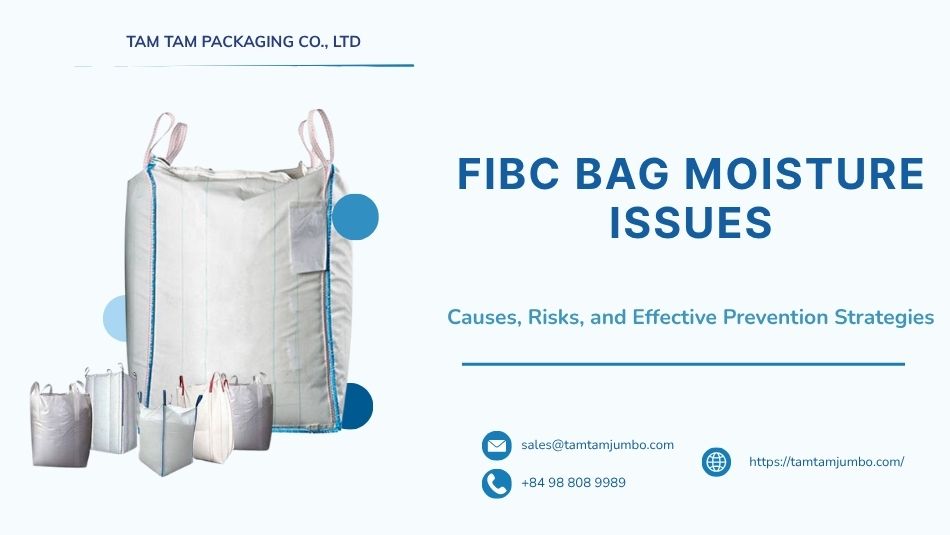
A shipment arrives with caking, clumping, or visible moisture damage despite being packed in a coated bag, and the natural question is why the coating didn’t work. Usually, it did exactly what the coating is supposed to do; the problem lies somewhere else entirely. This guide walks through the five most common root causes behind moisture complaints, so the actual failure point can be identified rather than assuming the coating itself was defective.
Five Possible Root Causes When Moisture Damage Shows Up
Moisture damage in a shipment that was supposedly protected almost always traces back to one of a handful of specific causes, and figuring out which one matters both for resolving the immediate issue and for preventing it on future orders. Working through these possibilities systematically is more productive than assuming the coated fabric simply failed.
Read more: Moisture Proof FIBC Bags: What Triple Proofed Actually Combines
Cause 1: Product Was Already Wet or Above Target Moisture at Fill Time
A bag can perform exactly as specified and still show moisture-related damage if the product itself was filled above its target moisture content in the first place. This is a filling process issue rather than a packaging failure, and it’s worth checking moisture readings at the point of fill before assuming the bag construction is at fault.
Cause 2: Container Condensation From Humidity and Temperature Cycling
Sea containers experience significant temperature swings between day and night and across climate zones during a long voyage, which can cause condensation to form on the container’s interior surfaces and drip onto cargo, independent of whether the bag itself has a coating defect. This is a common cause of moisture damage that shows up as isolated wet spots on bags positioned near the container walls or roof rather than uniform damage across the whole shipment.
Read more: Bulk Bags for Export: What to Ask a Big Bag Supplier in Vietnam
Cause 3: Coating Alone Without Addressing Seam Ingress
A coated bag without heat-sealed or taped seams still has needle holes at every stitch line, which remain a moisture entry point regardless of how well the fabric coating itself performs. If moisture damage appears concentrated near seam lines specifically rather than distributed across the fabric surface generally, seam ingress rather than coating failure is the likely cause.
Read more: Sift Proof FIBC Bags: Building a Truly Leak Proof Jumbo Bag
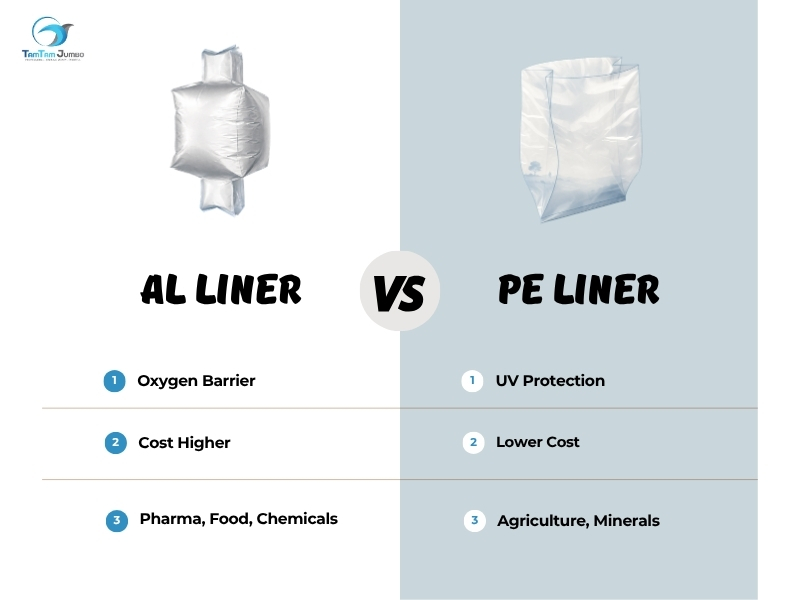
Cause 4: Liner Failure at the Closure Point
Where a liner was specified in addition to coated fabric, the liner’s closure at the top is a common point of failure, since a liner that isn’t properly heat-sealed or tied provides an open path for moisture regardless of how effective the liner film itself is. Damage concentrated near the top of the bag, close to the fill point, often points to closure rather than the liner material.
Cause 5: Coating Degradation From Abrasion or UV Exposure
Coating can wear away from repeated handling abrasion or degrade from extended UV exposure, reducing its effectiveness over the course of a long storage period even though it performed correctly when the bag was new. If bags spent extended time in outdoor storage or went through unusually rough handling before the moisture issue was discovered, coating wear is worth investigating specifically.
Read more: FIBC UV Protection: What Outdoor Bag Storage Actually Requires
Why a Coated Bag Claim Alone Doesn’t Guarantee Moisture Protection
A supplier describing a bag simply as a coated bag isn’t necessarily specifying seam treatment, liner presence, or coating thickness, all of which affect actual moisture performance as much as the coating itself. Buyers should treat coated bag as a starting point in a conversation about full moisture specification, not a complete answer on its own.
A Diagnostic Checklist for Moisture Damage Complaints
- Where on the bag does the damage appear: concentrated near seams, near the top closure, near container walls, or distributed generally?
- What was the product’s moisture content at the point of fill, if that data is available?
- How long did the shipment spend in transit or outdoor storage, and under what climate conditions?
- Does the affected bag’s coating show visible wear or degradation compared to an unused reference sample?
- Was a liner specified, and if so, does its closure show signs of being improperly sealed?
How to Prevent Recurrence Once the Cause Is Identified
Fill-moisture issues call for tightening quality control at the filling stage rather than changing bag specification. Container condensation issues call for adjusting container loading position or considering a liner for particularly sensitive products. Seam ingress calls for upgrading to heat-sealed or taped seam construction. Liner closure failures call for confirming closure method compatibility with the actual filling process. Coating degradation calls for reassessing UV stabilization or handling practices relative to actual storage duration.
How Tam Tam Packaging Helps Diagnose and Prevent Moisture Issues
Tam Tam Packaging works with buyers experiencing moisture complaints to work through this diagnostic process, reviewing damage location and pattern against fill records and transit conditions before recommending a specification change, rather than defaulting to a heavier coating as a blanket fix that may not address the actual cause.
Common Mistakes When Investigating FIBC Bag Moisture Complaints
- Assuming the coating failed without checking whether damage is actually concentrated at seams or the liner closure.
- Not checking product moisture content at the point of fill before concluding the bag was at fault.
- Overlooking container condensation as a cause for damage isolated to bags near container walls or the roof.
- Upgrading coating thickness as a default fix without identifying whether coating degradation was actually the cause.
- Not comparing an affected bag’s coating condition against an unused reference sample to check for wear.
Applications Where Moisture Diagnosis Matters Most
Agricultural exports, particularly grain and fertilizer moving through long sea freight routes, are a common setting for moisture complaints given the combination of hygroscopic product, extended transit time, and variable climate exposure across the voyage. Diagnosing the actual cause matters especially here, since a fill-moisture issue and a seam ingress issue call for entirely different fixes despite producing similar-looking damage on arrival.
Read more: FIBC Bags for Agriculture: Matching Specification to Product Category
Frequently Asked Questions
My bags were coated, so why did I still get moisture damage?
Coating addresses moisture transmission through the fabric surface specifically, but seams, liner closures, container condensation, and product moisture at fill time are all separate potential causes that coating alone doesn’t address.
How can I tell if the damage came from container condensation rather than the bag itself?
Condensation damage typically appears isolated to bags positioned near container walls or the roof, rather than distributed evenly across the whole shipment.
Does damage near the seams mean the fabric coating failed?
Not necessarily. Damage concentrated near seam lines usually points to needle-hole ingress at the stitching rather than a problem with the coating on the fabric surface itself.
Should I always ask for a heavier coating if I’ve had moisture problems?
Not without diagnosing the actual cause first. A heavier coating won’t help if the real issue was seam ingress, liner closure, or product moisture at the point of fill.
What does a coated bag claim actually guarantee?
On its own, not much beyond fabric surface treatment. Seam construction, liner presence, and coating thickness all need to be specified separately for a complete moisture protection picture.
Conclusion
Moisture damage in a coated bag shipment usually traces back to one of five specific causes: fill moisture, container condensation, seam ingress, liner closure failure, or coating degradation, rather than a defect in the coating itself. Diagnosing which one actually occurred is what allows the right fix to be applied instead of defaulting to a heavier coating that may not solve the real problem.
Tam Tam Packaging Co. works with buyers to diagnose the actual cause behind moisture complaints before recommending a specification change. Contact our team if you’re experiencing moisture issues with a recent shipment.
Contact Us
Tam Tam Packaging Co.
Email: sales@tamtamjumbo.com
Website: https://tamtamjumbo.com/
Read more
FIBC Bag Moisture Issues: Why a Coated Bag Still Lets Moisture In
A shipment arrives with caking, clumping, or visible moisture damage despite being packed in a...
Oct

FIBC Bag Inspection Checklist: Verifying a Shipment Against Specs
There’s a difference between checking whether a bag is worn out and checking whether a...
Sep
FIBC Bag Handling Guidelines: What Changes for a FIBC Program
Handling technique affects bag performance just as much as fabric specification does, and it’s the...
Sep
Common FIBC Bag Failures: How a Jumbo Bag Supplier Prevents
Nearly every FIBC bag failure traces back to one of a handful of root causes,...
Sep
How to Stack FIBC Bag Safely: Why Baffle Bag Behaves Differently
Stacking height limits aren’t a matter of judgment call or common sense alone; they come...
Sep
How to Store FIBC Bags: Getting the Most From UV Additive
A bag manufactured with a strong UV additive package can still fail early if it’s...
Sep