

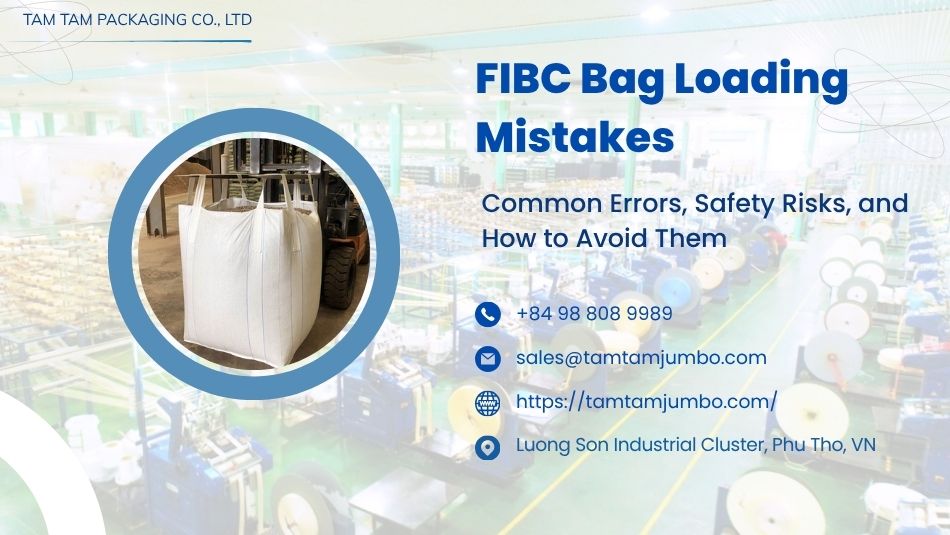
Loading filled bags onto a truck or into a shipping container is a distinct operation from filling the bags in the first place, with its own set of mistakes that have nothing to do with fabric quality or fill technique. This guide covers what commonly goes wrong at the transport loading stage specifically, the point where a perfectly good bag can still end up damaged, shifted, or unsafely positioned before it even leaves the yard.
FIBC Bag Loading Mistakes Happen After Filling, During the Transport Loading Stage
A bag can be filled correctly, within its rated capacity, with proper technique avoiding shock loading, and still run into trouble once it’s being positioned and secured for the actual transport leg. This stage deserves its own attention separate from filling procedure, since the mistakes that happen here are largely about vehicle and container loading practice rather than anything related to the bag’s own construction.
Read more: FIBC Bag Handling Guidelines: What Changes for a FIBC Program
Mistake 1: Uneven Weight Distribution Across the Vehicle or Container
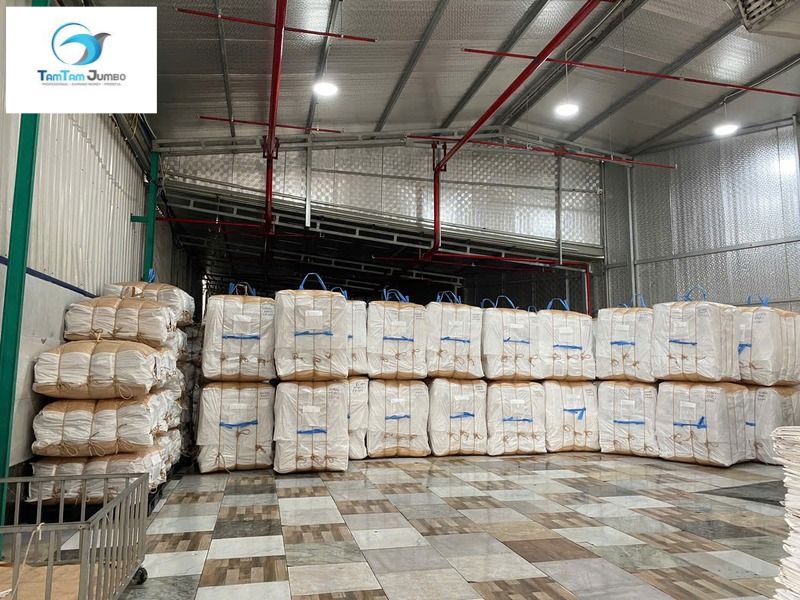
Concentrating too much weight toward the front, back, or one side of a vehicle or container affects handling stability during transport and, in serious cases, creates a genuine road safety issue for truck transport. Loading plans should distribute bag weight as evenly as practical across the available floor space rather than simply filling from one end to the other without considering balance.
Mistake 2: Inadequate Securing Allowing Bags to Shift in Transit
Bags that aren’t adequately blocked, braced, or secured against the vehicle or container structure can shift during transport, particularly under braking, cornering, or rough road conditions, leading to abrasion wear against neighboring bags or the vehicle itself. Gaps left between bags and the container wall are a common contributor, since they give bags room to move before contacting a restraining surface.
Mistake 3: Loading Heavier Bags on Top of Lighter Ones
Loading sequence should generally place heavier bags at the bottom of a stack or load, since lighter bags underneath heavier ones can be crushed or destabilized in a way that wasn’t accounted for in the bags’ stacking test rating, which typically assumes uniform product and consistent stacking order.
Read more: How to Stack FIBC Bags Safely: Why Baffle FIBC Bag Behaves Differently
Mistake 4: Loading Bags With Visible Damage Without Inspection
Bags with visible seam damage, tears, or degraded fabric shouldn’t go straight onto a transport load without at least a basic check, since a compromised bag is far more likely to fail under the vibration and handling stress of transit than it would in stationary storage. A quick visual check during the loading process catches problems before they become a transit failure rather than after.
Read more: Common FIBC Bag Failures: How a Jumbo Bag Supplier Prevents
Mistake 5: Exceeding Vehicle or Container Weight Limits
Total load weight needs to respect the vehicle’s legal weight limit or the container’s rated capacity, not just each individual bag’s own safe working load. It’s possible for every bag in a load to be well within its individual rating while the total shipment still exceeds what the vehicle or container is legally or structurally rated to carry.
Mistake 6: Not Separating Incompatible Products in a Mixed Load
Loading bags containing different products in the same vehicle or container without considering compatibility can create a contamination risk from a bag failure, or in more serious cases a genuine safety issue if incompatible chemical products are involved. Mixed loads need a loading plan that accounts for product compatibility, not just available space.
Mistake 7: Poor Loading Sequence for Multi-Stop Deliveries
Loads with multiple delivery stops should be sequenced so the first stop’s bags are accessible without needing to unload and reload bags meant for later stops, since repeated unnecessary handling increases both labor time and the risk of bag damage from extra movement. Planning loading order around the delivery sequence in advance avoids this.
Building a Loading Checklist for Drivers and Loading Staff
- Confirm weight distribution is reasonably even across the vehicle or container before securing the load.
- Check that bags are adequately blocked or braced against shifting, with minimal gaps to the container or vehicle walls.
- Verify heavier bags are positioned at the bottom of any stacked sections.
- Visually inspect bags for damage before loading, setting aside any showing seam or fabric issues.
- Confirm total load weight against the vehicle or container’s rated limit, not just individual bag SWL.
- Check product compatibility for any mixed loads before finalizing the loading plan.
How Tam Tam Packaging Supports Safe Loading Practices
Tam Tam Packaging can advise on construction type and stacking data relevant to your typical loading pattern, and we’re happy to discuss practical loading considerations as part of the specification conversation, particularly for buyers setting up a new distribution or export loading process.
Read more: Bulk Bags for Export: What to Ask a Big Bag Supplier in Vietnam
Applications Across FIBC Industries Moving Bulk Freight
These loading mistakes show up across FIBC industries handling road freight, container export, and multi-stop regional distribution alike, since the underlying issues, weight distribution, securing, stacking sequence, and load compatibility, are functions of the loading process itself rather than any single product category. Construction material distributors moving cement and aggregate to multiple job sites in a single run are a common setting where multi-stop sequencing mistakes specifically tend to surface.
Read more: FIBC Bags for Construction: A Complete Guide Across Materials
Frequently Asked Questions
What is the difference between filling mistakes and loading mistakes?
Filling mistakes happen when product goes into the bag, such as shock loading during fill, while loading mistakes happen afterward, when filled bags are positioned and secured onto a truck or into a container for transport.
Why does weight distribution across a vehicle matter?
Uneven distribution affects handling stability during transport and can create a genuine road safety issue, in addition to potentially exceeding axle weight limits even when total vehicle weight is within range.
Should I ever load a bag with visible damage?
No. A bag with seam damage, tears, or degraded fabric is more likely to fail under transit vibration and handling stress than it would in stationary storage, and should be set aside for assessment instead.
Can every bag in a load be within its individual weight rating and the load still be unsafe?
Yes. Total load weight needs to respect the vehicle or container’s own weight limit, which is a separate consideration from each individual bag’s safe working load.
How should heavier and lighter bags be arranged in a mixed-weight load?
Heavier bags should generally go at the bottom, since lighter bags underneath heavier ones can be crushed in ways a standard stacking test, which usually assumes uniform product, doesn’t account for.
Conclusion
Transport loading mistakes are a distinct category from filling errors or construction defects, centered on weight distribution, securing, stacking sequence, and load compatibility. A simple loading checklist covering these points catches most of the common problems before a shipment ever leaves the yard.
Tam Tam Packaging Co. can advise on construction type and stacking data to support your loading process. Contact our team to discuss your typical loading pattern and requirements.
Contact Us
Tam Tam Packaging Co.
Email: sales@tamtamjumbo.com
Website: https://tamtamjumbo.com/
Read more

FIBC Bag Loading Mistakes: Trucking Issues
Loading filled bags onto a truck or into a shipping container is a distinct operation...
Oct

FIBC Electrostatic: Why Type C Bags Target One Discharge Type
Not every static discharge carries the same ignition risk, and understanding the difference is what...
Oct
FIBC Bag Moisture Issues: Why a Coated Bag Still Lets Moisture In
A shipment arrives with caking, clumping, or visible moisture damage despite being packed in a...
Oct

FIBC Bag Inspection Checklist: Verifying a Shipment Against Specs
There’s a difference between checking whether a bag is worn out and checking whether a...
Sep
FIBC Bag Handling Guidelines: What Changes for a FIBC Program
Handling technique affects bag performance just as much as fabric specification does, and it’s the...
Sep

Common FIBC Bag Failures: How a Jumbo Bag Supplier Prevents
Nearly every FIBC bag failure traces back to one of a handful of root causes,...
Sep