

Discharging a filled bulk bag isn’t always as simple as opening a spout and letting gravity do the work. Product flow behavior, facility equipment, and how the bag will actually be positioned during unloading all shape which method makes sense, and several of these methods depend directly on the bag’s loop configuration rather than its spout alone. This guide covers the main unloading methods in use and what each one requires from the bag.
Unloading Method Depends on Bottom Construction and Product Flow Behavior
Free-flowing granular products generally unload well through simple gravity discharge, while cohesive powders, fine materials prone to compaction, or products that have settled during transport often need mechanical assistance to flow out reliably. Matching unloading method to actual product behavior, not just bottom construction type, avoids discharge problems that show up only once a bag reaches the unloading station.
Read more: FIBC Bottom Discharge Types: How an Iris Closure Controls Flow
Gravity Discharge Through a Spout
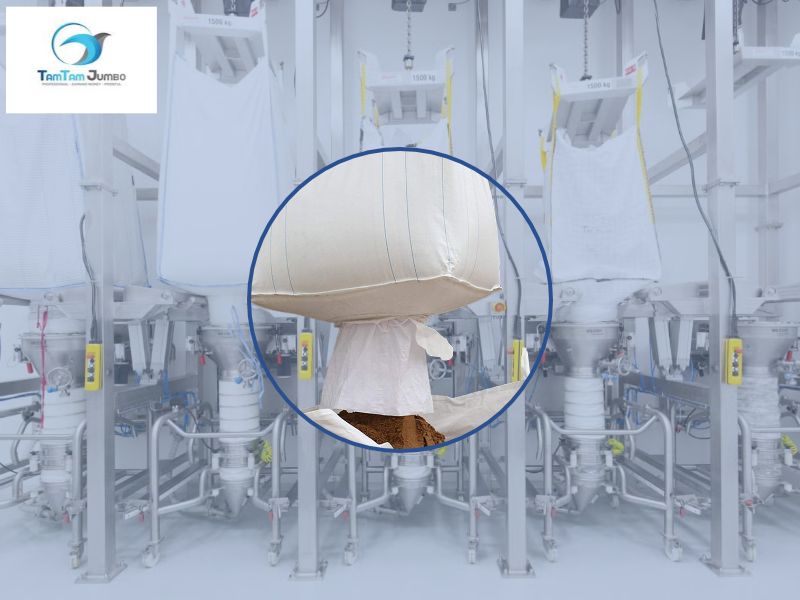
The most straightforward method, opening a spout bottom and allowing product to flow by gravity into a receiving hopper or chute below. This works well for dry, free-flowing materials and requires the least specialized equipment, though it depends on the product actually flowing freely once the spout opens, which isn’t guaranteed for every material.
Tipping and Inverting via a Frame Connected to the Bulk Bag Loops
Some unloading systems use a mechanical frame that lifts the bag by its loops and tips or inverts it to discharge contents through the top opening or a side panel, rather than relying on a bottom spout at all. This approach is common for flat-bottom bags without a dedicated discharge spout, or for facilities that prefer controlled tipping over gravity flow through a narrow spout opening. Loop strength and anchoring become directly relevant to unloading safety in this method, since the loops bear the bag’s full weight throughout the tipping motion, not just during the initial lift.
Read more: Cross Corner FIBC Bags: Comparing and Choosing Loop Types Fit
Cutting Open for Single-Use Flat Bottom Bags
Flat-bottom bags with no discharge spout are sometimes simply cut open and emptied, either by hand or using a bag-slitting device at an automated unloading station. This method is economical for single-trip applications where controlled, repeatable discharge isn’t a priority, but it destroys the bag in the process, ruling it out for any multi-trip use.
Vacuum and Pneumatic Unloading Systems
Vacuum or pneumatic conveying systems draw product out of the bag through a connected tube rather than relying on gravity, which works well for fine powders and allows the discharge point to be positioned somewhat independently of the bag’s spout orientation. This method requires a spout connection compatible with the specific vacuum or conveying equipment, similar in principle to the fit considerations that apply to standard gravity spout connections.
Read more: FIBC Bag Spout Design: Engineering the Right Bulk Bag Spout Size
Addressing Bridging and Rat-Holing in Cohesive Products
Cohesive powders can form a stable arch, or bridge, above the discharge opening that prevents material from flowing even when the spout is fully open, or can develop a narrow central channel, called rat-holing, that discharges only the material directly above the opening while leaving the rest of the bag full. Both problems are product flow behavior issues rather than bag defects, and they typically require either flow aid equipment or a bag body designed to encourage flow toward the discharge point.
Vibration and Flow Aid Equipment
Discharge stations for cohesive or bridging-prone products often incorporate vibration tables, air pads, or mechanical agitation to break up bridges and keep material flowing toward the spout. Buyers experiencing consistent discharge problems with a specific product should evaluate whether the issue is bag-related or whether flow aid equipment at the unloading station would resolve it more effectively than any bag design change could.
Matching Loop Configuration to Your Unloading Method
Gravity spout discharge places relatively little demand on loop design beyond standard lifting requirements, but tipping-frame unloading systems place sustained load on the loops throughout an extended inversion motion, making loop type and anchoring strength a more central consideration. Buyers using or considering a tipping-frame unloading system should confirm loop configuration is rated for this specific handling pattern, not just standard vertical lifting.
Building a Complete Unloading Specification
A complete FIBC unloading specification identifies the actual method in use, gravity spout, tipping frame, vacuum system, or manual cutting, then addresses spout dimensions and closure for spout-based methods, or loop rating and anchoring specifically for tipping-frame methods, along with any flow aid considerations for cohesive products.
How Tam Tam Packaging Supports Unloading Equipment Compatibility
Tam Tam Packaging engineers spout dimensions and loop configuration to match the buyer’s actual unloading method, whether that’s gravity discharge into a hopper, a tipping-frame system, or vacuum conveying, confirming compatibility before a full production order rather than assuming a standard configuration will fit every unloading setup.
Common Unloading Mistakes
- Assuming a standard spout will discharge a cohesive product without checking for bridging or rat-holing risk first.
- Using standard loop configuration for a tipping-frame system without confirming it’s rated for the sustained load an inversion motion applies.
- Not matching vacuum or pneumatic system connection requirements to the bag’s spout dimensions before ordering.
- Treating a discharge problem as a bag defect without first assessing whether flow aid equipment would resolve it.
- Choosing cut-open flat-bottom bags for an application that actually needs repeatable, controlled multi-trip discharge.
Applications Across Bulk Material Unloading
Mining and mineral processing facilities commonly deal with cohesive, fine, or moisture-variable materials prone to bridging, making flow behavior assessment and appropriate unloading method selection particularly relevant in this sector. Facilities running tipping-frame unloading systems for flat-bottom bags in this environment should pay close attention to loop rating given the repeated, sustained-load inversion cycles typical of high-volume processing operations.
Read more: FIBC Bags for Minerals: A Jumbo Bag Specification Guide
Frequently Asked Questions
What is the most common FIBC unloading method?
Gravity discharge through a spout is the most common and simplest method, suited to dry, free-flowing materials, though it isn’t always sufficient for cohesive or bridging-prone products.
Why do bulk bag loops matter for unloading, not just lifting?
In tipping-frame unloading systems, loops bear the bag’s full weight throughout an extended inversion motion, making loop strength and anchoring directly relevant to discharge safety, not just the initial lift.
What is bridging in bulk bag discharge?
A stable arch that cohesive powder can form above the discharge opening, preventing material from flowing out even when the spout is fully open, typically requiring flow aid equipment to resolve.
Can any FIBC bag be used with a vacuum unloading system?
Only if the spout connection is compatible with the specific vacuum or pneumatic conveying equipment, which should be confirmed against actual equipment dimensions before ordering.
Should I cut open bags for unloading?
Only for single-trip applications where controlled, repeatable discharge isn’t a priority, since cutting destroys the bag and rules out any multi-trip reuse.
Conclusion
Unloading method should be chosen based on actual product flow behavior and facility equipment, not assumed to be a simple gravity spout in every case. Tipping-frame systems in particular shift the specification focus toward loop rating and anchoring strength, since loops carry sustained load throughout the discharge process rather than just during a standard lift.
Tam Tam Packaging Co. engineers spout and loop specifications to match your actual unloading method and equipment. Contact our team to confirm the right configuration for your discharge process.
Contact Us
Tam Tam Packaging Co.
Email: sales@tamtamjumbo.com
Website: https://tamtamjumbo.com/
Read more
FIBC Unloading Methods: Matching Loops to Discharge Equipment
Discharging a filled bulk bag isn’t always as simple as opening a spout and letting...
Oct
FIBC Bag Loading Mistakes: Trucking Issues
Loading filled bags onto a truck or into a shipping container is a distinct operation...
Oct

FIBC Electrostatic: Why Type C Bags Target One Discharge Type
Not every static discharge carries the same ignition risk, and understanding the difference is what...
Oct

FIBC Bag Moisture Issues: Why a Coated Bag Still Lets Moisture In
A shipment arrives with caking, clumping, or visible moisture damage despite being packed in a...
Oct

FIBC Bag Inspection Checklist: Verifying a Shipment Against Specs
There’s a difference between checking whether a bag is worn out and checking whether a...
Sep
FIBC Bag Handling Guidelines: What Changes for a FIBC Program
Handling technique affects bag performance just as much as fabric specification does, and it’s the...
Sep