

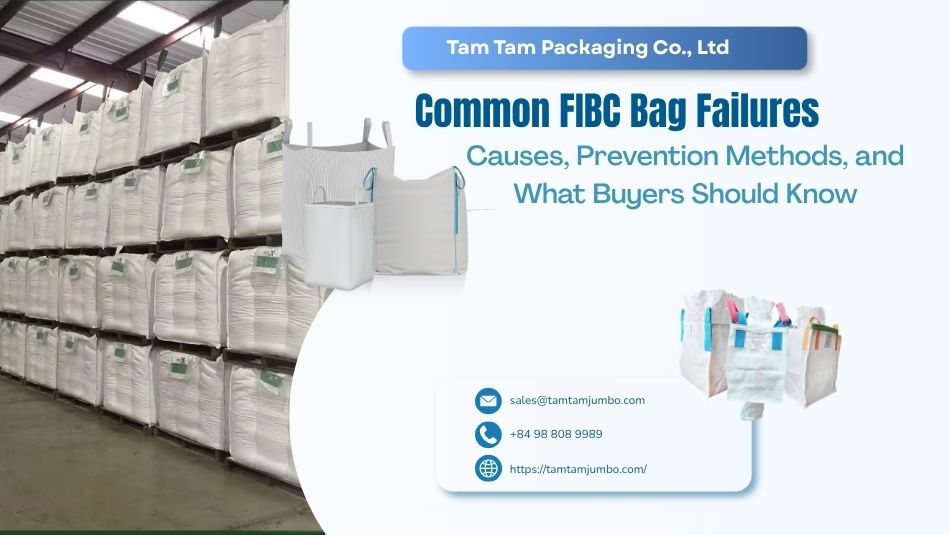
Nearly every FIBC bag failure traces back to one of a handful of root causes, and nearly every one of them is preventable at the specification or sourcing stage. This guide walks through the most common failure modes, what actually causes each one, and what separates a jumbo bag supplier who prevents these problems from one who simply hopes they don’t happen.
Why Most FIBC Bag Failures Trace Back to a Specification or Sourcing Gap
A bag rarely fails for reasons outside what could have been addressed before it was ever manufactured. Underspecified fabric, inadequate seam construction, missing UV stabilization, or a buyer exceeding a rating the bag was never tested for are all failures with an identifiable point where a different decision would have prevented the outcome.
Seam and Stitching Failure
Seams are usually the first point of failure under load, since they concentrate stress at a narrow line rather than distributing it across the full fabric surface. Skipped stitches, incorrect thread tenacity, or a stitch type mismatched to the bag’s fill weight all show up as seam failure, often at the base or loop anchoring points that carry the most load.
Read more: FIBC Bag Stitching Types: How Sewing Machine Choice Affects Seam
Fabric Failure From Inadequate GSM or Poor Weave Quality
Fabric that is underweight for the product’s actual density, or woven with lower-quality tape yarn or excessive recycled content, can fail through tearing or general weakening well before reaching its nominal rated capacity. This failure mode is often invisible until the bag is actually loaded, since underweight fabric doesn’t necessarily look different from properly specified fabric on casual inspection.
UV Degradation Failure
Bags left in outdoor storage beyond their fabric’s UV stabilization allowance lose tensile strength gradually and sometimes invisibly, then fail during a lift or handling event that an undegraded bag would have survived without issue. This failure mode is particularly deceptive since the bag can look structurally fine right up until it isn’t.
Read more: FIBC UV Protection: What Outdoor Bag Storage Actually Requires
Overloading Beyond Rated Safe Working Load
Loading a bag beyond its tested safe working load removes the safety margin the rating was built around, and failure under these conditions isn’t a defect in the bag so much as a predictable consequence of operating outside its tested envelope. This includes both static overloading, simply filling too much product, and dynamic overloading from aggressive lifting that exceeds the static weight momentarily.
Read more: FIBC Safe Working Load: What a Big Bag 1000kg Actually Means
Loop and Lifting Point Failure
Loop failure often stems from a loop configuration mismatched to the actual lifting equipment and load distribution, uneven loading during a lift that concentrates stress on one loop, or anchoring stitching that wasn’t rated for the bag’s fill weight. This is one of the more serious failure modes given loops fail during active lifting rather than passive storage.
Spout and Discharge Closure Leaks
A spout that isn’t sealed correctly, or a closure method mismatched to the product’s particle size, allows product loss and, for hazardous or combustible materials, potential safety issues during discharge. Spout failures are frequently a specification gap rather than a manufacturing defect, since the wrong closure method was chosen for the application from the start.
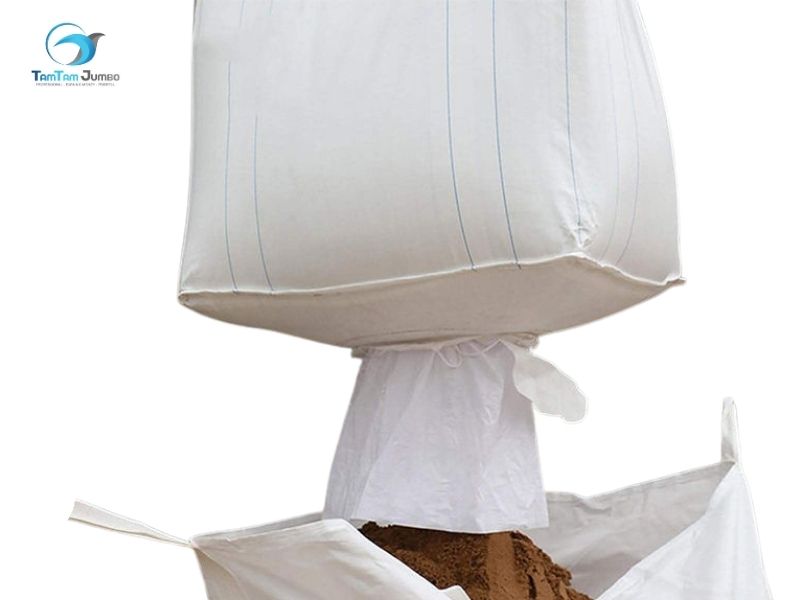
Read more: FIBC Bottom Discharge Types: How an Iris Closure Controls Flow
Sift and Dust Leakage Through Seams or Fabric
Fine product escaping through standard seams or loosely woven fabric is a containment failure rather than a structural one, but it still represents the bag failing to do its job, whether that means product loss, workplace dust exposure, or contamination of the storage environment.
Stacking-Induced Failure
Bags stacked beyond their tested layer limit, stacked on top of an already-damaged bag, or stacked in a construction type prone to leaning and shifting can fail under sustained compressive load even when the individual bags would have performed fine in isolation.
Read more: How to Stack FIBC Bags Safely: Why a Baffle Bag Behaves Differently
What a Reliable Jumbo Bag Supplier Does Differently
A supplier who prevents these failure modes tests complete bag assemblies against the target fill weight and safety factor rather than relying on component specifications in isolation, documents fabric GSM and construction details individually rather than bundling everything into a vague general claim, and provides sample or test reports on request rather than treating documentation as an afterthought. These practices cost more to maintain than cutting corners, which is part of why supplier evaluation matters as much as the technical specification itself.
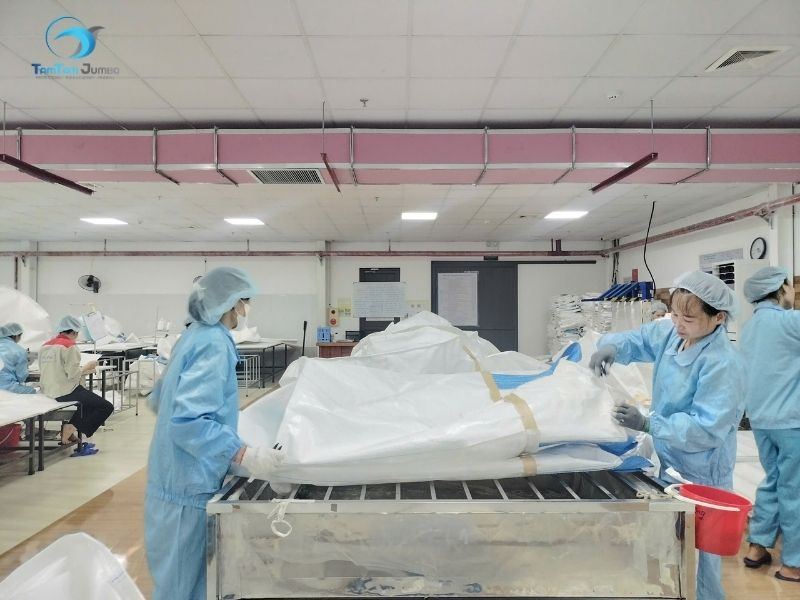
Read more: FIBC Bag Testing Standards: A Complete Overview of ISO 21898
A Buyer’s Checklist for Evaluating Supplier Quality Control
- Does the supplier provide safe working load and stacking test data for the complete bag assembly, not just fabric specifications?
- Can they document stitch type, thread specification, and seam construction for base seams and loop anchoring specifically?
- Do they specify UV stabilization level matched to a stated exposure duration, with supporting test method referenced?
- Are samples available for evaluation before a full production commitment?
- Do they provide batch traceability, allowing a quality issue to be isolated to a specific production run rather than treated as affecting an entire order?
How Tam Tam Packaging Addresses These Failure Modes
Tam Tam Packaging tests complete bag constructions, fabric, seams, loops, and base together, against the target fill weight, safety factor, and stacking requirement for each order, rather than assuming component specifications add up to a safe finished product. Documentation for GSM, stitch type, UV stabilization, and batch traceability is provided individually so buyers can verify exactly what has been tested rather than relying on a general quality claim.
Applications in Construction Site Handling
Construction sites see a disproportionate share of these failure modes in practice, given the rough handling, extended outdoor storage, and repeated forklift and crane use typical of job site conditions. Cement and aggregate bags in particular experience compounding stress from UV exposure, stacking, and multiple handling cycles, making supplier quality control and correct specification especially consequential in this setting.
Read more: FIBC Bags for Construction: A Complete Guide Across Materials
Frequently Asked Questions
What is the most common cause of FIBC bag failure?
Seam and stitching failure is among the most common, since seams concentrate stress at a narrow line and are sensitive to stitch type, thread quality, and construction matched to the bag’s actual fill weight.
Can a bag fail even if it hasn’t been overloaded?
Yes. UV degradation, inadequate fabric specification, stacking on a damaged bag, or spout closure issues can all cause failure at or below the bag’s rated capacity.
How can I tell if a supplier has strong quality control?
Ask for safe working load and stacking test data on the complete bag assembly, specific stitch and seam documentation, UV stabilization test references, and batch traceability, not just a general quality claim.
Is UV degradation failure preventable?
Yes, by matching UV stabilization level to realistic outdoor storage duration and tracking how long bags have actually been in outdoor storage rather than treating all stock as equally fresh.
Why does loop failure happen during lifting specifically?
Because loops carry the full dynamic load during an active lift, which can momentarily exceed the static fill weight, making loop configuration and anchoring strength particularly important compared to passive storage stress.
Conclusion
The common failure modes covered here, seams, fabric, UV degradation, overloading, loops, spouts, sift leakage, and stacking, nearly all trace back to a specification decision or a supplier’s quality control practice rather than random chance. Choosing a jumbo bag supplier who tests complete assemblies and documents each element individually is what actually prevents most of these problems before they happen.
Tam Tam Packaging Co. tests complete bag constructions against your target fill weight, safety factor, and stacking requirement, with documentation for every element. Contact our team to discuss how we can help you avoid these common failure points.
Contact Us
Tam Tam Packaging Co.
Email: sales@tamtamjumbo.com
Website: https://tamtamjumbo.com/
Read more
Common FIBC Bag Failures: How a Jumbo Bag Supplier Prevents
Nearly every FIBC bag failure traces back to one of a handful of root causes,...
Sep
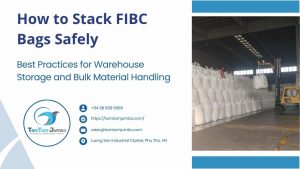
How to Stack FIBC Bag Safely: Why Baffle Bag Behaves Differently
Stacking height limits aren’t a matter of judgment call or common sense alone; they come...
Sep
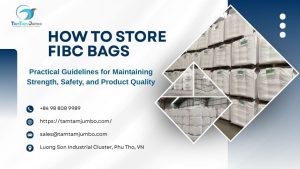
How to Store FIBC Bags: Getting the Most From UV Additive
A bag manufactured with a strong UV additive package can still fail early if it’s...
Sep
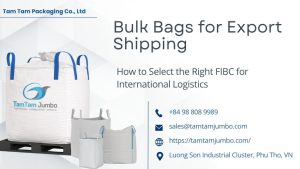
Bulk Bags for Export: What to Ask a Big Bag Supplier in Vietnam
A bag that performs perfectly in short domestic truck transport can still fail on a...
Sep
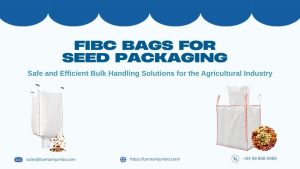
FIBC Bags for Seed Packaging: Choosing Right Liner for Viability
Seed packaging has a goal most other bulk commodities don’t share: keeping the product alive....
Sep

FIBC Bags for Sugar Packaging: What to Look for in Bag Suppliers
Sugar is deceptively demanding to package well in bulk. It is highly hygroscopic, fine enough...
Sep