
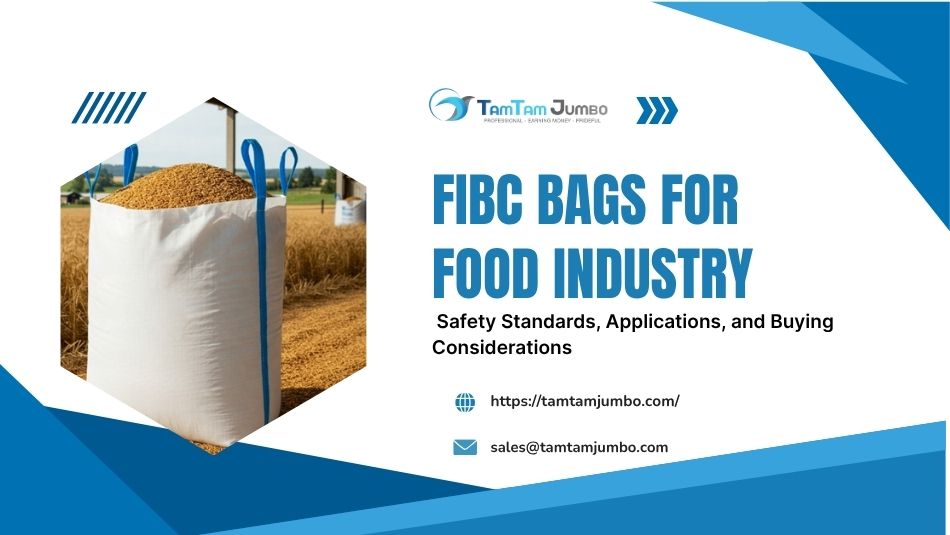
Food manufacturers sourcing bulk ingredient packaging are working from a different starting point than a farm or export grain operation. The priority shifts from harvest-stage concerns like respiration and field moisture toward facility-level hygiene systems, allergen cross-contact prevention, and contamination control through manufacturing, storage, and processing line integration. This guide covers what food grade bulk bags actually need to address for dry ingredient supply into food processing operations.
How Food Industry FIBC Needs Differ From General Agricultural Packaging
Agricultural FIBC sourcing often centers on the farm-to-mill stage, where respiration, field moisture, and harvest logistics drive specification choices. Food industry sourcing, by contrast, typically involves already-processed dry ingredients moving into manufacturing facilities, where the priorities shift toward hygiene documentation, contamination prevention, and integration with food processing line equipment.
Read more: FIBC Bags for Agriculture: Matching Specification to Product Category
Dry Food Ingredients: Sugar, Flour, Starch, and Rice
Sugar, flour, starch, rice, and similar dry ingredients are among the most common food industry FIBC applications, typically requiring standard capacity bags in the 500kg to 1000kg range with fabric and seam construction suited to fine, sometimes sift-prone particle sizes. These ingredients generally do not need ventilation the way fresh produce does, since they are shelf-stable dry goods rather than actively respiring material.
Read more: Sift Proof FIBC Bags: Building a Truly Leak Proof Jumbo Bag
BRC Certification and Facility-Level Food Safety
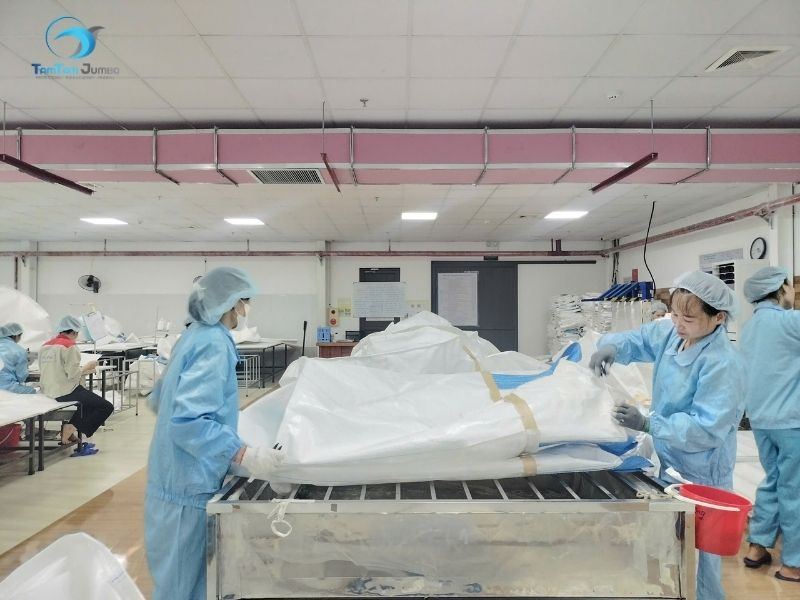
Food grade status for these applications depends on the manufacturing facility holding current BRC certification, covering hygiene practices, pest control, and contamination prevention systems audited independently rather than tested into an individual bag design. Buyers should verify the certificate scope explicitly covers flexible packaging production and confirm the certified site matches where their bags are actually manufactured.
Read more: Food Grade FIBC Bags: What a BRC Certificate Actually Confirms
Allergen Control and Cross-Contact Prevention
Facilities producing bags for multiple ingredient types need documented procedures preventing allergen cross-contact between production runs, particularly relevant for buyers whose ingredients will be used in allergen-sensitive food products. This includes segregation of production lines or thorough cleaning protocols between different ingredient-designated runs, which should be confirmed as part of a facility’s food safety documentation rather than assumed from general BRC certification alone.
Virgin Fabric and Contamination Control
Food grade bulk bags typically use virgin polypropylene fabric rather than recycled content, since recycled material can introduce contaminants not suitable for food contact applications. Stitching thread should similarly be food-safe, and buyers sourcing for direct or indirect food contact applications should confirm this material sourcing explicitly rather than assuming standard industrial fabric is automatically acceptable.
Moisture Protection for Hygroscopic Food Ingredients
Ingredients like sugar, starch, and certain flour types are hygroscopic enough to clump or degrade with humidity exposure, making moisture protection through coated fabric or a food-safe liner a common addition alongside food grade sourcing. The right liner material depends on the ingredient’s specific moisture sensitivity and expected storage duration before use.
Read more: Moisture Proof FIBC Bags: What Triple Proofed Actually Combines
Spout Compatibility With Food Processing Equipment
Food manufacturing facilities frequently run automated or semi-automated filling and discharge lines, making spout diameter and closure method compatibility with existing equipment a functional requirement rather than a minor detail. A poorly matched spout can slow throughput and increase product exposure to the surrounding environment, both of which carry food safety implications beyond simple production efficiency.
Read more: FIBC Top Filling Options: Choosing the Right Top Spout Size
Building a Complete Food Industry FIBC Specification
Bringing these elements together, a complete food industry specification typically addresses current BRC certification with confirmed scope, virgin fabric and food-safe thread, allergen cross-contact procedures where relevant, moisture protection matched to ingredient sensitivity, and spout dimensions matched to processing line equipment.
Common Food Industry FIBC Specification Combinations
| Ingredient Example | Typical Specification Combination |
| Refined sugar | BRC certified facility, virgin PP fabric, moisture proof liner, standard 1000kg capacity |
| Wheat flour | BRC certified facility, sift proof seams, spout matched to automated filling line |
| Starch or specialty powder ingredient | Allergen segregation documentation, moisture proof construction, virgin fabric |
| Rice or grain-based ingredient | BRC certified facility, standard capacity, moisture protection for extended storage |
How Tam Tam Packaging Specifies Bags for the Food Industry
Tam Tam Packaging manufactures food grade bulk bags under documented hygiene controls with current BRC certification, using virgin polypropylene fabric and food-safe liner options confirmed against each ingredient’s moisture sensitivity. Spout dimensions are engineered to match the buyer’s actual processing line equipment, and specification sheets document each food safety element individually.
Common Mistakes When Sourcing Food Industry FIBC Bags
- Accepting a general food grade claim without requesting the current BRC certificate and confirming its scope.
- Assuming standard industrial fabric is acceptable for food contact without confirming virgin material sourcing.
- Overlooking allergen cross-contact procedures for facilities producing bags across multiple ingredient types.
- Ordering generic spout dimensions without confirming compatibility with existing processing line equipment.
- Not addressing moisture protection for hygroscopic ingredients despite otherwise meeting food grade requirements.
Applications Across the Food Industry
Food industry FIBC use spans ingredient suppliers, food manufacturers, and bakeries and processors sourcing dry bulk ingredients for production, each layering food safety, contamination control, and equipment compatibility requirements on top of standard mechanical specifications. Buyers across this range benefit from treating food grade status, allergen control, and moisture protection as separate, individually confirmed requirements rather than assuming one certification covers the full picture.
Frequently Asked Questions
What makes an FIBC bag suitable for the food industry?
Manufacturing under BRC-certified hygiene controls, using virgin polypropylene fabric and food-safe thread, with moisture protection and spout compatibility matched to the specific ingredient and processing equipment.
Is BRC certification enough to guarantee a food grade bag?
BRC certifies the manufacturing facility’s hygiene and food safety systems, but buyers should still confirm fabric sourcing, allergen procedures, and moisture protection separately for their specific ingredient.
Do food industry bags need to be different from agricultural food grade bulk bags?
The core food safety requirements overlap, but food industry sourcing typically emphasizes facility hygiene, allergen control, and processing line compatibility more than agricultural concerns like field moisture and harvest logistics.
Why does allergen cross-contact matter for FIBC bags?
Facilities producing bags for multiple ingredient types need documented procedures preventing cross-contact between production runs, which matters directly for buyers whose ingredients go into allergen-sensitive food products.
Should food industry bags use recycled fabric?
Generally no. Virgin polypropylene fabric is standard for food grade applications, since recycled content can introduce contaminants not suitable for food contact.
Conclusion
FIBC bags for the food industry depend on facility-level BRC certification, virgin fabric sourcing, allergen control procedures, moisture protection, and processing line spout compatibility working together, not any single certification standing in for the whole picture. Buyers who confirm each of these elements individually get a specification that genuinely fits food manufacturing requirements.
Tam Tam Packaging Co. manufactures food grade bulk bags under documented BRC-certified hygiene controls, with virgin fabric and spout compatibility matched to your processing line. Contact our team to confirm the right specification for your ingredient.
Contact Us
Tam Tam Packaging Co.
Email: sales@tamtamjumbo.com
Website: https://tamtamjumbo.com/
Read more
FIBC Bags for Construction: A Complete Guide Across Materials
Walk onto almost any construction site or materials yard and the bulk bags you see...
Aug
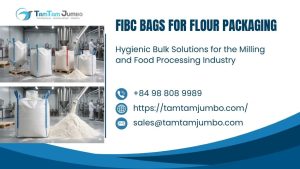
FIBC Bags for Flour: Why Allergen Status Change the Specification
Flour shares the fine-particle and combustible dust characteristics of other food powders, but wheat’s status...
Aug
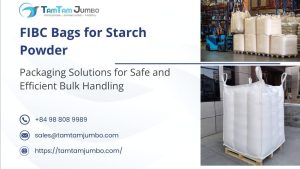
FIBC Bag for Starch Powder: Dustproof Bag Needs Antistatic
Starch powder occupies an unusual position in FIBC specification: it is a common food and...
Aug
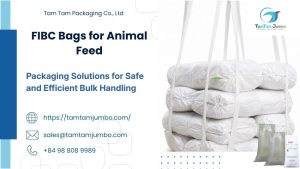
FIBC Bags for Animal Feed: What Actually Makes a Clean Bulk Bag
FIBC bags for animal feed mean something more specific than a bag that looks unused....
Aug
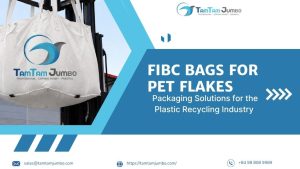
FIBC Bag for PET Flakes: Why UV Resistance Matter More Than It
Recycled PET flakes share a base polymer with virgin resin pellets, but the two behave...
Aug
FIBC Bags for Plastic Resin: PP Fabric Packaging PP Pellets
There is a certain irony in shipping polypropylene resin pellets inside a bag woven from...
Aug