

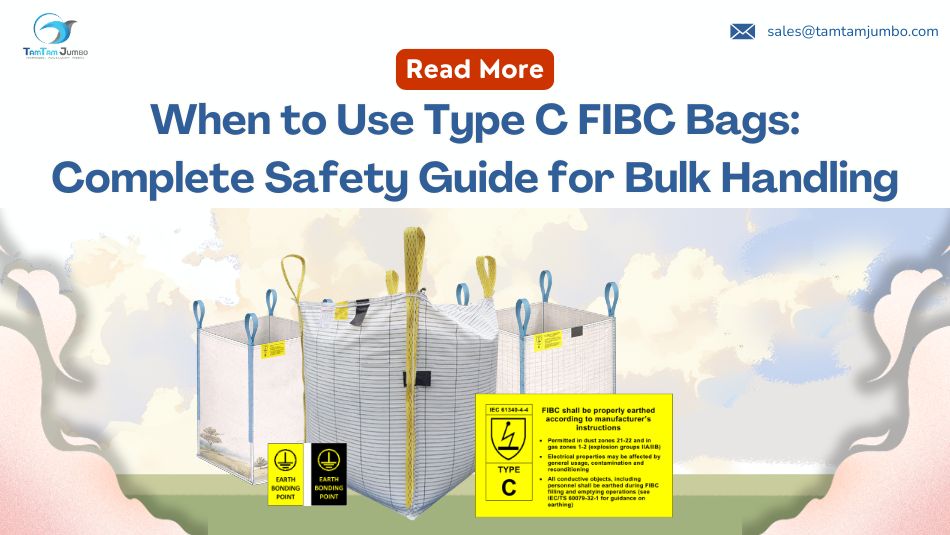
Choosing the wrong bulk bag in hazardous environments is not just a technical mistake—it is a serious safety risk.
Many buyers ask: “When to use Type C FIBC bag?” but often underestimate the conditions that require them.
In real industrial operations, incorrect selection can lead to:
- Electrostatic discharge (ESD) ignition
- Fire or explosion risks
- Compliance violations in regulated markets
At Tam Tam Packaging Co., we have seen that understanding when to use Type C FIBC bag is just as important as understanding how they work.
This guide provides a clear, practical framework to help B2B buyers identify the right scenarios for using conductive bulk bags.
What Are Type C FIBC Bags?
Type C FIBC bags, also known as conductive bulk bags, are designed with interconnected conductive threads that allow static electricity to be safely discharged through grounding.
👉 Simple Definition:
Type C FIBC bags are bulk containers that prevent dangerous electrostatic discharge by safely grounding accumulated static electricity.
Why Knowing When to Use Type C FIBC Bag Is Critical
Static electricity is generated during:
- Filling
- Discharging
- Transport
In certain environments, this can ignite:
- Flammable dust
- Gas or vapor mixtures
⚠️ Risk:
A single spark can trigger:
- Explosion
- Fire
- Severe operational damage
✔ Solution:
Type C FIBC bags provide:
- Controlled discharge path
- Reliable grounding system
- High-level electrostatic safety
👉 However, they must be used only when necessary and correctly.
When to Use Type C FIBC Bags
1. When Handling Flammable Powders
Use Type C bags when materials:
- Generate static
- Can ignite under electrostatic discharge
Examples:
- Chemical powders
- Organic dusts
- Fine industrial materials
✔ Why:
Powders create high static buildup during flow and friction.
2. When Flammable Gases or Vapors Are Present
This is one of the most critical conditions.
Typical environments:
- Chemical plants
- Solvent processing facilities
- Petrochemical operations
✔ Requirement:
Only Type C (or Type D) bags are safe in these environments.
👉 Important:
Type A and Type B bags are NOT suitable in gas/vapor environments.
3. In ATEX or Hazardous Classified Zones
Use Type C when operating in:
- Zone 1 or Zone 2 areas
- Environments requiring explosion protection
✔ Compliance:
- ATEX regulations
- Industrial safety standards
👉 These environments require strict electrostatic control.
4. When Using High-Speed Filling or Discharge Systems
High-speed operations increase:
- Friction
- Static generation
✔ Use Type C when:
- Pneumatic filling systems
- Rapid discharge processes
👉 Static levels can exceed safe limits quickly.
5. When Handling High-Value or Sensitive Materials
Even if the risk is moderate, Type C is recommended for:
- Expensive materials
- Critical supply chains
👉 Preventing loss and ensuring safety becomes a priority.
When NOT to Use Type C FIBC Bags
Type C is not always the best option.
❌ Do NOT use if:
- Grounding cannot be guaranteed
- Operators are not trained
- The infrastructure lacks a proper earthing system
👉 Critical insight:
A Type C bag without grounding can become more dangerous than a standard bag.
Type C vs Other FIBC Types (Quick Comparison)
| Type | Static Control | Grounding | Suitable for Gas Environment |
| Type A | ❌ None | ❌ No | ❌ No |
| Type B | ⚠️ Limited | ❌ No | ❌ No |
| Type C | ✅ Full | ✅ Yes | ✔ Yes |
| Type D | ✅ Advanced | ❌ No | ✔ Yes |
👉 Key takeaway:
Type C is the only grounded solution for full electrostatic protection.
From Field Manufacturing Experience
At Tam Tam Packaging Co., we frequently observe:
❗ Common mistakes:
- Using Type C without grounding
- Choosing Type C “just to be safe” without system readiness
- Ignoring maintenance of grounding connections
👉 Expert insight:
Type C FIBC bags are a system solution, not just a product.
Their safety depends on the entire operational setup.
How to Decide If You Need Type C FIBC Bags
Use this simple decision framework:
✔ Step 1: Check material
- Flammable → Type C required
- Non-flammable → consider Type A/B
✔ Step 2: Check environment
- Gas/vapor present → Type C mandatory
- Dust only → Type B may be sufficient
✔ Step 3: Check operations
- High-speed handling → Type C recommended
✔ Step 4: Check compliance
- ATEX / EU regulations → Type C often required
Quick Summary
- Use Type C FIBC bags when:
- Handling flammable powders
- Working with gases or vapors
- Operating in hazardous zones
- High static generation environments
- Require grounding to function safely
- Provide full electrostatic protection
- Not suitable without a proper grounding system
FAQ – When to Use Type C FIBC Bags
1. When should I use Type C FIBC bags?
When handling flammable powders or operating in environments with flammable gases or vapors.
2. Do Type C bags always require grounding?
Yes. Grounding is essential for safe operation.
3. Can Type C bags be used without grounding?
No. This is unsafe and can increase risk.
4. What industries require Type C bags?
Chemical, petrochemical, pharmaceutical, and hazardous material industries.
5. Is Type C always better than Type B?
Not always. It depends on risk level and operational conditions.
Conclusion
Understanding when to use Type C FIBC bags is essential for ensuring safety, compliance, and operational efficiency.
Type C bags are critical when:
- Electrostatic risk is high
- Flammable environments are present
- Regulations require strict control
However, they must be used correctly—with proper grounding—to deliver their full safety benefits.
Contact Us
Looking for a reliable FIBC bags manufacturer?
Tam Tam Packaging Co. provides high-quality, customizable Type C FIBC bags tailored to your industry requirements.
- 📧 Email: sales@tamtamjumbo.com
- 🌐 Website: https://tamtamjumbo.com/
👉 Contact us today for expert consultation and quotation.
Read more

FIBC Bags for Flour: Why Allergen Status Change the Specification
Flour shares the fine-particle and combustible dust characteristics of other food powders, but wheat’s status...
Aug
FIBC Bag for Starch Powder: Dustproof Bag Needs Antistatic
Starch powder occupies an unusual position in FIBC specification: it is a common food and...
Aug
FIBC Bags for Animal Feed: What Actually Makes a Clean Bulk Bag
FIBC bags for animal feed mean something more specific than a bag that looks unused....
Aug
FIBC Bag for PET Flakes: Why UV Resistance Matter More Than It
Recycled PET flakes share a base polymer with virgin resin pellets, but the two behave...
Aug
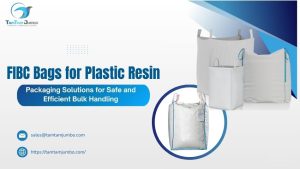
FIBC Bags for Plastic Resin: PP Fabric Packaging PP Pellets
There is a certain irony in shipping polypropylene resin pellets inside a bag woven from...
Aug
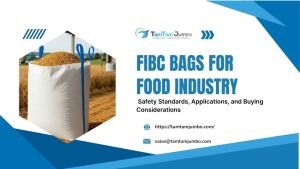
FIBC Bags for the Food Industry: Building a Food Grade Bag
Food manufacturers sourcing bulk ingredient packaging are working from a different starting point than a...
Aug