

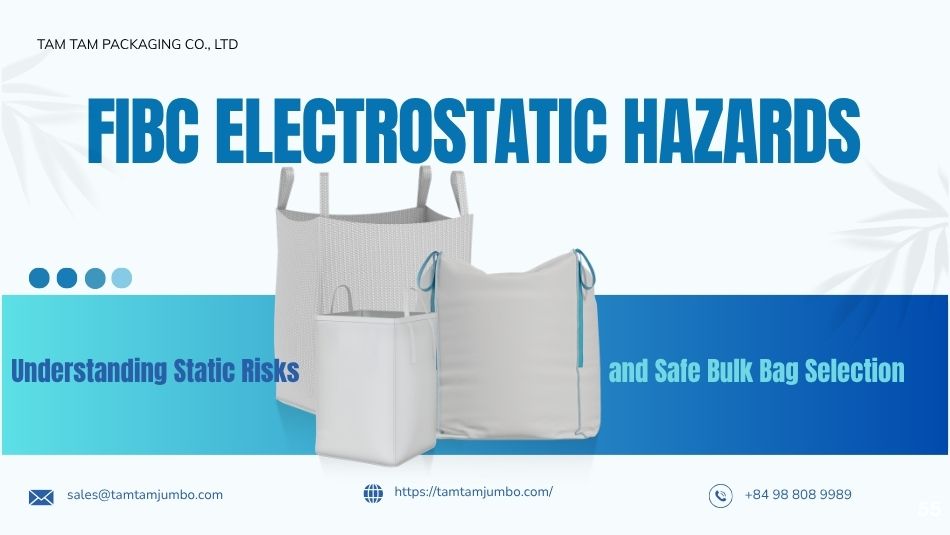
Not every static discharge carries the same ignition risk, and understanding the difference is what actually explains why Type C construction exists as a distinct category rather than just a stronger version of Type B. This guide goes into the mechanics behind electrostatic hazards in FIBC handling, the different discharge types and their relative danger, and how hazardous area zone classification determines what protection level a facility actually needs.
How Triboelectric Charging Actually Generates Static in Powder Handling
Static charge builds up through triboelectric charging, the transfer of electrons between two materials in contact as they separate, which happens continuously as powder or pellets flow against each other and against bag fabric during filling, pneumatic conveying, and discharge. The rate of charge generation increases with flow velocity, meaning high-speed filling and pneumatic transfer systems generate meaningfully more static than slow, gentle handling of the same material.
Read more: FIBC Bags for Plastic Resin: PP Fabric Packaging PP Pellets
The Four Discharge Types and Their Relative Ignition Energy
Accumulated static charge releases through one of several distinct discharge mechanisms, and these differ substantially in how much energy they carry and, correspondingly, what they’re capable of igniting.
| Discharge Type | Relative Energy | Practical Relevance |
| Corona discharge | Very low | Generally insufficient to ignite most dust or vapor atmospheres |
| Spark discharge | Can be significant | From an isolated conductor, capable of igniting many flammable atmospheres |
| Brush discharge | Low to moderate | Can ignite some flammable gas or vapor atmospheres but typically not dust |
| Propagating brush discharge | High | Capable of igniting dust clouds, the specific hazard Type C construction addresses |
Why Propagating Brush Discharge Is the Hazard Type C Bags Specifically Address
Propagating brush discharge occurs specifically with thin, highly insulating materials that have a high breakdown voltage, conditions that ungrounded or poorly designed FIBC bags can create. This discharge type carries enough energy to ignite combustible dust clouds, which is why standard bags handling fine flammable powders present a genuine risk that lower-energy discharge types don’t. Type C construction eliminates this specific risk by providing a grounded conductive path that prevents the high-voltage buildup propagating brush discharge requires in the first place.
Read more: Anti-Static Bulk Bags: How a Type C Bag Prevents Ignition Risk
ATEX Hazardous Area Zones and What They Require
Facilities handling combustible dust are classified into hazardous area zones based on how frequently and for how long an explosive dust atmosphere is likely to be present, with Zone 20 representing continuous or frequent presence, Zone 21 representing occasional presence during normal operation, and Zone 22 representing presence only under abnormal conditions. This zone classification, established through a facility’s own hazard assessment, is what actually determines whether Type C, Type B, or standard construction is appropriate, rather than the FIBC bag choice driving the classification.
Matching Bag Type to Your Facility’s Zone Classification
- Zone 20 areas generally require the most rigorous static control, making properly grounded Type C construction a standard expectation.
- Zone 21 areas commonly also call for Type C protection, particularly where dust clouds form during routine filling and discharge operations.
- Zone 22 areas may be adequately served by Type B construction depending on the specific dust’s minimum ignition energy, though this should be confirmed against the facility’s formal hazard assessment rather than assumed.
- Areas outside any classified zone, handling genuinely non-combustible material, may not require static protection at all.
Read more: Dust Proof Bulk Bags: Controlling Exposure Standard Sift Proofing
Common Electrostatic Hazard Misconceptions
- Assuming any anti-static label means the same level of protection, when Type B and Type C address genuinely different discharge mechanisms.
- Believing an ungrounded Type C bag still provides meaningful protection, when its conductive grid with no ground connection can actually behave like an isolated conductor.
- Assuming zone classification is the packaging supplier’s responsibility to determine, when it’s fundamentally a facility-level hazard assessment the buyer needs to establish first.
- Treating corona discharge risk the same as propagating brush discharge risk, when their ignition capability differs substantially.
Building a Complete Electrostatic Risk Assessment
A complete assessment starts with the facility’s own hazardous area zone classification, then confirms the specific product’s minimum ignition energy and whether flammable vapors might be present alongside dust, before determining whether Type B, Type C, or standard construction is appropriate. This assessment should exist independent of, and prior to, any specific bag order, since it’s a facility safety requirement rather than a packaging specification detail.
Read more: FIBC Bags for Chemicals: Building the Right Bulk Bag Specification
How Tam Tam Packaging Supports Electrostatic Hazard Compliance
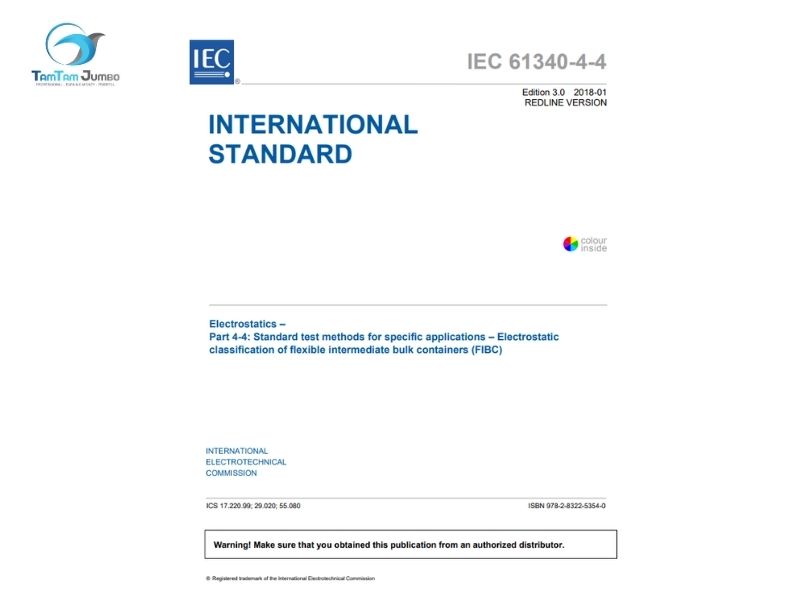
Tam Tam Packaging manufactures Type B and Type C FIBC bags tested to IEC 61340-4-4, with grounding tag placement and conductive grid design confirmed against the buyer’s stated hazard classification. We work with buyers to understand which zone and discharge risk applies to their specific handling process before finalizing a construction recommendation.
Frequently Asked Questions
What is triboelectric charging?
The transfer of electrons between two materials in contact as they separate, which is how static charge builds up continuously as powder or pellets move against bag fabric during filling and handling.
Why does propagating brush discharge matter more than other discharge types for dust hazards?
It carries enough energy to ignite combustible dust clouds, unlike lower-energy discharge types such as corona discharge, making it the specific hazard Type C construction is designed to prevent.
What are ATEX hazardous area zones?
A classification system based on how frequently an explosive dust or gas atmosphere is likely to be present at a location, which determines what level of static protection and other safety measures are required.
Who determines whether a facility needs Type C bags?
The facility itself, through its own hazardous area zone classification and hazard assessment, which the FIBC specification should then be matched to rather than driving the assessment.
Does an ungrounded Type C bag still offer some protection?
Not reliably. An ungrounded conductive grid can behave like an isolated conductor capable of accumulating and later discharging its own static charge, which can be as risky as using a standard bag.
Conclusion
Electrostatic hazard in FIBC handling comes down to which discharge type a given situation can produce and how much ignition energy that discharge carries, with propagating brush discharge being the specific high-energy risk Type C construction addresses. Matching bag type to an actual facility hazard zone classification, rather than defaulting to a generic anti-static label, is what makes the protection meaningful.
Tam Tam Packaging Co. manufactures Type B and Type C FIBC bags matched to your facility’s hazardous area zone classification. Contact our team to work through the right electrostatic protection for your application.
Contact Us
Tam Tam Packaging Co.
Email: sales@tamtamjumbo.com
Website: https://tamtamjumbo.com/
Read more
FIBC Electrostatic: Why Type C Bags Target One Discharge Type
Not every static discharge carries the same ignition risk, and understanding the difference is what...
Oct
FIBC Bag Moisture Issues: Why a Coated Bag Still Lets Moisture In
A shipment arrives with caking, clumping, or visible moisture damage despite being packed in a...
Oct

FIBC Bag Inspection Checklist: Verifying a Shipment Against Specs
There’s a difference between checking whether a bag is worn out and checking whether a...
Sep
FIBC Bag Handling Guidelines: What Changes for a FIBC Program
Handling technique affects bag performance just as much as fabric specification does, and it’s the...
Sep
Common FIBC Bag Failures: How a Jumbo Bag Supplier Prevents
Nearly every FIBC bag failure traces back to one of a handful of root causes,...
Sep
How to Stack FIBC Bag Safely: Why Baffle Bag Behaves Differently
Stacking height limits aren’t a matter of judgment call or common sense alone; they come...
Sep