
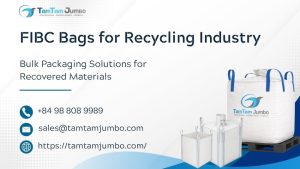
Recycling operations move an unusually wide range of material through FIBC packaging, plastic flakes, metal shavings, sorted mixed recyclables, and textile waste, each with genuinely different handling characteristics. This guide covers what actually matters across the main recycling material streams, and addresses a question specific to this industry: whether the bag itself should be made from recycled content.
Why Recycling Streams Need Different FIBC Approaches Than Virgin Materials
Recovered materials tend to be less uniform than virgin commodities, varying in moisture content, particle shape, and contamination level even within the same general material category. Recycling facilities also commonly store material outdoors for extended periods awaiting sufficient volume for processing or shipment, adding UV exposure as a near-universal consideration across recycling material streams.
Plastic Flakes and Regrind: Abrasion and UV for Long Storage
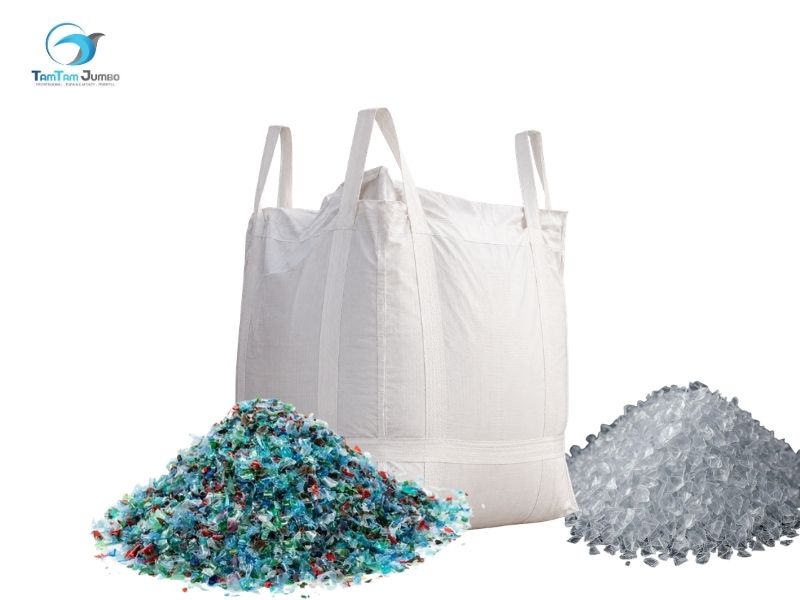
Ground or flaked plastic material, whether PET, HDPE, or mixed polymer regrind, shares sharp irregular edges and extended outdoor storage duration as common concerns, making abrasion-resistant fabric and UV stabilization central to the specification.
Read more: FIBC Bags for PET Flakes: Why UV Resistance Matters More Than It
Metal Scrap and Shavings: Puncture Resistance and Sharp Edge Considerations
Metal shavings, turnings, and small scrap pieces present a different and more severe fabric challenge than plastic flakes, since metal edges can puncture standard woven fabric rather than simply causing surface abrasion over time. Bags intended for metal scrap generally need heavier fabric GSM and, in some cases, reinforced or double-layer construction at points of expected contact, along with realistic expectations about single-trip use given the puncture risk involved.
Read more: FIBC Bag GSM Guide: How Fabric Weight Determines Strength
Mixed Recyclables and Sorted Material Streams
Sorted mixed recyclables, separated plastics, paper fiber, or mixed containers moving from a materials recovery facility toward end processors, tend to vary the most in density and particle size within a single bag load, since sorting accuracy is never perfect. Standard fabric and seam construction usually suffices, but buyers should confirm safe working load accounts for the heaviest realistic density the stream could reach, not just its average.
Textile and Fiber Recycling: Bulk Handling Considerations
Recycled textile and fiber material is typically light and bulky relative to its weight, meaning bags for this stream are often sized by volume rather than approaching standard weight capacity limits, and construction type selection should account for this low-density fill behavior rather than assuming standard dense-material proportions apply.
Read more: FIBC Bag Construction Types: Circular, U and 4 Panel Compared
Should the Bag Itself Be Made From Recycled Content?
Recycled bulk bags, meaning FIBC bags manufactured using recycled polypropylene fabric rather than virgin material, are a genuine option for many recycling industry applications, particularly where the packaged material is not food contact or high-purity and where the sustainability positioning of using recycled packaging for recycled material has direct marketing value. The trade-off is that recycled PP fabric can show more variability in tensile strength and consistency than virgin fabric, so buyers should confirm safe working load testing was actually performed on the specific recycled fabric blend being used rather than assumed equivalent to a virgin fabric rating.
Read more: FIBC Safe Working Load: What a Big Bag 1000kg Actually Means
Building a Complete Recycling Industry FIBC Specification
Once the specific material stream is identified, plastic flakes, metal scrap, mixed recyclables, or textile fiber, a complete specification typically addresses fabric abrasion or puncture resistance appropriate to the material, UV stabilization for expected outdoor storage duration, safe working load confirmed for realistic density, and a decision on virgin versus recycled bag fabric based on the application’s purity and sustainability priorities.
Common Recycling Industry FIBC Specification Combinations
| Material Stream | Typical Specification Combination |
| PET or mixed plastic flakes | Abrasion-resistant fabric, high UV stabilization, standard 1000kg capacity |
| Metal shavings and scrap | Heavy GSM or reinforced fabric, single-trip use, puncture-conscious construction |
| Sorted mixed recyclables | Standard fabric and seams, SWL confirmed for peak realistic density |
| Textile and fiber waste | Volume-oriented construction, standard fabric, moderate UV stabilization |
How Tam Tam Packaging Specifies Bags for Recycling Operations
Tam Tam Packaging works through the specific recovered material stream- plastic flakes, metal scrap, mixed recyclables, or fiber, before finalizing fabric abrasion or puncture resistance, UV stabilization, and safe working load, and offers recycled-content fabric options with confirmed SWL testing for buyers prioritizing packaging sustainability alongside their recovered material handling.
Common Mistakes When Sourcing Recycling Industry FIBC Bags
- Using standard fabric for metal scrap without accounting for puncture risk from sharp edges.
- Underestimating UV exposure duration for material stockpiled outdoors awaiting processing volume.
- Assuming recycled fabric bags automatically match virgin fabric SWL ratings without confirming actual test data.
- Sizing mixed recyclable bags for average density rather than the heaviest realistic density the stream could reach.
- Treating all recycling material streams as needing the same specification regardless of their genuinely different physical characteristics.
Applications Across the Recycling and Materials Recovery Industry
Recycling FIBC applications span materials recovery facilities sorting mixed streams, plastics reprocessors handling flakes and regrind, metal recyclers processing scrap, and textile recovery operations, each contributing to a circular materials economy where packaging choices, including whether to use recycled bulk bags themselves, increasingly factor into a facility’s own sustainability positioning.
Frequently Asked Questions
What are recycled bulk bags?
FIBC bags manufactured using recycled polypropylene fabric rather than virgin material, offered as a sustainability-focused packaging option for applications where fabric purity requirements allow it.
Do recycled bulk bags perform the same as virgin fabric bags?
Recycled PP fabric can show more variability in tensile strength, so buyers should confirm SWL testing was performed on the specific recycled fabric blend rather than assuming equivalence to virgin fabric ratings.
Why do metal scrap bags need different fabric than plastic flake bags?
Metal edges can puncture fabric rather than just causing surface abrasion, requiring heavier or reinforced fabric and often single-trip use expectations.
Why does UV resistance matter so much across recycling material streams?
Recycling facilities commonly store material outdoors for extended periods awaiting sufficient volume for processing or shipment, exposing bags to significant cumulative UV exposure.
How should mixed recyclable bags be sized for weight capacity?
Safe working load should account for the heaviest realistic density the sorted stream could reach, not just its average, since sorting accuracy varies.
Conclusion
FIBC bags for the recycling industry need to be matched to the specific recovered material stream, plastic flakes, metal scrap, mixed recyclables, or textile fiber, each with genuinely different fabric and handling requirements. Recycled bulk bags are a legitimate option worth considering across many of these applications, provided SWL testing on the actual recycled fabric blend backs up the rating.
Tam Tam Packaging Co. builds FIBC specifications across recycling material streams, including recycled-content fabric options with confirmed SWL testing. Contact our team to work through the right specification for your operation.
Contact Us
Tam Tam Packaging Co.
Email: sales@tamtamjumbo.com
Website: https://tamtamjumbo.com/
Read more

FIBC Bags for Sugar Packaging: What to Look for in Bag Suppliers
Sugar is deceptively demanding to package well in bulk. It is highly hygroscopic, fine enough...
Sep
FIBC Bags for Carbon Black: When a BRC Certificate Applies
Carbon black is overwhelmingly an industrial material, used as a reinforcing filler in tire and...
Sep
FIBC Bags for Pharmaceutical Powders: What Sets a Pharma Bag
Pharmaceutical powder handling sits at the far end of the specification spectrum from general industrial...
Sep
FIBC Bags for Hazardous Material: How to Classify Bags Required
A UN certificate confirms a bag’s packing group and maximum weight, but it doesn’t tell...
Sep
FIBC Bags for Recycling Industry: Bulk Bag Across Material Stream
Recycling operations move an unusually wide range of material through FIBC packaging, plastic flakes, metal...
Sep
FIBC Bags for Construction: A Complete Guide Across Materials
Walk onto almost any construction site or materials yard and the bulk bags you see...
Aug