

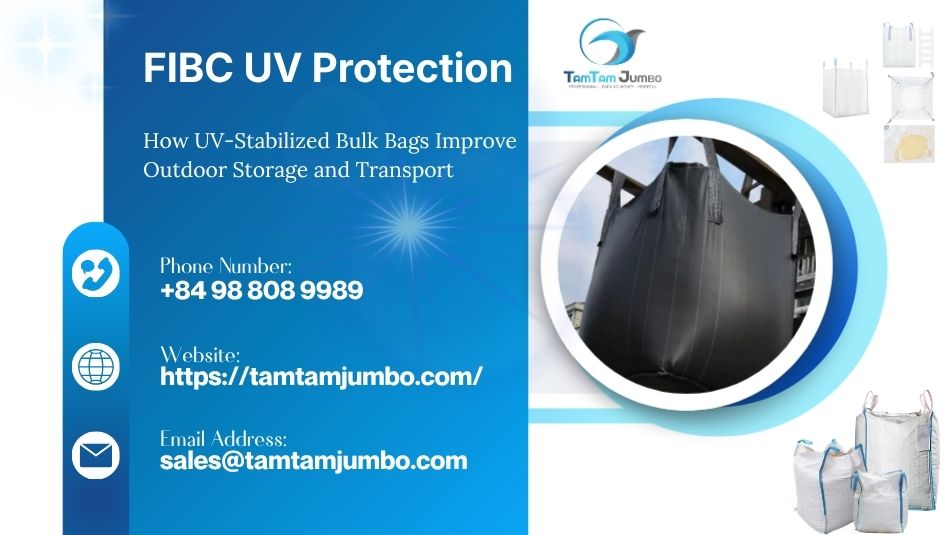
A bag that passed every strength test on the day it was manufactured can still fail months later if it has spent that time sitting in direct sunlight without adequate UV protection. Polypropylene degrades under ultraviolet exposure in a way that is not always visible until the fabric has already lost meaningful strength, which makes UV stabilization and outdoor storage practice a genuine safety consideration, not just a durability preference. This guide covers how UV exposure actually damages FIBC fabric, what stabilization adds, and how to store bags outdoors without compromising their rated capacity.
How UV Exposure Degrades Polypropylene Fabric
Ultraviolet radiation breaks down the molecular structure of polypropylene over time, a process called photodegradation, which reduces tensile strength and makes the fabric increasingly brittle. This damage accumulates gradually and is not always visible on the surface until the fabric has already lost a significant portion of its original strength, which is what makes UV exposure a hidden risk compared to more visible forms of damage like tearing or staining.
Read more: FIBC Bag GSM Guide: How Fabric Weight Determines Strength
What UV Stabilization Actually Adds to FIBC Fabric
UV Additives in the Resin
UV stabilizers are chemical additives blended into the polypropylene resin before the fabric is extruded and woven, working by absorbing or neutralizing ultraviolet radiation before it can break down the polymer chains. This is fundamentally different from a surface coating, since the protection is integrated throughout the material rather than applied as an external layer that could wear off.
How Much Protection Is Enough
UV stabilization is typically specified as a percentage of additive by weight or referenced against a target outdoor exposure duration the fabric is expected to withstand while maintaining its rated strength. Higher stabilization levels generally cost more, so the right amount depends on realistic expected outdoor exposure time rather than defaulting to the maximum available level for every application.
How Long Can FIBC Bags Sit Outdoors
The following ranges are general industry reference points, since actual performance depends on the specific stabilizer formulation, geographic UV intensity, and fabric weight.
| Stabilization Level | Approximate Safe Outdoor Exposure | Typical Use Case |
| None (standard fabric) | Not recommended for sustained outdoor exposure | Indoor storage or brief outdoor handling only |
| Basic UV stabilization | Approximately 3 to 6 months | Short-term outdoor staging before use |
| Standard UV stabilization | Approximately 6 to 12 months | Common outdoor storage across most industrial applications |
| High UV stabilization | 12 months or more | Extended outdoor storage in high UV intensity regions |
Buyers with a specific outdoor storage duration in mind should communicate that target to the manufacturer directly, since matching stabilization level to actual expected exposure avoids both under-protection and unnecessary added cost.
Visible and Invisible Signs of UV Degradation
Visible signs of UV damage include fading, chalking or a powdery surface residue, and visible brittleness where the fabric cracks rather than flexes. The more concerning issue is that meaningful strength loss can begin before these visible signs appear, meaning a bag that still looks acceptable may already have reduced load-bearing capacity if it has exceeded its stabilization’s effective exposure period.
UV Protection vs Weatherproofing: Different Requirements
UV stabilization addresses fabric strength degradation from sunlight specifically, which is a different requirement from moisture protection against rain or humidity. A bag can be UV stabilized without being moisture resistant, and vice versa, so buyers storing bags outdoors long-term should evaluate both requirements separately rather than assuming one addresses the other.
Read more: Ventilated Bulk Bags: When a Breathable Bag Matters for Agriculture
Best Practices for Outdoor Bag Storage
Covering and Shading
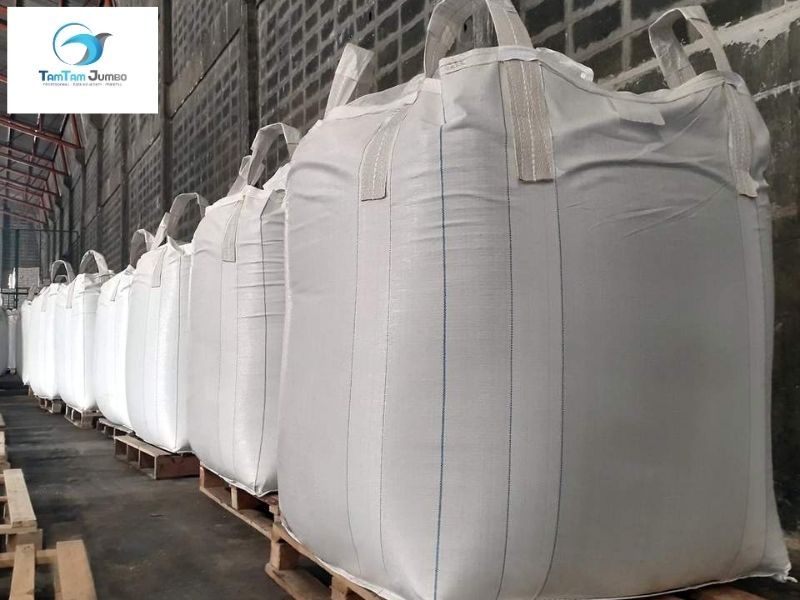
Tarping or covering stored bags, even those with UV-stabilized fabric, extends effective service life by reducing direct exposure and is a practical low-cost supplement to fabric stabilization rather than a substitute for it.
Stacking and Ground Contact
Bags stored directly on the ground are exposed to moisture wicking and additional wear beyond UV exposure alone. Pallets or raised platforms reduce this compounding effect and should be standard practice for any outdoor storage arrangement, regardless of UV stabilization level.
Rotation and Inventory Management
First-in, first-out inventory rotation limits how long any individual bag sits in outdoor storage, reducing the risk of bags exceeding their effective UV exposure window before use. Facilities storing bags outdoors for extended or unpredictable periods benefit from tracking approximate storage start dates against the fabric’s rated exposure duration.
Specification Details for UV-Stabilized Fabric
- Target outdoor exposure duration, communicated based on realistic storage and use timelines.
- UV stabilizer type and concentration, confirmed against the target exposure duration.
- Geographic UV intensity at the storage location, since equatorial and high-altitude regions experience more intense UV exposure than temperate climates.
- Whether moisture protection is also required alongside UV stabilization.
How Tam Tam Packaging Adds UV Protection to Bags
Tam Tam Packaging formulates UV stabilization into fabric resin based on the buyer’s expected outdoor storage duration and destination climate, rather than applying a single default stabilization level across all orders. Specification sheets document the stabilization level provided, so buyers can plan inventory rotation and storage practices around the fabric’s actual rated exposure window.
Common Mistakes in Outdoor Bag Storage
- Ordering standard, non-stabilized fabric for bags that will spend extended periods outdoors before use.
- Assuming UV stabilization also provides moisture protection without confirming this separately.
- Storing bags directly on the ground without pallets, compounding UV exposure with moisture and abrasion damage.
- Not tracking how long individual bags have been in outdoor storage relative to their fabric’s rated exposure duration.
- Underestimating UV intensity in tropical or high-altitude storage locations when specifying stabilization level.
Applications in Environmental and Waste Management
Environmental and waste handling operations frequently store filled bags outdoors at treatment or disposal sites for extended periods before processing, making UV stabilization a standard requirement rather than an optional upgrade. Bags containing contaminated soil or sludge byproducts destined for eventual treatment often sit in open storage yards for months, and fabric strength loss from UV exposure during that period directly affects whether the bag can still be safely handled and transported when it is finally moved.
Read more: FIBC Safe Working Load: What a Big Bag 1000kg Actually Means
Frequently Asked Questions
How does UV exposure weaken FIBC fabric?
Ultraviolet radiation breaks down the polypropylene’s molecular structure through photodegradation, reducing tensile strength and increasing brittleness over time, often before visible damage appears.
What is the difference between UV stabilization and a surface coating?
UV stabilizers are additives blended into the resin before the fabric is made, providing protection throughout the material, while a coating is an external layer applied afterward and addresses different requirements such as moisture or dust resistance.
How long can a UV-stabilized bag stay outdoors?
It depends on the stabilization level, ranging from roughly three to six months for basic stabilization up to twelve months or more for high stabilization, though actual performance varies by climate and fabric weight.
Does UV stabilization also protect against rain and moisture?
No. UV stabilization addresses sunlight-related fabric degradation specifically, and moisture protection should be specified separately if bags will also face rain or humidity exposure during outdoor storage.
How can I tell if a bag has UV damage?
Visible signs include fading, a chalky surface residue, and brittleness, but meaningful strength loss can occur before these signs are visible, so tracking outdoor storage duration is more reliable than visual inspection alone.
Conclusion
UV protection determines how long an FIBC bag can sit outdoors before its actual load-bearing strength drops below its rated capacity, and that degradation is not always visible until it has already happened. Matching stabilization level to realistic storage duration, combined with basic outdoor storage practices like covering and pallet use, keeps bags performing at their tested rating throughout their working life.
Tam Tam Packaging Co. formulates UV stabilization to match your expected outdoor storage duration and climate. Contact our team to confirm the right protection level for your application.
Contact Us
Tam Tam Packaging Co.
Email: sales@tamtamjumbo.com
Website: https://tamtamjumbo.com/
Read more

FIBC Bags for Flour: Why Allergen Status Change the Specification
Flour shares the fine-particle and combustible dust characteristics of other food powders, but wheat’s status...
Aug
FIBC Bag for Starch Powder: Dustproof Bag Needs Antistatic
Starch powder occupies an unusual position in FIBC specification: it is a common food and...
Aug
FIBC Bags for Animal Feed: What Actually Makes a Clean Bulk Bag
FIBC bags for animal feed mean something more specific than a bag that looks unused....
Aug
FIBC Bag for PET Flakes: Why UV Resistance Matter More Than It
Recycled PET flakes share a base polymer with virgin resin pellets, but the two behave...
Aug
FIBC Bags for Plastic Resin: PP Fabric Packaging PP Pellets
There is a certain irony in shipping polypropylene resin pellets inside a bag woven from...
Aug
FIBC Bags for the Food Industry: Building a Food Grade Bag
Food manufacturers sourcing bulk ingredient packaging are working from a different starting point than a...
Aug