

Fabric weight gets most of the attention when buyers evaluate FIBC bag strength, but the seams are usually where a bag actually fails under load. Stitch type, thread specification, and the sewing machine used to produce the seam all affect how much force a joint can carry before it gives way. This guide walks through the main bulk bag stitching type, the sewing machines behind them, and where stitching quality matters most across the construction of the bag.
Why Stitching Type Matters as Much as Fabric Weight
A fabric bag can be rated well above the required safe working load and still fail prematurely if the seams joining that fabric are not engineered to match. Seams concentrate stress at a narrow line rather than distributing it across the full fabric surface, which is why stitch type, stitch density, and thread strength need their own specification rather than being assumed to scale automatically with fabric GSM.
Read more: FIBC Bag GSM Guide: How Fabric Weight Determines Strength
Common Stitch Type Used in Bulk Bag Manufacturing
Single Needle Lock Stitch
A single needle lock stitch interlocks a top and bottom thread at each stitch point, producing a secure seam suitable for lighter fill weights and less demanding applications. It is straightforward to produce but offers less redundancy than multi-needle alternatives, since a single point of thread failure can compromise a longer section of the seam.
Double Needle Lock Stitch
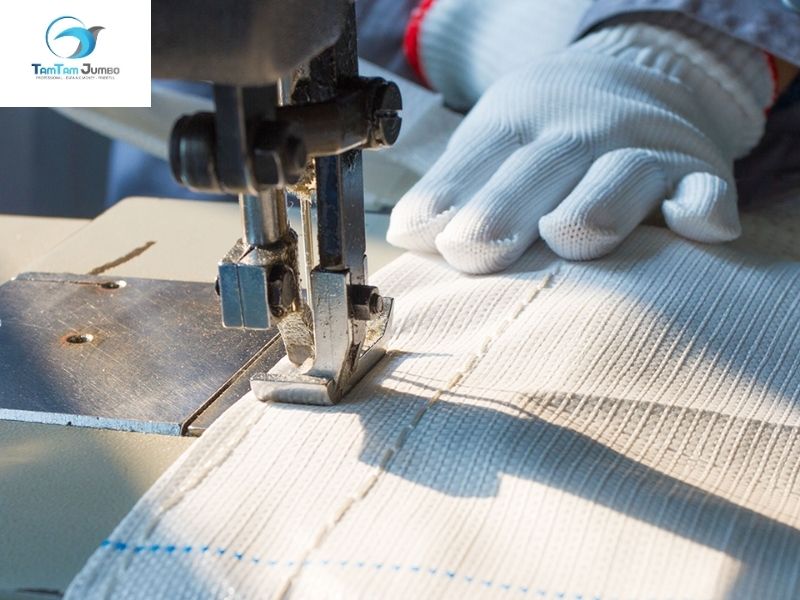
A double needle machine sews two parallel lines of lock stitching in a single pass, roughly doubling the load-bearing thread at the seam and providing redundancy if one stitch line is damaged. This is a common choice for standard industrial bulk bags where moderate to heavy fill weights are involved.
Chain Stitch
Chain stitching loops thread through itself rather than interlocking a top and bottom thread, which allows for faster production speeds and some seam elasticity, useful where a small amount of flex is beneficial. It can unravel from one end if not properly secured, which is a consideration for seams under sustained tension.
Safety Stitch (Chain Stitch Over Lock Stitch)
A safety stitch combines an overlock stitch, which encases the raw fabric edge, with a chain stitch running parallel to it, providing both edge protection and strong seam holding power in a single pass. This combination is common for base seams and other high-stress joints where both strength and fraying resistance matter.
Sewing Machines Used in FIBC Production
Single Needle Machines
Single needle lock stitch machines are used for lighter seams, hem finishing, and applications where a single strong stitch line is sufficient for the fill weight involved.
Double Needle Machines
Double needle machines produce the two-line lock stitch seams standard on most industrial bulk bags, offering a practical balance of strength, production speed, and redundancy for general use.
Safety Stitch Machines
Safety stitch machines, such as those used for base and top seam construction, combine overlock and chain stitch functions and are typically reserved for the highest-stress joints on a bag, including base seams and loop anchoring points, where seam failure would be most consequential.
Stitch Density and Thread Specification
Stitches per inch, along with thread denier and material, determine how much load a given seam length can carry. Higher stitch density generally increases seam strength up to a point, beyond which excessive stitching can perforate the fabric enough to weaken it rather than reinforce it. The thread should also be matched to the fabric, typically high-tenacity polypropylene thread for PP woven fabric, since a mismatch in material properties can create a seam that fails at the thread, even when the fabric itself is adequate.
Where Stitching Type Matters Most in the Bag
Base Seams
The base seam carries the full weight of the filled bag in a circular or U panel construction, making it one of the highest-stress joints on the bag. Safety stitching or reinforced double-needle construction is standard for this seam on bags handling moderate to heavy fill weights.
Loop Anchoring
Lifting loops transfer the entire load through their stitched connection to the body fabric during lifting, making this another critical stitching point. Loop anchoring typically uses reinforced stitching patterns specifically tested against the bag’s rated safe working load rather than a standard seam stitch.
Read more: Cross Corner FIBC Bags: Comparing Choosing Loop Types Fits
Body Panel Seams
For panel constructions such as 4 panel or U panel bags, the vertical corner seams joining body panels carry significant load during filling and stacking, and the stitch type here should match the bag’s overall fill weight rating rather than defaulting to a lighter stitch used elsewhere on the bag.
Matching Stitch Type to Fill Weight and Trip Count
Light, single-trip bags can often use standard double needle lock stitching throughout, while heavier fill weights and multi-trip bags benefit from safety stitching at base seams and loop anchoring points specifically, even if body panel seams use a lighter standard stitch. Matching stitch type to the actual demands of the application, rather than using the same stitch specification across every seam regardless of load, is what separates a well-engineered bag from one that simply meets a generic construction standard.
Common Stitching Defects and Their Causes
- Skipped stitches caused by incorrect needle tension or worn machine components, creating gaps in an otherwise continuous seam.
- Thread breakage from using a thread with insufficient tenacity for the fabric weight and stitch density specified.
- Puckering or fabric distortion from excessive stitch density relative to the fabric’s weave structure.
- Inconsistent stitches per inch across a production run indicate inadequate machine calibration or maintenance.
- Seam unraveling from chain stitch ends that were not properly secured or backstitched.
How Tam Tam Packaging Controls Stitching Quality
Tam Tam Packaging matches stitch type and machine selection to each seam’s function, using safety stitching for base seams and loop anchoring on bags rated for moderate to heavy fill weights, and confirming stitches per inch and thread specification against the bag tested safe working load. Production line quality checks include stitch density verification and visual inspection for skipped stitches or thread inconsistency before bags are packed for shipment.
Specification Details Buyers Should Confirm
- Stitch type is used at base seams, loop anchoring, and body panel seams individually, rather than a single generic stitch specification.
- Stitches per inch for each seam type.
- Thread material and denier, confirming compatibility with the body fabric.
- Whether safety stitching is used at the highest-stress joints on the bag.
- Seam strength test data supporting the stitch specification for the bag’s rated fill weight.
Read more: How to Lift FIBC Bags Safely
Applications in Construction Materials
Construction material bags, particularly for cement and aggregate, are handled repeatedly by forklift and crane at job sites and distribution yards, placing sustained stress on base seams and loop anchoring points across the bag’s service life. Safety stitching at these joints, combined with stitch density matched to the bag’s rated fill weight, is a standard specification for this application, given the repeated, often rough handling conditions typical of construction supply chains.
Frequently Asked Questions
What stitch type is strongest for FIBC bags?
Safety stitching, which combines an overlock stitch with a chain stitch, generally provides the best combination of strength and fraying resistance for high-stress seams such as base seams and loop anchoring.
What is the difference between a lock stitch and a chain stitch?
A lock stitch interlocks top and bottom threads at each point for a secure, less elastic seam, while a chain stitch loops the thread through itself, allowing faster production and some flexibility, but with more risk of unraveling if not secured properly.
Does higher stitch density always mean a stronger seam?
Only up to a point. Excessive stitching can perforate the fabric enough to weaken it, so stitch density needs to be matched to fabric weight rather than maximized without limit.
Which seams need the strongest stitching on an FIBC bag?
Base seams and loop anchoring points typically carry the most stress and generally warrant the strongest stitch type, such as safety stitching, on bags handling moderate to heavy fill weights.
What thread is used for Bulk bag stitching?
High-tenacity polypropylene thread is standard, chosen to match the properties of the PP woven fabric and avoid a strength mismatch at the seam.
Conclusion
Bulk bag stitching type, thread specification, and sewing machine selection determine how well a seam of an FIBC bag performs under load, independent of fabric weight alone. Buyers who specify stitch type by seam function, rather than accepting a single generic stitch across the entire bag, get a construction that actually matches its rated fill weight at the points most likely to fail first.
Tam Tam Packaging Co. matches stitch type and thread specification to each seam’s function, with safety stitching at base seams and loop anchoring for bags rated to your fill weight. Contact our team to confirm the right stitching specification for your application.
Contact Us
Tam Tam Packaging Co.
Email: sales@tamtamjumbo.com
Website: https://tamtamjumbo.com/
WhatsApp: +84 92 852 3288
Read more
Bulk Bag Stitching Type: How Sewing Machine Choice Affect Seam
Fabric weight gets most of the attention when buyers evaluate FIBC bag strength, but the...
Jul
Moisture Proof FIBC Bags: What Triple Proofed Actually Combines
Hygroscopic powders absorb ambient moisture whenever the packaging around them allows it, and for many...
Jul
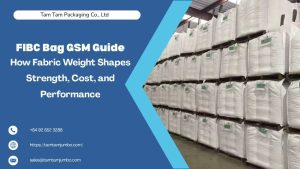
FIBC Fabric GSM Guide: How Fabric Weight Determines Strength
GSM is the number buyers reach for first when comparing FIBC fabric across suppliers, and...
Jul
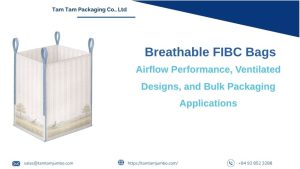
Breathable FIBC Bags: Guide to Choosing the Right Mesh Big Bag
Buyers moving from small mesh sacks to bulk mesh big bags for the first time...
Jul
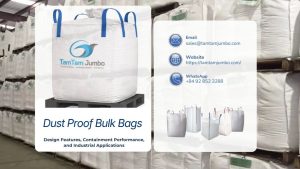
Dust Proof Bulk Bags: Controlling Exposure Standard Sift Proofing
A bag that keeps fine powder from sifting out during storage is not automatically the...
Jul

Sift Proof FIBC Bags: Building a Truly Leak Proof Jumbo Bag
Fine powders find their way out of packaging that would hold coarser material without issue....
Jul