

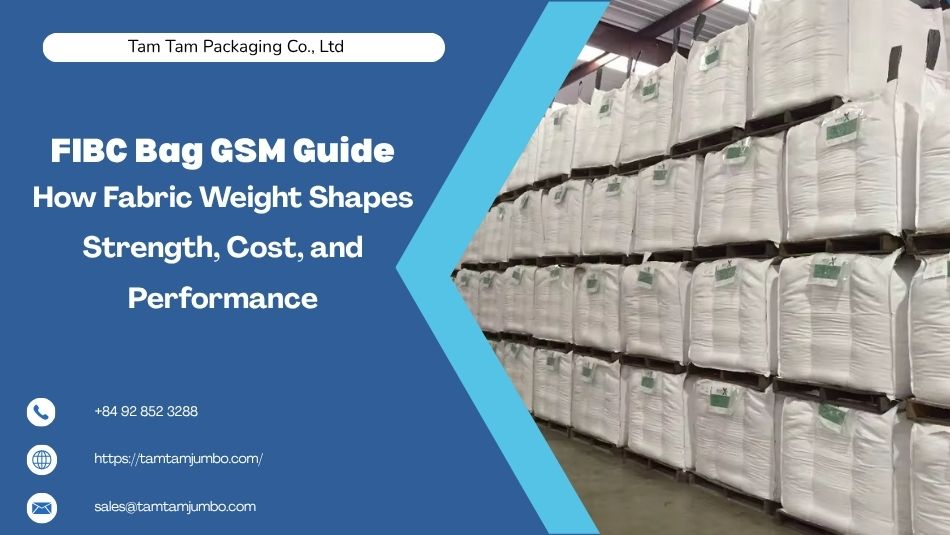
GSM is the number buyers reach for first when comparing FIBC fabric across suppliers, and it is also the number most likely to be misread on its own. GSM measures the weight of PP woven fabric per square meter, but two fabrics with identical GSM can perform very differently depending on weave density, tape width, and yarn quality. This guide explains what GSM actually tells you, what it does not, and how to use it correctly alongside safe working load when specifying a bag.
What GSM Means for PP Woven Fabric
GSM stands for grams per square meter, a standard measure of fabric weight used across the woven polypropylene industry. A higher GSM generally indicates more material in a given area of fabric, which correlates with greater tensile strength, but GSM is a weight measurement, not a direct strength rating. Two fabrics can share the same GSM while differing meaningfully in how that weight is distributed across the weave.
How GSM Relates to Denier and Tape Width
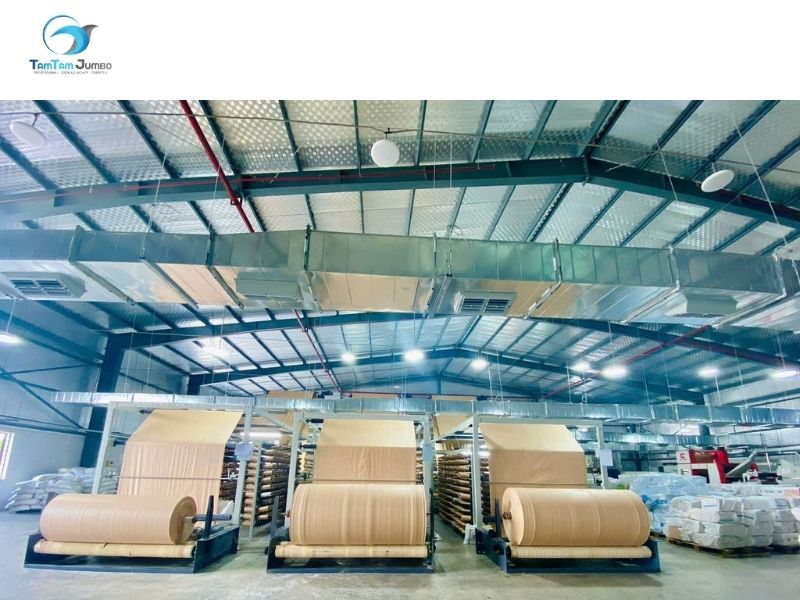
PP woven fabric is made from flat tape yarns, and denier measures the linear density of these individual tapes, essentially how much a fixed length of tape weighs. GSM is the combined result of tape denier, tape width, and how many tapes are woven per inch in both the warp and weft directions. A fabric can reach a target GSM using fewer, heavier tapes woven more loosely, or more numerous, lighter tapes woven tightly, and these two approaches do not necessarily perform the same way under load, even at identical GSM.
Why GSM Alone Doesn’t Determine Bag Strength
Weave Density
Weave density, measured as ends per inch in both directions, affects how evenly a fabric distributes load and how resistant it is to tearing once a small cut or puncture starts. A tightly woven fabric at a given GSM generally resists tear propagation better than a loosely woven fabric at the same weight, since there is less open space between tapes for a tear to travel through.
Tape Yarn Quality
The polypropylene resin quality and any additives used in tape extrusion affect tensile strength independent of GSM. Virgin polypropylene generally produces stronger, more consistent tape yarn than fabric incorporating significant recycled content, meaning a virgin PP fabric can outperform a recycled PP fabric at the same nominal GSM.
Typical GSM Ranges by Application
GSM requirements scale with fill weight, handling conditions, and whether the bag is intended for single or multiple trips.
| Application | Typical GSM Range | Notes |
| Light single-trip bags (under 500 kg) | Approximately 120 to 150 GSM | Suited to light, non-abrasive dry goods |
| Standard single-trip bags (500 to 1000 kg) | Approximately 150 to 200 GSM | Most common range for general industrial use |
| Heavy or dense fill (1000 to 2000 kg) | Approximately 200 to 250 GSM | Common for mineral, chemical, and construction bulk materials |
| Multi-trip bags | 220 GSM and above, often with reinforcement | Higher GSM supports repeated handling cycles |
These ranges are general starting points rather than fixed rules, since actual GSM requirements should be confirmed against safe working load testing for the specific bag construction rather than selected from a table alone.
How Safe Working Load and Safety Factor Relate to GSM
GSM is one input into a bag’s overall safe working load rating, alongside seam construction, loop design, and base and top methods. A bag is not considered adequately specified simply because its fabric GSM looks high enough on paper; the finished construction needs to be tested as a whole against the target fill weight and required safety factor, typically 5:1 or 6:1, depending on intended use. Buyers should ask for the safe working load test result for the complete bag rather than treating GSM as a stand-alone substitute for that data.
Read more: FIBC Bags Safety Factor: Complete Guide to 5:1, 6:1 and Beyond
GSM and Cost: Where Buyers Overspend or Underspend
Fabric cost scales roughly with GSM, since higher GSM means more raw material per bag. Overspecifying GSM for a light, non-abrasive product adds cost without a meaningful performance benefit, while underspecifying GSM for dense or abrasive material risks premature failure during handling. The goal is matching GSM to the actual fill weight, handling method, and number of expected trips, not defaulting to the highest available GSM as a safety margin or the lowest available GSM to minimize cost.
Read more: Circular FIBC Bags: What the Big Bag Specification Should Define
Testing and Verifying Fabric GSM
Fabric GSM is verified by weighing a cut sample of known area and calculating weight per square meter, a straightforward test that reputable suppliers should be able to demonstrate on request. Buyers receiving fabric or finished bags with a suspiciously light feel relative to the specified GSM can request a sample cutting and weighing as a basic verification step, rather than relying solely on the supplier’s stated figure.
How Tam Tam Packaging Selects and Verifies PP Woven Fabric GSM
Tam Tam Packaging specifies fabric GSM based on the target fill weight, safety factor, and expected handling conditions for each order, using virgin polypropylene tape yarn woven to a defined density rather than selecting GSM as an isolated number. Sample fabric weighing is available on request, and safe working load testing is documented for the complete bag construction rather than fabric GSM alone.
Common GSM Specification Mistakes
- Comparing GSM figures across suppliers without confirming weave density and tape yarn quality are also comparable.
- Assuming higher GSM always means a stronger bag regardless of seam and loop construction.
- Selecting GSM based on a generic table without adjusting for the specific product’s density and handling abrasiveness.
- Accepting a stated GSM figure without requesting sample verification for large or repeat orders.
- Overlooking that recycled PP content can reduce effective strength compared to virgin PP at the same nominal GSM.
Applications in Mining
Mining and mineral processing operations typically require fabric at the higher end of standard GSM ranges, since ore concentrates and mineral powders are often dense and abrasive, and multi-trip use is common at processing and export facilities. Buyers in this sector should confirm both GSM and weave density together, since abrasion resistance during repeated handling depends on more than raw fabric weight alone.
Frequently Asked Questions
What does GSM mean for FIBC fabric?
GSM stands for grams per square meter, a measurement of PP woven fabric weight that correlates with tensile strength but does not fully determine it on its own.
Does higher GSM always mean a stronger bag?
Not necessarily. Weave density, tape yarn quality, and overall bag construction, including seams and loops, all affect strength alongside GSM.
What GSM is typical for a standard 1000 kg bulk bag?
Approximately 150 to 200 GSM is common for standard single-trip bags in this weight range, though actual requirements depend on the specific product and handling conditions.
How can a buyer verify a supplier’s stated GSM?
By requesting a sample fabric cutting of a known area, weighing it, and calculating grams per square meter directly rather than relying solely on the supplier’s figure.
Does recycled polypropylene affect GSM-based strength comparisons?
Yes. Fabric made with significant recycled PP content can be weaker than virgin PP fabric at the same nominal GSM, so the material source should be confirmed alongside the GSM figure.
Conclusion
GSM is a useful starting point for comparing PP woven fabric, but it only tells part of the story. Weave density, tape yarn quality, and the complete bag’s tested safe working load all need to be considered alongside GSM to specify a bag that actually performs as expected for its intended fill weight and handling conditions.
Tam Tam Packaging Co. specifies PP woven fabric GSM matched to your fill weight, product density, and handling conditions, with sample verification available on request. Contact our team to confirm the right fabric specification for your application.
Contact Us
Tam Tam Packaging Co.
Email: sales@tamtamjumbo.com
Website: https://tamtamjumbo.com/
WhatsApp: +84 92 852 3288
Read more
FIBC Fabric GSM Guide: How Fabric Weight Determines Strength
GSM is the number buyers reach for first when comparing FIBC fabric across suppliers, and...
Jul
Breathable FIBC Bags: Guide to Choosing the Right Mesh Big Bag
Buyers moving from small mesh sacks to bulk mesh big bags for the first time...
Jul
Dust Proof Bulk Bags: Controlling Exposure Standard Sift Proofing
A bag that keeps fine powder from sifting out during storage is not automatically the...
Jul
Sift Proof FIBC Bags: Building a Truly Leak Proof Jumbo Bag
Fine powders find their way out of packaging that would hold coarser material without issue....
Jul
Anti-Static Bulk Bags: How a Type C Bag Prevents Ignition Risk
Filling and emptying an FIBC bag generates static charge as powder moves against fabric, and...
Jul
Food Grade FIBC Bags: What a BRC Certificate Actually Confirms
Calling a bag food grade is not the same as proving it. Food grade FIBC...
Jul