

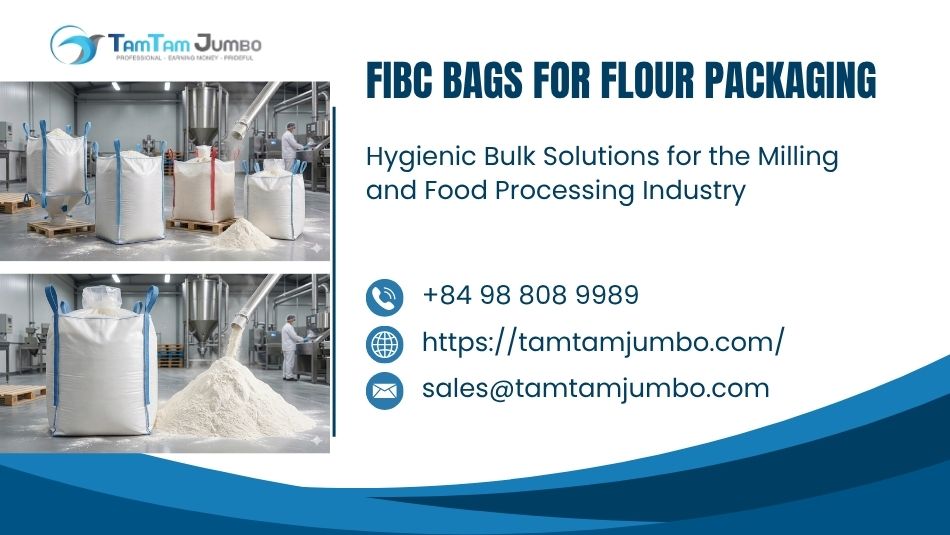
Flour shares the fine-particle and combustible dust characteristics of other food powders, but wheat’s status as one of the most commonly declared food allergens adds a layer of specification most other dry ingredients don’t carry. Food grade FIBC bags for flour need to address allergen segregation and, for many buyers, milling-level traceability, on top of the sift proofing and moisture protection that apply to fine powders generally.
Flour’s Dual Status: Major Allergen and Combustible Dust
Wheat flour presents two distinct risk categories that don’t often overlap in a single ingredient: it is a recognized major food allergen requiring declaration and cross-contact control, and it is also a fine organic powder capable of combustible dust behavior in bulk handling environments. A flour packaging specification needs to account for both, rather than treating flour as a standard food powder with only dust and moisture considerations.
Read more: FIBC Bags for Starch Powder: Dustproof Bag Needs Antistatic
Why Wheat Allergen Status Demands Stricter Segregation Than Most Food Bags
Facilities producing bags used across multiple ingredient types need documented allergen segregation procedures generally, but wheat’s prevalence as a declared allergen makes this particularly consequential for flour specifically, since cross-contact into a supposedly wheat-free ingredient’s packaging carries direct regulatory and consumer safety consequences. Buyers should confirm not just that a facility has allergen procedures, but that those procedures specifically address wheat and gluten-containing ingredient segregation.
Read more: FIBC Bags for the Food Industry: Building a Food Grade Bag
Milling Traceability: Origin, Protein Content, and Batch Tracking
Flour buyers, particularly commercial bakeries and food manufacturers with specific formulation requirements, often need batch-level traceability connecting a bag back to the milling run, wheat origin, and protein content or gluten strength of that specific batch. This traceability need is more granular than general food grade batch labeling, since flour’s baking performance varies meaningfully with wheat variety and milling specification in a way that matters directly to the buyer’s finished product.
Read more: FIBC Label Requirements: Reading 5:1 vs 6:1 Markings Correctly
Combustible Dust Risk in Flour Handling
Flour dust explosions are among the most historically documented combustible dust incidents in food processing, and facilities handling flour in bulk quantities should assess this risk in the same way covered for starch powder, potentially requiring anti-static bag construction alongside standard food grade sourcing where a formal dust hazard assessment identifies genuine risk.
Sift Proof Construction for Fine Flour Particles
Flour’s fine particle size means standard single-stitch seams are generally inadequate, making folded and double-stitched seam construction a standard requirement consistent with other fine food powders. Fabric weave density should be specified with flour’s particle fineness in mind.

Read more: Sift Proof FIBC Bags: Building a Truly Leak Proof Jumbo Bag
Moisture Protection to Prevent Caking and Spoilage
Flour absorbs ambient moisture readily, leading to caking, reduced flow characteristics, and in more severe cases mold risk during extended storage. Coated fabric or a food-safe liner addresses this, with liner choice depending on expected storage duration and climate conditions during transit.
Spout Compatibility With Bakery and Milling Equipment
Commercial bakeries and food manufacturers frequently run automated flour handling systems, making spout diameter and closure method compatibility with existing equipment a functional requirement. Buyers should provide actual equipment connection dimensions rather than requesting a generic standard spout size.
Read more: FIBC Top Filling Options: Choosing the Right Top Spout Size
Building a Complete Flour Packaging Specification
Bringing these elements together, a complete flour specification typically addresses BRC certified manufacturing, wheat-specific allergen segregation procedures, milling batch traceability where the buyer’s formulation requires it, sift proof seam construction, moisture protection, anti-static construction where dust hazard assessment identifies risk, and spout compatibility with processing equipment.
Common Flour FIBC Specification Combinations
| Flour Application | Typical Specification Combination |
| Commercial bakery flour supply | BRC certified, wheat allergen segregation, milling batch traceability, sift proof seams |
| Automated milling to processing line | As above plus sealed spout matched to automated filling equipment |
| Bulk flour with confirmed dust hazard assessment | Sift proof seams, Type B or Type C anti-static construction, moisture protection |
| Standard retail-bound flour packaging | BRC certified, standard moisture protection, sift proof seams |
How Tam Tam Packaging Specifies Bags for Flour
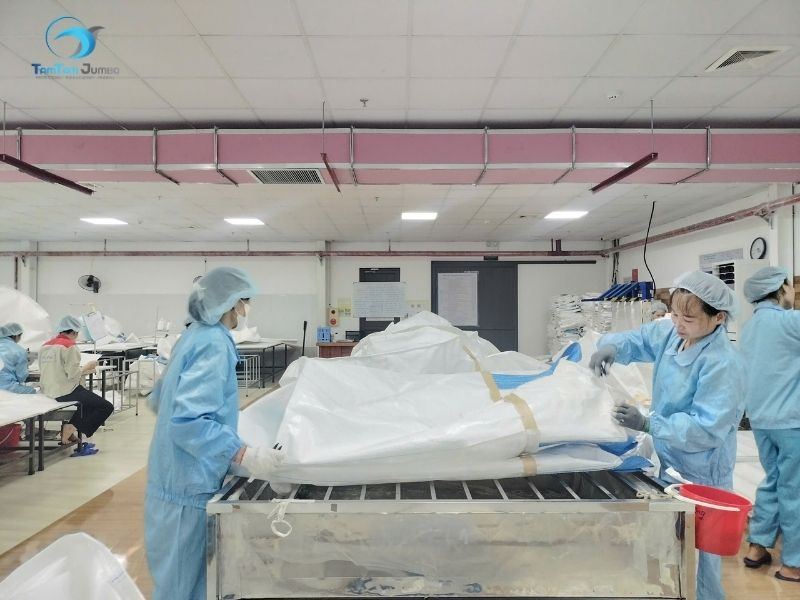
Tam Tam Packaging builds flour bag specifications with wheat-specific allergen segregation, sift proof seam construction, and moisture protection as standard, adding anti-static protection and milling batch traceability detail based on the buyer’s dust hazard assessment and formulation requirements. Specification sheets document each element individually.
Common Mistakes When Sourcing Flour FIBC Bags
- Assuming general food grade certification automatically includes wheat-specific allergen segregation procedures.
- Overlooking combustible dust risk assessment for facilities handling significant bulk flour volumes.
- Not requesting milling batch traceability when formulation performance depends on specific wheat protein content.
- Using standard seam construction inadequate for flour’s fine particle size.
- Ordering generic spout dimensions without confirming fit against actual bakery or milling equipment.
Applications Across the Milling and Baking Industry
Flour packaging spans milling facilities producing bulk flour for commercial distribution, bakeries sourcing flour for direct production use, and food manufacturers incorporating flour into further processed products, each layering allergen control, traceability, and equipment compatibility requirements differently depending on their specific formulation and production needs.
Frequently Asked Questions
Why does flour need stricter allergen procedures than other food powders?
Wheat is one of the most commonly declared food allergens, making cross-contact into supposedly wheat-free ingredient packaging a direct regulatory and consumer safety concern, which warrants confirming wheat-specific segregation procedures rather than general allergen claims.
Is flour a combustible dust hazard?
Yes. Flour dust explosions are among the most historically documented combustible dust incidents in food processing, relevant to facilities handling flour in significant bulk quantities.
What is milling batch traceability and why does it matter?
It connects a bag back to the specific milling run, wheat origin, and protein or gluten content of that batch, which matters for buyers whose baking formulations depend on consistent flour performance.
Does flour need moisture protection?
Yes. Flour absorbs ambient moisture readily, leading to caking and reduced flow characteristics, making coated fabric or a liner a standard addition.
Should flour bags be food grade certified?
Yes, for flour entering food production, BRC-certified manufacturing with confirmed scope covering flexible packaging is the standard requirement.
Conclusion
Flour packaging needs more than general food grade FIBC bags. Wheat’s allergen status, combustible dust characteristics, and, for many buyers, milling-level traceability all deserve individual attention in the specification, rather than assuming standard food powder packaging automatically covers flour’s particular risk profile.
Tam Tam Packaging Co. builds FIBC specifications for flour addressing allergen segregation, dust and moisture protection, and milling traceability together. Contact our team to work through the right specification for your flour supply chain.
Contact Us
Tam Tam Packaging Co.
Email: sales@tamtamjumbo.com
Website: https://tamtamjumbo.com/
Read more
FIBC Bags for Flour: Why Allergen Status Change the Specification
Flour shares the fine-particle and combustible dust characteristics of other food powders, but wheat’s status...
Aug
FIBC Bag for Starch Powder: Dustproof Bag Needs Antistatic
Starch powder occupies an unusual position in FIBC specification: it is a common food and...
Aug
FIBC Bags for Animal Feed: What Actually Makes a Clean Bulk Bag
FIBC bags for animal feed mean something more specific than a bag that looks unused....
Aug
FIBC Bag for PET Flakes: Why UV Resistance Matter More Than It
Recycled PET flakes share a base polymer with virgin resin pellets, but the two behave...
Aug
FIBC Bags for Plastic Resin: PP Fabric Packaging PP Pellets
There is a certain irony in shipping polypropylene resin pellets inside a bag woven from...
Aug
FIBC Bags for the Food Industry: Building a Food Grade Bag
Food manufacturers sourcing bulk ingredient packaging are working from a different starting point than a...
Aug