

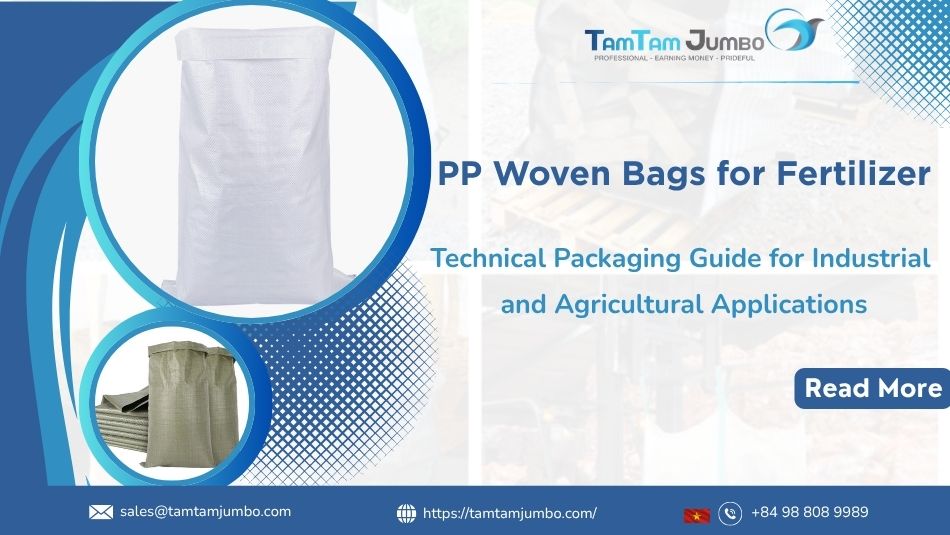
Fertilizer packaging must withstand heavy loads, moisture exposure, long transportation routes, and demanding storage conditions. For agricultural manufacturers and distributors, packaging performance directly affects product quality, handling efficiency, and brand reliability.
PP woven bags for fertilizer have become one of the most widely used industrial packaging solutions because they combine strength, moisture resistance, cost efficiency, and customization flexibility.
At Tam Tam Packaging Co., we manufacture PP woven fertilizer bags for international B2B customers requiring reliable packaging performance across agriculture, chemical, and industrial supply chains. Based on export experience in Europe, Canada, and Asia, fertilizer buyers increasingly prioritize packaging durability, UV resistance, and moisture protection alongside competitive pricing and stable supply capability.
This article explains how PP woven fertilizer bags are manufactured, why they are widely used, and what buyers should evaluate before sourcing fertilizer packaging.
What Are PP Woven Bags for Fertilizer?
PP woven fertilizer bags are industrial packaging bags made from woven polypropylene fabric designed to carry granular, powdered, or compound fertilizers.
The woven structure provides high tensile strength while maintaining lightweight handling characteristics. Depending on fertilizer type and storage conditions, the bags may include:
- Lamination coating
- BOPP film
- PE inner liner
- UV stabilization
- Anti-slip treatment
- Valve or block bottom structure
These bags are commonly used for:
- Urea
- NPK fertilizer
- Potash fertilizer
- Ammonium sulfate
- Organic fertilizer
- Compound fertilizer
- Agricultural chemicals
High-quality PP woven fertilizer bags help prevent moisture absorption, product leakage, and packaging failure during transportation and warehouse handling.
Read more: What Is PP Woven Bags
Why Fertilizer Requires Specialized Packaging
Fertilizer products create several packaging challenges that standard bags may not handle effectively.
Moisture Sensitivity
Many fertilizers are hygroscopic, meaning they absorb moisture from the surrounding environment.
Excess humidity can lead to:
- Product caking
- Hardening
- Reduced spreading performance
- Nutrient degradation
Laminated PP woven bags help reduce moisture penetration and preserve fertilizer quality during storage and shipping.
Heavy Weight Requirements
Fertilizer is commonly packed in:
- 25kg bags
- 40kg bags
- 50kg bags
Industrial packaging must maintain structural integrity during:
- Filling
- Stacking
- Pallet handling
- Long-distance transport
The woven polypropylene structure provides strong load-bearing performance with good puncture resistance.
Outdoor Storage Conditions
Agricultural supply chains often involve temporary outdoor storage.
Without UV protection, polypropylene fabric may degrade under sunlight exposure.
UV-stabilized woven bags improve resistance to prolonged UV exposure and extend packaging lifespan during warehouse and outdoor handling.
Types of PP Woven Bags for Fertilizer
Different fertilizer products require different packaging structures.
Standard PP Woven Fertilizer Bags
These are basic woven polypropylene bags without lamination.
Advantages:
- Cost-effective
- Lightweight
- Breathable
- Suitable for dry environments
Applications:
- Short transportation routes
- Low-moisture fertilizers
- Domestic agricultural markets
Laminated PP Woven Bags
Laminated bags include an additional coating layer that improves moisture resistance.
Advantages:
- Better humidity protection
- Reduced product leakage
- Improved durability
- Better print surface
These bags are commonly used for exporting fertilizer packaging.
BOPP Laminated Fertilizer Bags
BOPP laminated bags combine woven PP fabric with BOPP film lamination.
Advantages include:
- High-quality printing
- Moisture barrier protection
- Better shelf appearance
- Improved abrasion resistance
These bags are commonly used for retail fertilizer packaging and branded agricultural products.
PP Woven Bags with PE Liner
For highly moisture-sensitive fertilizers, PE liners provide additional internal protection.
Benefits:
- Better moisture barrier
- Reduced contamination risk
- Improved powder containment
- Protection against chemical interaction
This structure is commonly used for fine powder fertilizers and chemical-based agricultural products.
Technical Specifications for Fertilizer Packaging
Industrial buyers should evaluate technical specifications carefully before selecting packaging.
Fabric GSM
GSM (grams per square meter) determines fabric strength.
Typical fertilizer bag fabric ranges:
| Application | Typical GSM |
| Standard fertilizer bags | 60–80 GSM |
| Heavy-duty fertilizer bags | 90–120 GSM |
| Export-grade laminated bags | 100–140 GSM |
Higher GSM generally improves puncture resistance and stacking performance.
UV Resistance
UV stabilization is critical for agricultural supply chains.
Typical UV protection levels:
| UV Protection | Typical Usage |
| 200 hours | Indoor storage |
| 400 hours | Moderate outdoor exposure |
| 800+ hours | Long outdoor storage |
UV additives help reduce polypropylene degradation caused by sunlight exposure.
Lamination Thickness
Lamination thickness affects moisture resistance and durability.
Typical coating thickness:
- 15–30 microns
Thicker lamination improves moisture barrier performance but increases cost and stiffness.
Common Fertilizer Bag Sizes
The most common fertilizer packaging sizes include:
| Capacity | Typical Size |
| 10kg | 35 x 60 cm |
| 25kg | 50 x 80 cm |
| 40kg | 55 x 95 cm |
| 50kg | 60 x 100 cm |
Bag dimensions may vary depending on fertilizer density and customer filling systems.
Advantages of PP Woven Bags for Fertilizer
High Strength-to-Weight Ratio
PP woven bags provide excellent strength while remaining lightweight.
This improves:
- Transportation efficiency
- Manual handling
- Shipping costs
- Warehouse operations
Moisture Resistance
Laminated fertilizer bags help reduce humidity penetration and maintain product quality during storage and transportation.
Cost Efficiency
Compared with paper sacks or rigid containers, PP woven bags offer lower packaging costs while maintaining strong performance.
This is especially important for bulk fertilizer distribution.
Custom Printing Capability
BOPP laminated fertilizer bags allow high-resolution printing for:
- Branding
- Product instructions
- Multilingual export labeling
- Safety information
Chemical Resistance
Polypropylene material performs well in contact with many agricultural chemicals and fertilizers.
This makes PP woven packaging suitable for both chemical and organic fertilizer applications.
Manufacturing Considerations Buyers Often Overlook
Many fertilizer buyers focus primarily on price while overlooking technical manufacturing factors that affect long-term packaging reliability.
Seam Strength
Weak stitching is one of the most common causes of fertilizer bag failure.
Industrial fertilizer bags should use reinforced stitching and high-tensile sewing thread.
Lamination Quality
Poor lamination can lead to:
- Delamination
- Moisture penetration
- Reduced print durability
Advanced extrusion lamination improves bonding consistency and long-term performance.
Virgin vs Recycled PP Material
Virgin polypropylene offers:
- Better tensile strength
- Improved consistency
- Better appearance
- Reduced contamination risk
Some low-cost bags use excessive recycled material, which may reduce bag durability.
Read more: Eco Friendly Packaging Solutions
Dimensional Consistency
Consistent bag dimensions are important for:
- Automatic filling lines
- Pallet stacking
- Transportation efficiency
At Tam Tam Packaging Co., dimensional control is carefully monitored throughout weaving, cutting, and sewing processes to maintain stable packaging performance for export customers.
How to Choose the Right Fertilizer Packaging
Evaluate Storage Conditions
If fertilizer is exposed to humid environments or outdoor storage, laminated or PE-lined bags are recommended.
Consider Product Characteristics
Granular fertilizer and powder fertilizer require different packaging structures.
Powder products often need:
- Better sealing
- PE liner
- Stronger lamination
Check Filling System Compatibility
Automatic filling lines require precise bag dimensions and opening consistency.
Determine Branding Requirements
For retail fertilizer markets, BOPP laminated bags provide significantly better visual presentation and print quality.
Assess Export Transportation Conditions
Long export routes require:
- Stronger seams
- Better UV resistance
- Moisture barrier protection
- Better pallet stability
Applications Industries of Fertilizer PP Woven Bags
PP woven fertilizer bags are widely used in:
- Agricultural fertilizer packaging
- Chemical fertilizer distribution
- Retail fertilizer brands
- Bulk farming supply chains
- Industrial agrochemical applications
Common export markets include:
- Europe
- Canada
- South Korea
- Southeast Asia
- Middle East
- Africa
FAQ
Why are PP woven bags used for fertilizer packaging?
PP woven bags provide high strength, moisture resistance, cost efficiency, and durability for heavy agricultural products.
Are laminated fertilizer bags better than non-laminated bags?
Yes. Laminated bags offer improved moisture resistance, better print quality, and reduced product leakage.
What size fertilizer bags are most common?
The most common sizes are:
- 25kg
- 40kg
- 50kg
Actual dimensions depend on fertilizer density and filling systems.
Can fertilizer bags be UV-resistant?
Yes. UV stabilizers can be added to polypropylene fabric to improve sunlight resistance during outdoor storage.
What is the difference between BOPP fertilizer bags and standard PP woven bags?
BOPP laminated bags provide:
- Better moisture barrier
- Premium printing quality
- Improved appearance
- Better abrasion resistance
They are commonly used for retail fertilizer packaging.
Conclusion
PP woven bags for fertilizer remain one of the most reliable and cost-effective industrial packaging solutions for agricultural supply chains.
Their combination of:
- Strength
- Moisture resistance
- Customization flexibility
- Transportation efficiency
- Cost performance
makes them suitable for both domestic and export fertilizer packaging applications.
For international buyers, packaging quality directly affects product protection, warehouse efficiency, and brand reputation. Working directly with an experienced manufacturer helps ensure consistent bag quality, technical reliability, and stable supply capability.
Tam Tam Packaging Co. manufactures customized PP woven fertilizer bags for international agricultural and industrial customers, supporting a wide range of fertilizer packaging requirements with export-focused production standards.
Contact Us
Tam Tam Packaging Co.
Email: sales@tamtamjumbo.com
Website: https://tamtamjumbo.com/
Read more
FIBC Bags for Flour: Why Allergen Status Change the Specification
Flour shares the fine-particle and combustible dust characteristics of other food powders, but wheat’s status...
Aug
FIBC Bag for Starch Powder: Dustproof Bag Needs Antistatic
Starch powder occupies an unusual position in FIBC specification: it is a common food and...
Aug
FIBC Bags for Animal Feed: What Actually Makes a Clean Bulk Bag
FIBC bags for animal feed mean something more specific than a bag that looks unused....
Aug
FIBC Bag for PET Flakes: Why UV Resistance Matter More Than It
Recycled PET flakes share a base polymer with virgin resin pellets, but the two behave...
Aug
FIBC Bags for Plastic Resin: PP Fabric Packaging PP Pellets
There is a certain irony in shipping polypropylene resin pellets inside a bag woven from...
Aug
FIBC Bags for the Food Industry: Building a Food Grade Bag
Food manufacturers sourcing bulk ingredient packaging are working from a different starting point than a...
Aug