
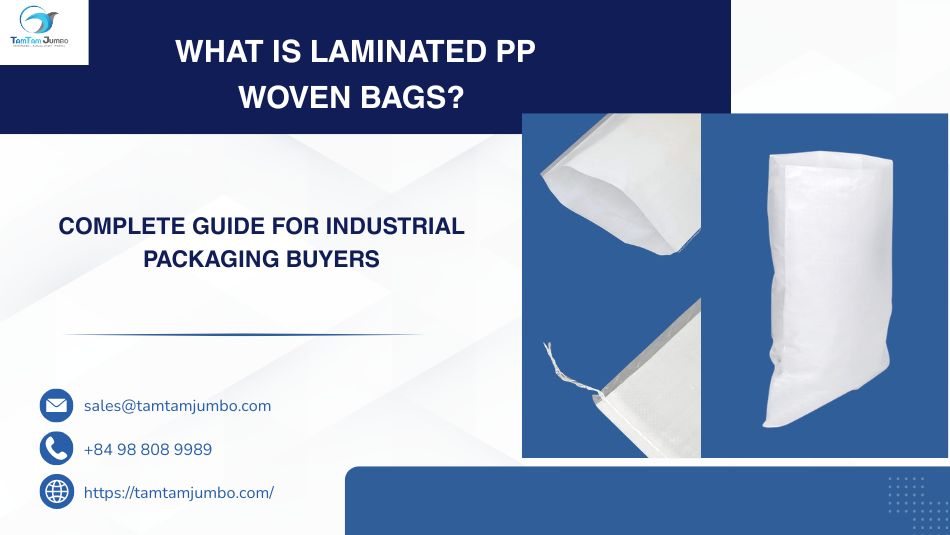
Laminated PP woven bags are polypropylene woven bags coated or laminated with an additional plastic film layer to improve moisture resistance, dust protection, durability, and printing quality.
These bags are widely used in industrial packaging where products require better protection against:
- Humidity
- Water exposure
- Dust leakage
- External contamination
Compared to standard woven polypropylene bags, laminated PP woven bags provide enhanced barrier performance while maintaining the strength and flexibility of woven PP fabric.
At Tam Tam Packaging Co., laminated woven bags are commonly used for industries where product protection during storage and export transportation is critical. The correct lamination structure depends on:
- Product sensitivity
- Climate conditions
- Filling systems
- Transportation methods
- Warehouse environment
Understanding what is laminated PP woven bags and where they perform best helps industrial buyers select more reliable packaging solutions.
What Is Laminated PP Woven Bags?
Laminated PP woven bags are woven polypropylene bags coated with a thin laminated layer, typically made from:
- Polypropylene (PP)
- Polyethylene (PE)
- BOPP film (Biaxially Oriented Polypropylene)
The lamination fills the small gaps between woven tapes and creates a smoother protective surface.
Simple Definition
Laminated PP woven bags are woven polypropylene packaging bags with an additional coating or film layer that improves moisture resistance, dust protection, and printability.
The base woven structure provides:
- Tensile strength
- Tear resistance
- Load-bearing performance
The laminated layer improves:
- Moisture barrier
- Surface smoothness
- Product protection
- Printing appearance
How Laminated PP Woven Bags Are Manufactured
Step 1: Polypropylene Tape Extrusion
Polypropylene resin is melted and stretched into flat tapes.
Tape quality directly affects:
- Fabric strength
- Durability
- Load performance
Virgin resin typically provides better:
- Mechanical strength
- Color consistency
- Long-term durability
Step 2: Circular Weaving
The PP tapes are woven into tubular fabric using circular looms.
The woven structure creates:
- High tensile strength
- Lightweight construction
- Flexible packaging performance
Fabric weaving density influences:
- Weight capacity
- Tear resistance
- Fabric stability
Step 3: Lamination Process
This is the key stage that differentiates laminated bags from standard woven bags.
A thin film layer is applied to the woven fabric surface through:
- Extrusion coating
- Film lamination
- BOPP lamination
The laminated layer:
- Seals fabric pores
- Improves moisture resistance
- Reduces dust leakage
- Creates a smoother printing surface
Typical lamination thickness may range from:
- 15–30 GSM coating layers
- 20–50 micron BOPP film, depending on application requirements
Step 4: Printing
Laminated surfaces support significantly better print quality compared to unlaminated woven fabric.
BOPP laminated bags especially allow:
- High-resolution graphics
- Multi-color printing
- Glossy or matte finishes
- Better brand presentation
Step 5: Cutting and Sewing
After lamination and printing, the fabric is cut and sewn into finished bags.
Bag construction may include:
- Open mouth design
- Valve design
- Gusseted structure
- PE liners
- Easy-open systems
Main Types of Laminated PP Woven Bags
Laminated PP Woven Bags
These bags use polyethylene coating directly on woven fabric.
Advantages
- Improved moisture resistance
- Cost efficiency
- Better dust protection
Common Applications
- Fertilizer
- Cement
- Animal feed
- Chemicals
BOPP Laminated Woven Bags
BOPP laminated bags use printed BOPP film laminated onto woven PP fabric.
Advantages
- Premium print quality
- High visual appearance
- Better moisture barrier
- Scratch-resistant graphics
Typical Applications
- Rice packaging
- Pet food
- Retail feed packaging
- Consumer agricultural products
Multi-Wall Laminated Woven Bags
These bags combine multiple material layers, such as:
- Woven PP fabric
- PE coating
- Kraft paper
- Inner liners
They are designed for heavier industrial applications.
Advantages of Laminated PP Woven Bags
Better Moisture Resistance
One of the primary benefits of laminated PP woven bags is moisture protection.
The laminated layer reduces:
- Water penetration
- Humidity exposure
- Product spoilage risk
This is especially important for:
- Fertilizer
- Flour
- Sugar
- Powder chemicals
- Food ingredients
Reduced Dust Leakage
Fine powders can escape through uncoated woven fabric.
Lamination helps:
- Seal fabric pores
- Reduce leakage
- Improve packaging cleanliness
Industries handling fine powders often prefer laminated structures for cleaner logistics operations.
Improved Printing Quality
Laminated surfaces allow:
- Sharper graphics
- Better color consistency
- Premium product presentation
BOPP laminated bags especially support high-definition printing suitable for retail packaging.
Better Product Protection During Export
Export logistics may involve:
- Long shipping times
- Humid climates
- Outdoor storage
- Rough handling
Laminated bags provide additional environmental protection during transportation and warehousing.
Strong Mechanical Performance
The woven polypropylene base still provides:
- High tensile strength
- Tear resistance
- Puncture resistance
- Load-bearing capacity
This combination of strength and barrier protection makes laminated woven bags highly versatile for industrial use.
Limitations of Laminated PP Woven Bags
Reduced Breathability
Lamination decreases airflow through the fabric.
For some agricultural products requiring ventilation, unlaminated woven bags may perform better.
Higher Production Cost
Laminated bags are generally more expensive than standard woven bags because of:
- Additional materials
- Extra production stages
- More complex printing processes
However, the improved protection may reduce:
- Product loss
- Moisture damage
- Packaging failures
Recycling Complexity
Some laminated structures using multiple materials may be more difficult to recycle compared to simple woven polypropylene bags.
Single-material PP structures are generally preferred for easier recyclability.
Read more: Eco Friendly Packaging Solutions
Common Industries Applications of Laminated PP Woven Bag
Agriculture Industry
Used for:
- Fertilizer
- Seeds
- Animal feed
- Grain products
Moisture resistance is especially important in humid export markets.
Food Industry
Common food applications include:
- Rice
- Flour
- Sugar
- Starch
- Salt
Food-grade laminated bags may also include:
- PE liners
- Virgin resin structures
- Food-safe production conditions
Chemical Industry
Chemical powders and granules often require:
- Dust-proof packaging
- Moisture protection
- Chemical resistance
Laminated woven bags improve product stability during storage and transportation.
Construction Industry
Construction materials such as:
- Cement
- Mortar
- Mineral powder
often use laminated woven bags because they resist:
- Moisture
- Abrasion
- Product leakage
Laminated vs Unlaminated PP Woven Bags
| Feature | Laminated PP Woven Bags | Unlaminated PP Woven Bags |
| Moisture Resistance | High | Moderate |
| Dust Protection | Better | Lower |
| Breathability | Lower | Higher |
| Printing Quality | Excellent | Moderate |
| Cost | Higher | Lower |
| Surface Finish | Smooth | Textured |
| Product Protection | Better | Basic |
Unlaminated bags are suitable for breathable packaging applications, while laminated bags are preferred for moisture-sensitive products.
Buyer Considerations Before Purchasing
Read more: What is PP Woven Bags
Understand Product Sensitivity
Products sensitive to:
- Moisture
- Humidity
- Dust contamination
usually require laminated packaging.
Evaluate Transportation Conditions
Export shipments may involve:
- Ocean freight
- Tropical climates
- Long storage periods
Laminated bags improve protection during international transportation.
Check Filling Equipment Compatibility
Automatic filling systems may require:
- Specific surface friction
- Valve designs
- Heat sealing compatibility
Bag specifications should match operational systems.
Verify Manufacturing Quality
Industrial buyers should evaluate:
- Lamination adhesion
- Fabric consistency
- Printing quality
- Sewing strength
- Barrier performance
Poor lamination quality may cause:
- Delamination
- Cracking
- Moisture penetration
From the Manufacturing Experience
At Tam Tam Packaging Co., one of the most common quality issues seen in low-grade laminated bags is unstable film bonding.
Poor lamination may lead to:
- Peeling surfaces
- Wrinkled printing
- Weak moisture protection
- Reduced durability during export handling
Stable lamination requires:
- Controlled temperature
- Proper bonding pressure
- Consistent coating thickness
- High-quality raw materials
The lamination process directly affects long-term packaging performance.
Quick Summary
- Woven polypropylene bags with protective laminated coating
- Designed for better moisture and dust protection
- Suitable for industrial and export packaging
Main benefits include:
- Improved moisture resistance
- Better print quality
- Enhanced product protection
- Reduced dust leakage
Common applications include:
- Agriculture
- Food packaging
- Chemicals
- Construction materials
The right laminated structure depends on:
- Product type
- Export conditions
- Filling systems
- Storage environment
FAQ
What is laminated PP woven bags?
Laminated PP woven bags are polypropylene woven bags coated with a laminated layer to improve moisture resistance and product protection.
Are laminated PP woven bag waterproof?
They are highly water-resistant but not always fully waterproof, depending on the lamination structure and bag design.
What is the difference between laminated and unlaminated woven bag?
Laminated bags provide better moisture resistance and print quality, while unlaminated bags offer more breathability.
What industries use laminated PP woven bag?
Agriculture, chemicals, food, construction, fertilizer, and industrial manufacturing industries commonly use laminated woven bags.
Are laminated PP woven bags suitable for export?
Yes. They are widely used in export logistics because they provide better protection against humidity and transportation stress.
Conclusion
Laminated PP woven bags combine the strength of woven polypropylene fabric with enhanced moisture protection, dust control, and improved visual appearance.
For industrial buyers, they offer a practical balance between:
- Packaging durability
- Product protection
- Export performance
- Cost efficiency
Selecting the correct laminated structure requires understanding:
- Product sensitivity
- Transportation conditions
- Filling systems
- Storage environment
- Manufacturing quality
Well-engineered laminated woven bags help reduce product damage, improve logistics reliability, and support safer industrial packaging operations.
Contact Us
Tam Tam Packaging Co.
Email: sales@tamtamjumbo.com
Website: https://tamtamjumbo.com/
Read more
FIBC Bags for Flour: Why Allergen Status Change the Specification
Flour shares the fine-particle and combustible dust characteristics of other food powders, but wheat’s status...
Aug
FIBC Bag for Starch Powder: Dustproof Bag Needs Antistatic
Starch powder occupies an unusual position in FIBC specification: it is a common food and...
Aug
FIBC Bags for Animal Feed: What Actually Makes a Clean Bulk Bag
FIBC bags for animal feed mean something more specific than a bag that looks unused....
Aug
FIBC Bag for PET Flakes: Why UV Resistance Matter More Than It
Recycled PET flakes share a base polymer with virgin resin pellets, but the two behave...
Aug
FIBC Bags for Plastic Resin: PP Fabric Packaging PP Pellets
There is a certain irony in shipping polypropylene resin pellets inside a bag woven from...
Aug
FIBC Bags for the Food Industry: Building a Food Grade Bag
Food manufacturers sourcing bulk ingredient packaging are working from a different starting point than a...
Aug