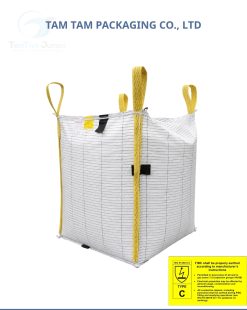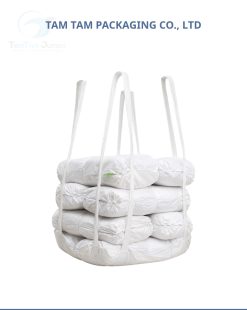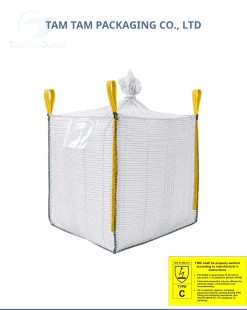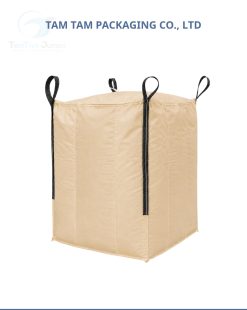



Product Description
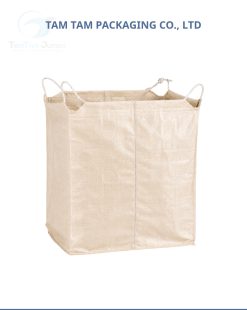
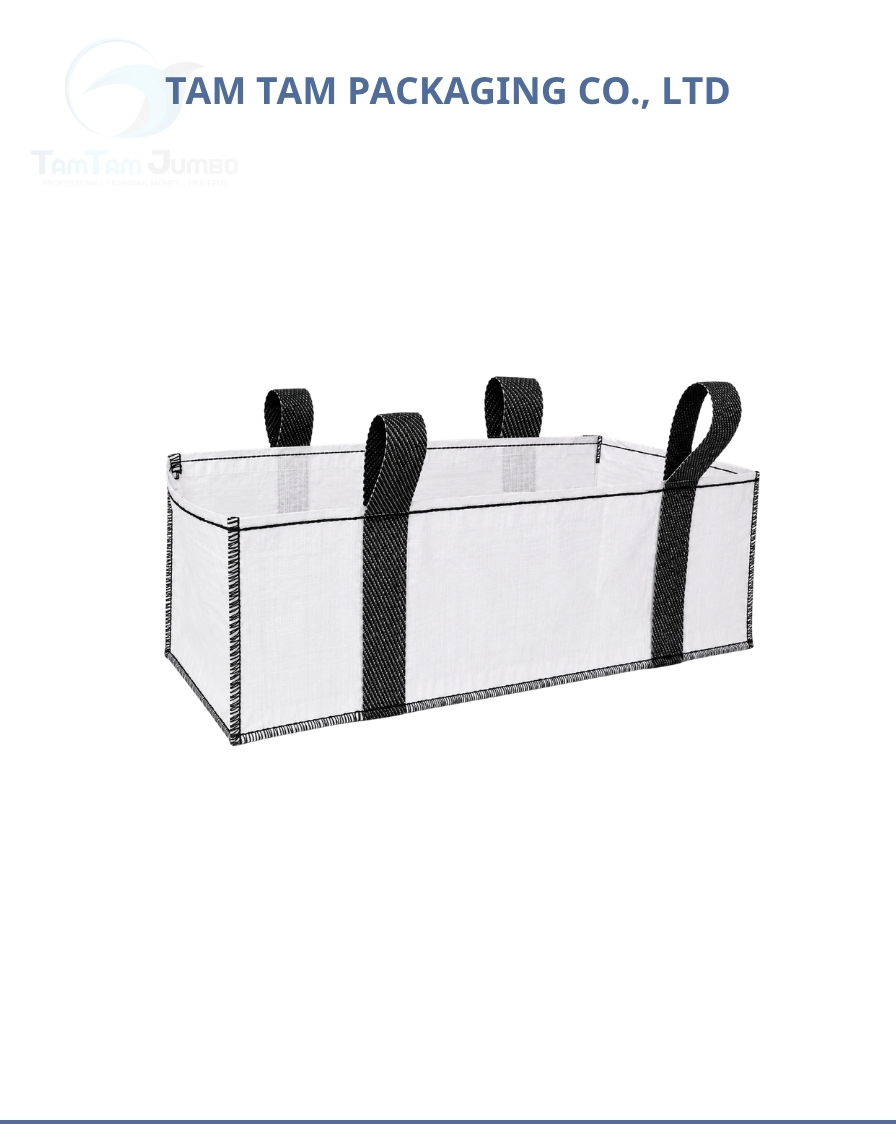
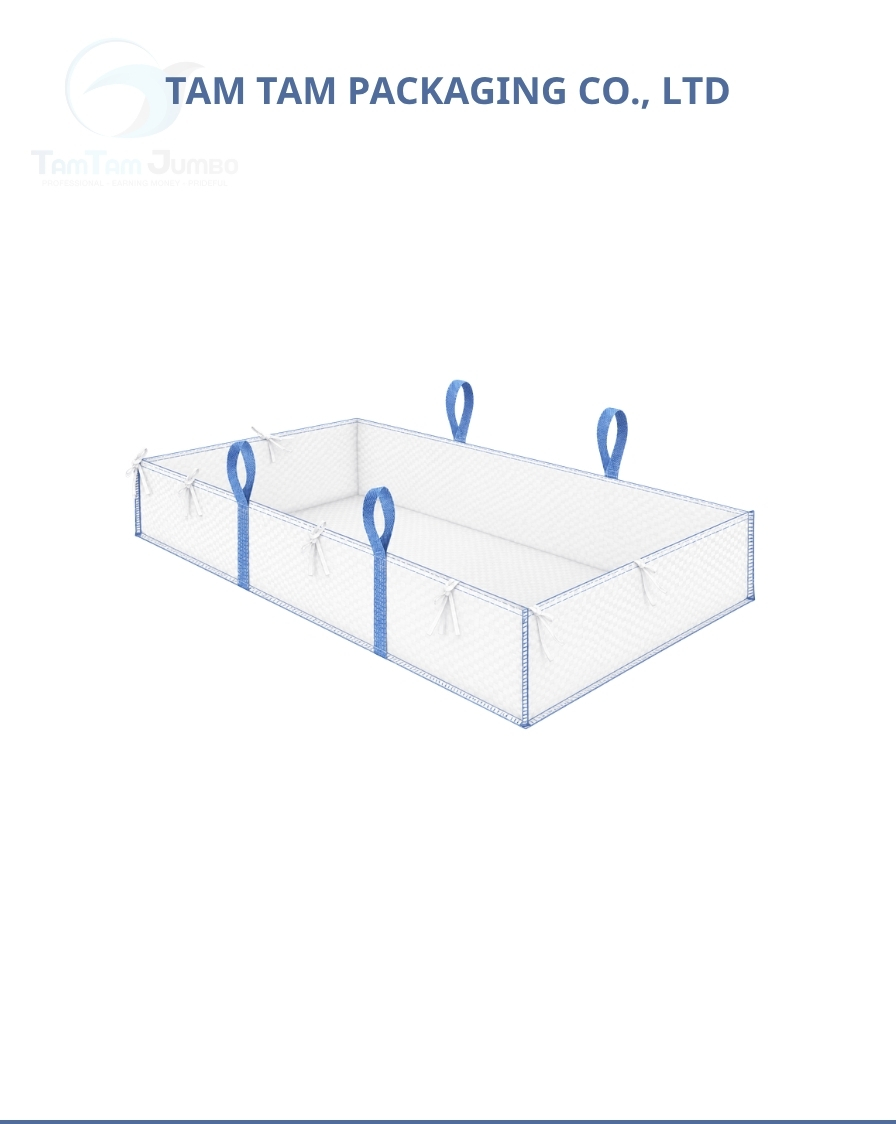
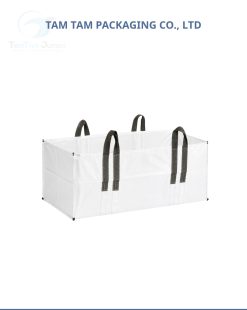
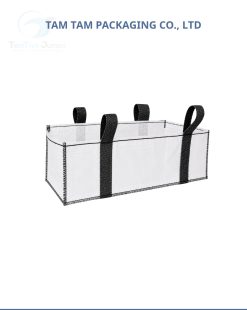
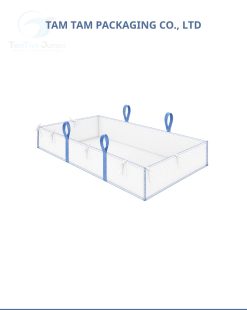
Empty FIBC bulk bags are notoriously awkward to store and transport — their woven fabric holds air and volume even when unfilled, taking up disproportionate space in warehouses, shipping containers, and delivery vehicles. For operations that receive, store, or redistribute large quantities of empty FIBC bags, this storage inefficiency represents a real cost. The Flatten FIBC Bag is engineered to collapse flat when empty, allowing bags to be stacked, palletised, and stored at a fraction of the volume of standard bulk bags.
Manufactured with a lay-flat woven PP construction that naturally collapses to a compact flat profile when not filled, our flatten FIBC bag is the preferred choice for distributors, bag rental operations, contract packers, and manufacturers who need to move or store large quantities of empty bags efficiently. Despite their compact empty profile, flattened FIBCs load and perform identically to standard bags — the same SWL, the same lifting loops, the same filling and discharge options.
Standard vs Flatten — Quick Comparison
| Feature | Standard FIBC | Flatten FIBC |
| Empty storage profile | Retains volume / air-filled | Lays flat — compact stack |
| Empty bags per pallet | Baseline (fewer) | Significantly more (2–3x) |
| Filled performance | Standard | Identical to standard FIBC |
| SWL range | 500–2,000 kg | 500–2,000 kg |
| Cost | Standard | Comparable / slight premium |
| Best for | Standard operations | High-volume empty bag handling, distribution, and rental |
Why Choose This Bag?
- Flat-collapsed profile when empty — up to 2–3× more empty bags per pallet compared to standard bulk bags
- Reduces empty bag storage footprint in warehouse — significant cost saving for high-volume operations
- Lower transport cost for empty bag redistribution — more bags per container or vehicle
- Identical filled performance to standard FIBC — same SWL, same lifting loops, same filling options
- Faster manual handling when empty — operators can carry and position flat bags far more easily than bulky standard bags
| 💡 BUYER TIP: When ordering empty bags for export to an overseas filling location, flatten FIBCs with pre-fitted liners to maximise your container utilisation on the outbound leg — you can ship 2–3× the bag count per container, reducing the freight cost per bag significantly. |
Typical Applications Industries
- FIBC bag distributors and rental fleets managing large empty bag inventories
- Contract packers and co-manufacturers handling multiple product runs with different bags
- Manufacturers with limited empty bag storage space between production runs
- Export operations shipping empty bags to overseas filling locations
- Operations with automated bag feeding systems.
Technical Specifications
| Construction | Lay-flat woven PP; circular or U-Panel base construction |
| Type Classification | Type A (non-conductive) |
| Safe Working Load | 500 kg – 2,000 kg |
| Safety Factor | 5:1 (single-use) / 6:1 (multi-trip) |
| Empty Profile | Lay-flat — collapses to compact stack when unfilled |
| Fabric | 100% Virgin PP woven, UV-stabilised |
| Fabric Weight (GSM) | 100 – 220 gsm |
| Coating | Coated or Uncoated |
| Lifting Loops | 4 corner loops (cross-corner available) |
| Top Options | Open top / Spout top / Duffle top |
| Bottom Options | Flat bottom / Discharge spout |
| Liner | Optional PE liner |
| Printing | Up to 4-colour flexographic |
| Packing | Flat-folded and baled for shipment — maximises container fill |
| Certification | ISO 21898; SGS tested |
Frequently Asked Questions
Q1: How many flatten FIBC bags fit on a standard pallet compared to regular FIBC bags?
This depends on bag dimensions and fabric weight, but as a general guide, flatten FIBCs allow 2–3 times more empty bags per pallet compared to standard bulk bags, which retain their three-dimensional shape even when empty. For high-volume distributors or operations that routinely ship large quantities of empty bags, this difference is substantial.
Q2: Does the flatten construction affect the bag’s performance when filled?
No. Once filled, a flatten FIBC performs identically to a standard FIBC of the same construction and specification. The flat-collapse property is a characteristic of the empty bag only. SWL, safety factor, loop strength, and fabric properties are unaffected by the lay-flat design.
Q3: Are flatten bags suitable for automated filling lines?
Flatten bags can be used on most manual and semi-automated filling lines. For fully automated bag-feeding systems, confirm the feeding mechanism is compatible with flat-folded bag loading — most modern FIBC filling stations accommodate both flat and three-dimensional bags. Contact us with your filling equipment details and we will confirm suitability.
Q4: Can flatten FIBC bags be supplied with a liner pre-fitted at the factory?
Yes. We can factory-fit PE tube or form-fit liners into flatten bags prior to flat-folding. This is particularly convenient for high-volume filling operations where on-line liner insertion would slow throughput.
Contact Us
| Reduce empty bag storage costs and simplify logistics with flatten FIBC bags. Request samples and a container fill calculation for your bag dimensions.
→ Get a Flatten FIBC Quote |