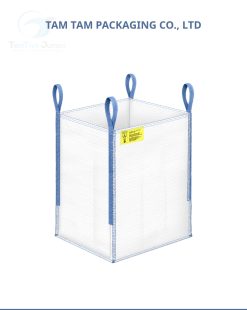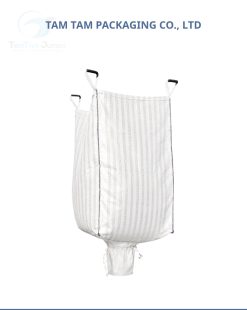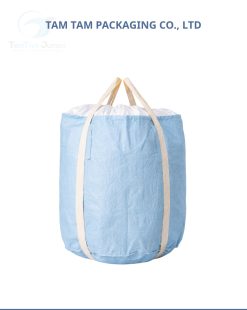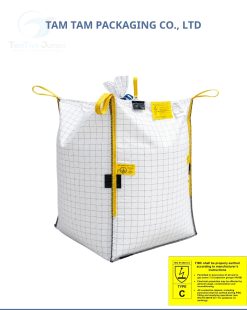



Product Description
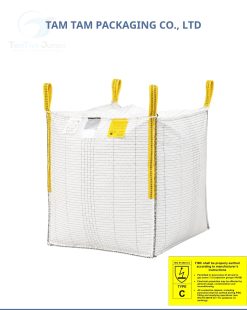
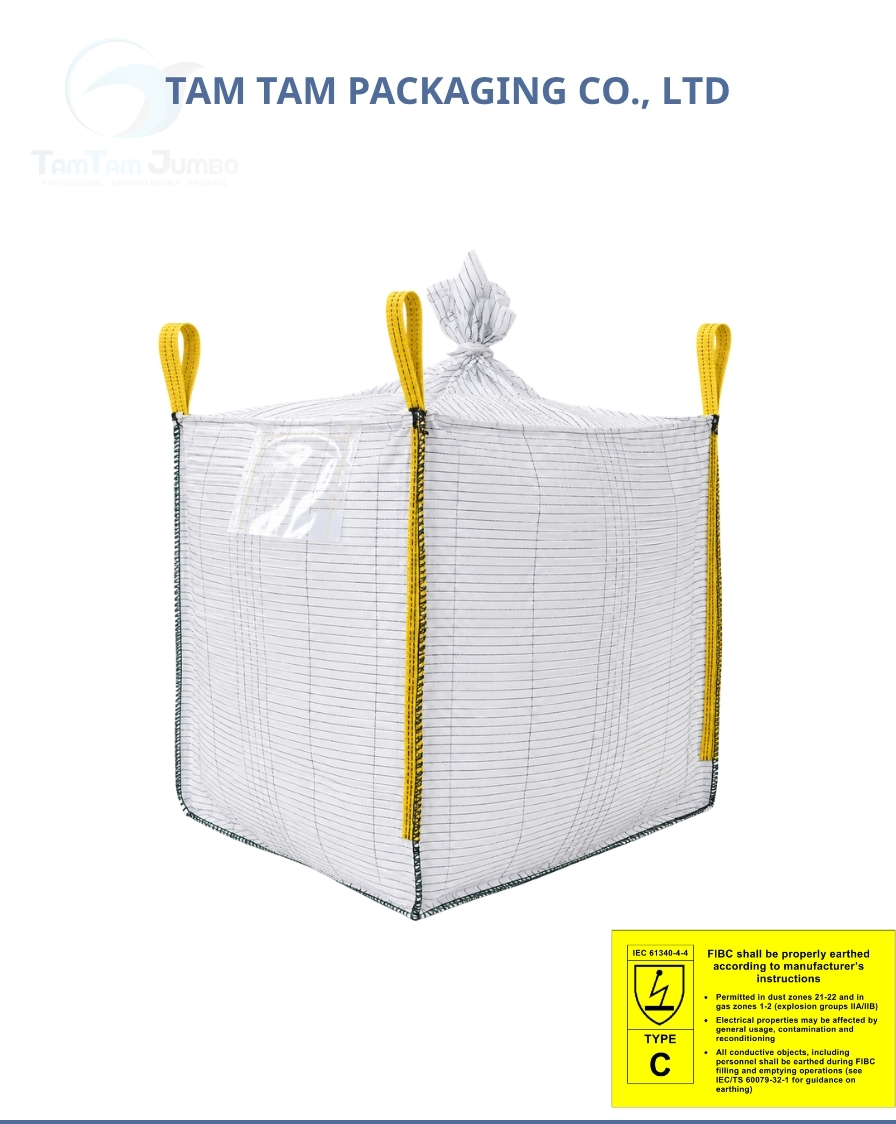
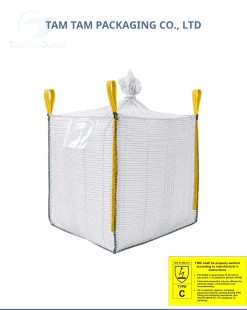
When the Minimum Ignition Energy (MIE) of your bulk material falls below 3 millijoules — or when your filling and discharge environment contains flammable vapours, gases, or a declared ATEX Zone 1 classification — Type B FIBC bags are no longer adequate and Type A FIBC bags are prohibited. Type C FIBC bags are the mandatory solution: their interwoven conductive thread grid provides a verified, documented path to ground that dissipates all forms of electrostatic discharge, including the propagating brush discharge (PBD), spark discharge, and brush discharge that can ignite sensitive flammable powders.
At Tam Tam Packaging, we specialise in supplying Type C FIBC bags for the most demanding flammable powder applications — organic powders, fine mineral dusts, and chemically reactive granules that present genuine explosion risk during bulk bag filling and discharge.
MIE & Environment — Which FIBC Type Is Required?
| Material MIE | Flammable Gas/Vapour Present? | Required FIBC Type |
| > 1,000 mJ | No | Type A acceptable |
| > 3 mJ | No | Type B acceptable (PBD prevented) |
| > 3 mJ | Yes | Type C required (grounding mandatory) |
| < 3 mJ | No or Yes | Type C required (grounding mandatory) |
| Any MIE | ATEX Zone 1 | Type C or D mandatory |
Why Choose This Bag?
- Only FIBC type that provides safe handling of materials with MIE < 3 mJ — the threshold below which standard brush discharges become ignition-capable
- Safe in the presence of flammable gases and vapours — unlike Type B, which prohibits this environment entirely
- Conductive thread grid tested to IEC 61340-4-4 — grounding resistance < 10⁷ ohm verified and documented per batch
- Available with matched conductive L1 liner for complete static protection on inner product-contact surface
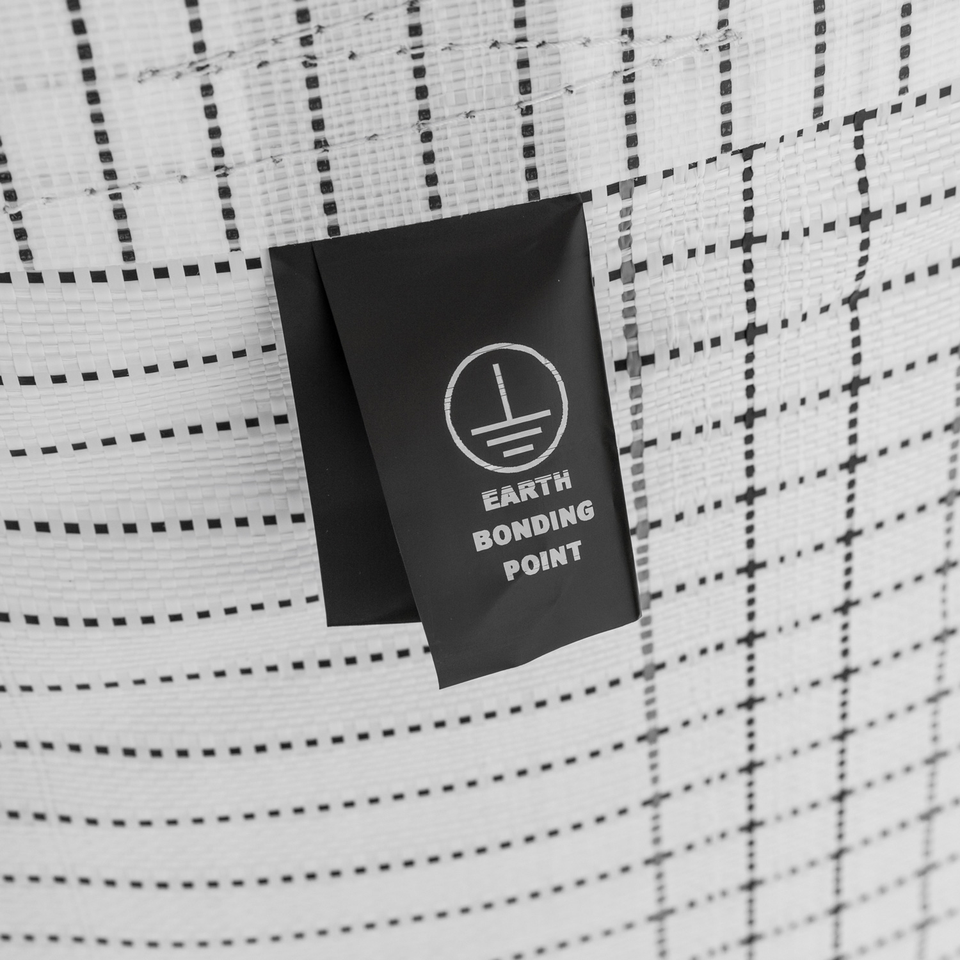
| ⚠️ SAFETY REQUIREMENT: Type C FIBC bags for flammable powders MUST be grounded to a verified earth point (resistance < 10⁷ ohm) before and during ALL filling and discharge operations. Never use these bags ungrounded. |
Typical Applications Industries
- Organic fine powders with MIE < 3 mJ: lycopodium, cornstarch, certain pharmaceutical actives
- Flammable mineral dusts: aluminium powder, magnesium powder, titanium powder
- Reactive chemical powders in solvent-wet environments where vapour concentrations reach explosive limits
- Sugar, starch, and flour in processing environments with co-presence of cleaning solvents
- Carbon black and conductive pigments in areas with flammable gas or vapour exposure
| 💡 BUYER TIP: For materials with MIE below 3 mJ, conduct a formal process safety review before finalising your FIBC specification — bag type is only one element of the complete ignition control strategy. |
Technical Specifications
| Type Classification | Type C (IEC 61340-4-4) |
| Grounding Resistance | < 10⁷ ohm from any bag point to ground — batch certified |
| MIE Suitability | Safe for materials with MIE < 3 mJ when properly grounded |
| Environment Suitability | Flammable gases, vapours, combustible dusts (ATEX Zone 1 & 2) |
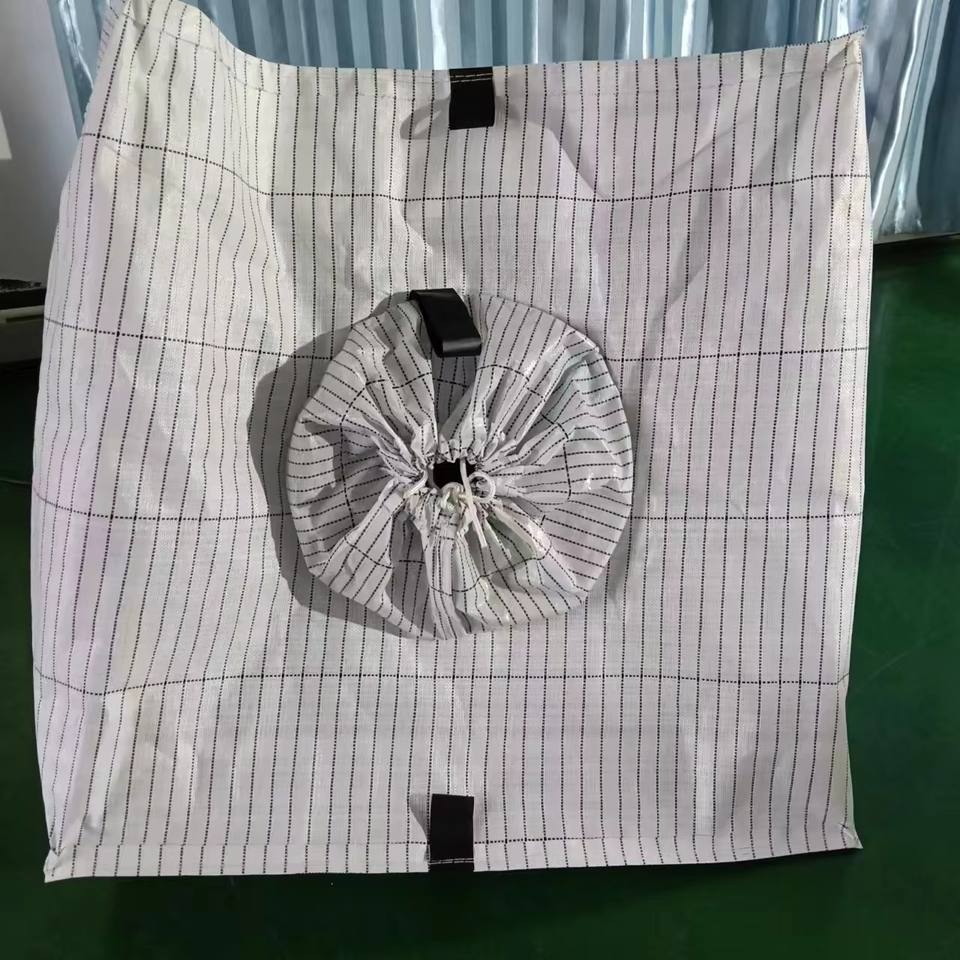
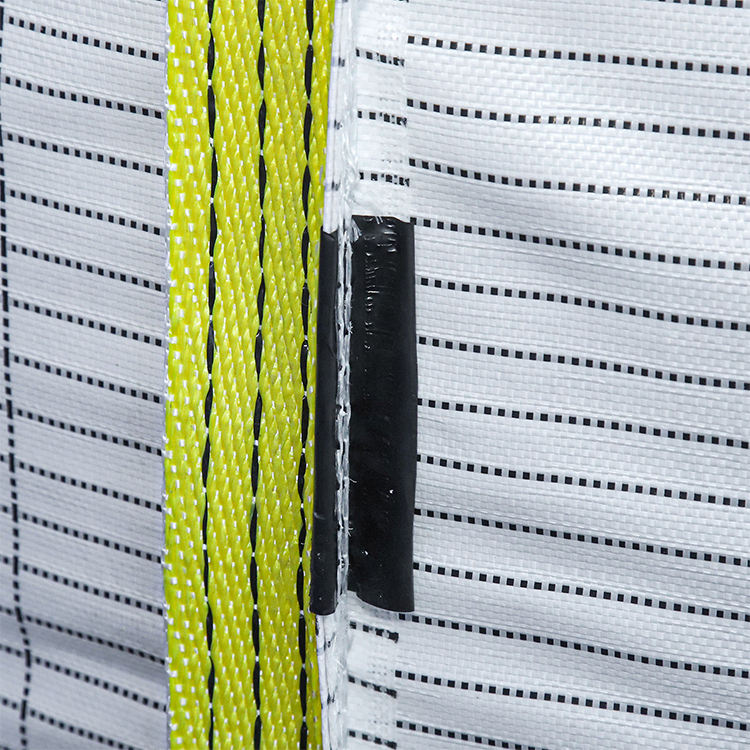
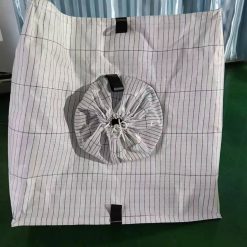
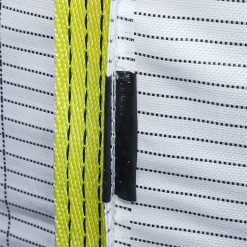
| Conductive Thread | Interwoven throughout fabric in continuous grid pattern |
| Construction Options | Circular / U-Panel / 4-Panel |
| Safe Working Load | 500 kg – 2,000 kg |
| Safety Factor | 5:1 (single-use) / 6:1 (multi-trip) |
| Fabric Weight (GSM) | 100 – 220 gsm |
| Seams | Sift-proof seams — standard for fine flammable powders |
| Liner | Conductive L1 liner available for complete matched system |
| Top Options | Spout top (preferred for dust control) / Open top / Duffle top |
| Bottom Options | Flat bottom / Discharge spout / Conical discharge |
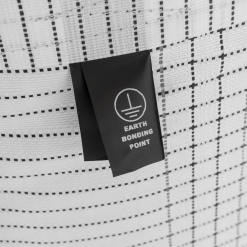
| Grounding Connection | Grounding ribbon — specify connector type (alligator / banana / ring) |
| Test Standard | IEC 61340-4-4 |
| Certification | ISO 21898; SGS tested; electrostatic test report per batch |
Frequently Asked Questions
Q1: How do I determine whether my powder requires Type B or Type C bags?
The key decision factors are: (1) MIE of your powder — if MIE is below 3 mJ, the bag is required regardless of environment. If MIE is above 3 mJ, move to factor 2. (2) Environment — if your filling or discharge area contains flammable gases, solvents, or vapours at any time (including during cleaning cycles). If the environment is strictly vapour- and gas-free, Type B may be acceptable. (3) ATEX zone classification — Zone 1 mandates Type C or D. Always consult your process safety engineer and IEC 61340-4-4 for the definitive determination for your specific material and environment.
Q2: What is the significance of the 10⁷ ohm grounding resistance threshold?
The 10⁷ ohm (10 megaohm) threshold is defined in IEC 61340-4-4 as the maximum resistance that still allows effective static charge dissipation to ground at a rate faster than charge accumulates during normal filling and discharge. Above 10⁷ ohm, the dissipation path is too resistive to prevent charge build-up, defeating the Type C protection mechanism.
Q3: Can I use Type C bags for aluminium powder?
Aluminium powder is an extremely sensitive flammable dust with a very low MIE. Type C bags with proper grounding are generally the correct specification for aluminium powder handling. However, aluminium powder also has unique ignition characteristics — it can react with water and other materials — so your complete process safety assessment must consider bag material compatibility, moisture exclusion, and emergency procedures in addition to electrostatic classification. We recommend engaging a process safety specialist for the complete assessment and will provide our full technical documentation to support it.
Q4: Is Type D ever preferable to Type C for flammable powder handling?
Type D bags dissipate static charge without requiring a grounding connection, which can be operationally simpler — there is no grounding ribbon to connect and no grounding resistance to verify before each fill. However, Type D bags are generally more expensive than Type C, and their safe use depends on the absence of conductive contamination on the bag surface (grease, water, metal particles), which can interfere with the dissipative mechanism. For facilities with reliable, verified grounding infrastructure, Type C is typically the more cost-effective choice.
Contact Us
| Handle your most sensitive flammable powders safely with verified Type C FIBC bags. Request IEC 61340-4-4 test reports, material safety documentation, and pricing.
→ Request Flammable Powder Type C Quote |