
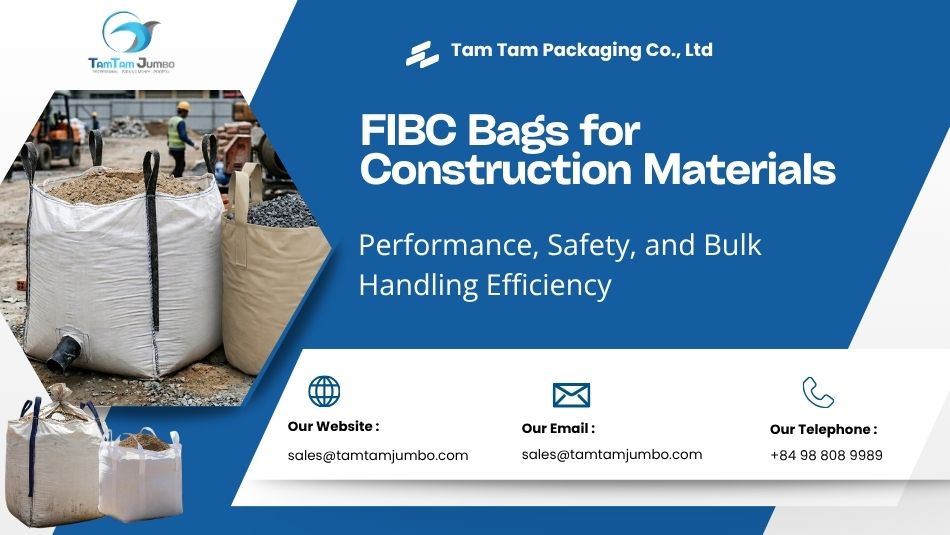
Walk onto almost any construction site or materials yard and the bulk bags you see will overwhelmingly be 1000kg capacity, but what’s inside them, and what the bag itself needs to do, varies a lot more than the shared capacity suggests. Cement, sand, gypsum, and pre-blended dry mix products each carry different specification priorities. This guide brings those together into one overview of what FIBC bags for construction actually need to address.
Why Construction Materials Don’t Share a Single FIBC Specification
Construction materials get grouped together as one FIBC application in a lot of sourcing conversations, but the actual physical and handling characteristics driving specification, particle fineness, moisture reactivity, abrasiveness, and blend consistency, differ enough between materials that a single generic construction bag rarely serves all of them well.
Cement: Sift Proofing and Hydration Protection
Cement’s fine particle size and permanent chemical reaction with moisture make sift proof seam construction and moisture protection the two central requirements, combined with UV stabilization for the extended outdoor yard storage cement commonly experiences.
Read more: FIBC Bags for Cement: A Specification Guide for This Industry
Sand and Aggregate: Abrasion Resistance and Moisture Variability
Sand’s coarser particle size means standard seams are usually adequate, but its abrasive texture and the significant weight variability between wet and dry sand shift the specification priorities toward fabric wear resistance and safe working load margin rather than sift proofing.
Read more: FIBC Bags for Sand: A Specification Guide Across Bulk Bag Industries
Gypsum, Mortar, and Dry Mix Products
Gypsum shares cement’s fine particle size and moisture reactivity, since gypsum products also set through a hydration process and lose performance if exposed to humidity before use, making sift proof and moisture proof construction relevant here as well. Pre-blended dry mix products, combining sand, cement, and various additives, introduce an additional consideration: segregation, where components of different density and particle size can separate during transport and vibration, settling unevenly within the bag. Buyers sourcing bags for blended dry mix products should discuss fill and handling practices with their supplier, since bag construction alone cannot fully prevent segregation if filling and transport conditions encourage it.
Read more: Moisture Proof FIBC Bags: What Triple Proofed Actually Combines
Why 1000kg Is the Default Capacity Across Construction Materials
1000kg capacity aligns conveniently with standard forklift and crane equipment used across construction supply chains, and with metric ton-based ordering and delivery calculations common in the industry. Buyers moving very high shipment volumes sometimes shift to 1500kg or 2000kg for fewer handling cycles, but this requires confirming site equipment can accommodate the increased weight before committing.
Read more: FIBC Bag Sizes Explained: Matching SWL to Common Capacity
Handling Conditions Common to All Construction Site Materials
Regardless of the specific material, construction site bags share several common handling realities: repeated forklift and crane handling across multiple supply chain stages, extended outdoor storage at yards and job sites, and generally rougher treatment than bags moving through more controlled indoor supply chains. This makes UV stabilization and reinforced base and loop stitching practical baseline considerations across nearly every construction material category, even when the core product-specific requirements differ.
Read more: FIBC UV Protection: What Outdoor Bag Storage Actually Requires
Building a Complete Construction Materials FIBC Specification
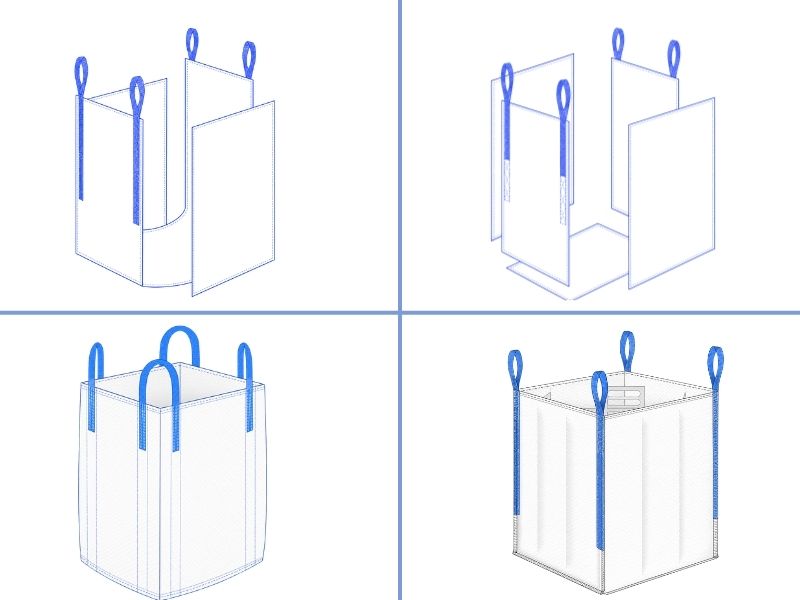
Once the specific material category is identified, cement, sand, gypsum, or dry mix, a complete specification typically layers on UV stabilization for outdoor storage and reinforced stitching for repeated handling as baseline requirements common across the category.
Common Construction Materials FIBC Specification Combinations
| Material | Typical Specification Combination |
| Standard bagged cement | Sift proof seams, moisture proof coating, UV stabilization, 1000kg capacity |
| Construction sand | Abrasion-resistant fabric, weight margin for moisture, standard UV stabilization |
| Gypsum powder | Sift proof seams, moisture proof liner, UV stabilization |
| Pre-blended dry mix | Sift proof seams, fill and transport guidance to limit segregation, UV stabilization |
How Tam Tam Packaging Specifies Bags for Construction Materials
Tam Tam Packaging identifies the specific construction material category first, cement, sand, gypsum, or blended dry mix, before finalizing seam, moisture, and UV specifications, layering reinforced stitching and capacity matched to site handling equipment across all construction material orders.
Common Mistakes When Sourcing Construction FIBC Bags
- Applying a single generic construction bag specification across cement, sand, and dry mix products with genuinely different requirements.
- Underestimating UV exposure duration for bags stored outdoors at yards and job sites for months.
- Overlooking segregation risk for pre-blended dry mix products during transport.
- Moving to higher capacity bags without confirming forklift or crane equipment is rated for the increased weight.
- Using standard stitching for base seams and loops that will see repeated rough handling across multiple supply chain stages.
Applications Across the Construction Industry
Construction FIBC applications span cement and aggregate producers, ready-mix and dry mix manufacturers, and building material distributors supplying job sites directly, each handling materials with different specification priorities but generally similar outdoor storage and repeated handling conditions. Working through the material-specific requirements first, then layering on the common construction site handling considerations, produces a specification that actually holds up in practice.
Frequently Asked Questions
Why is 1000kg the standard FIBC capacity for construction materials?
It aligns with standard forklift and crane equipment used across construction supply chains and with common metric ton-based ordering calculations.
Do cement and sand need the same bag specification?
No. Cement needs sift proof seams and moisture protection due to its fine particle size and hydration sensitivity, while sand needs abrasion-resistant fabric and weight margin for moisture variability.
What is segregation in dry mix products?
It refers to different density components in a blended product separating and settling unevenly during transport and vibration, a consideration specific to pre-blended dry mix construction materials.
Do construction FIBC bags need UV stabilization?
In most cases yes, since construction materials commonly sit outdoors at yards and job sites for extended periods before use.
What capacity should I choose beyond the standard 1000kg?
1500kg or 2000kg can reduce handling cycles for high-volume shipments, but only after confirming site forklift or crane equipment is rated for the increased weight.
Conclusion
FIBC bags for construction share a common default capacity and similar site handling conditions, but the core specification, seam type, moisture protection, and abrasion resistance, needs to be built around the specific material. Cement, sand, gypsum, and dry mix products each deserve their own assessment rather than a single generic construction bag.
Tam Tam Packaging Co. builds FIBC specifications across construction materials, from cement and sand to gypsum and blended dry mix. Contact our team to work through the right specification for your product.
Contact Us
Tam Tam Packaging Co.
Email: sales@tamtamjumbo.com
Website: https://tamtamjumbo.com/
Read more
FIBC Bags for Recycling Industry: Bulk Bag Across Material Stream
Recycling operations move an unusually wide range of material through FIBC packaging, plastic flakes, metal...
Sep
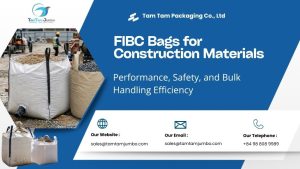
FIBC Bags for Construction: A Complete Guide Across Materials
Walk onto almost any construction site or materials yard and the bulk bags you see...
Aug
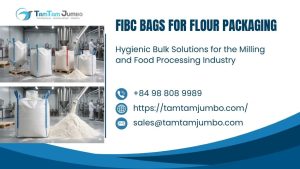
FIBC Bags for Flour: Why Allergen Status Change the Specification
Flour shares the fine-particle and combustible dust characteristics of other food powders, but wheat’s status...
Aug
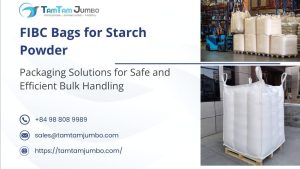
FIBC Bag for Starch Powder: Dustproof Bag Needs Antistatic
Starch powder occupies an unusual position in FIBC specification: it is a common food and...
Aug
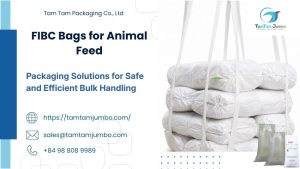
FIBC Bags for Animal Feed: What Actually Makes a Clean Bulk Bag
FIBC bags for animal feed mean something more specific than a bag that looks unused....
Aug
FIBC Bag for PET Flakes: Why UV Resistance Matter More Than It
Recycled PET flakes share a base polymer with virgin resin pellets, but the two behave...
Aug