

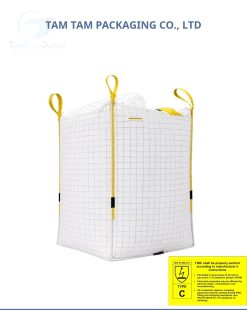
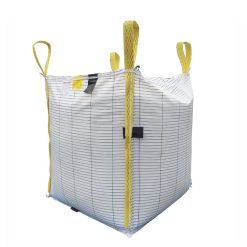
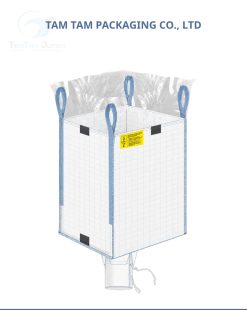
Product Description
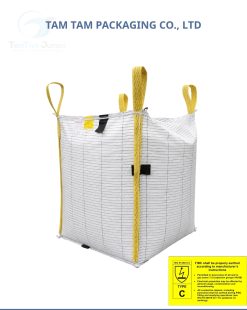
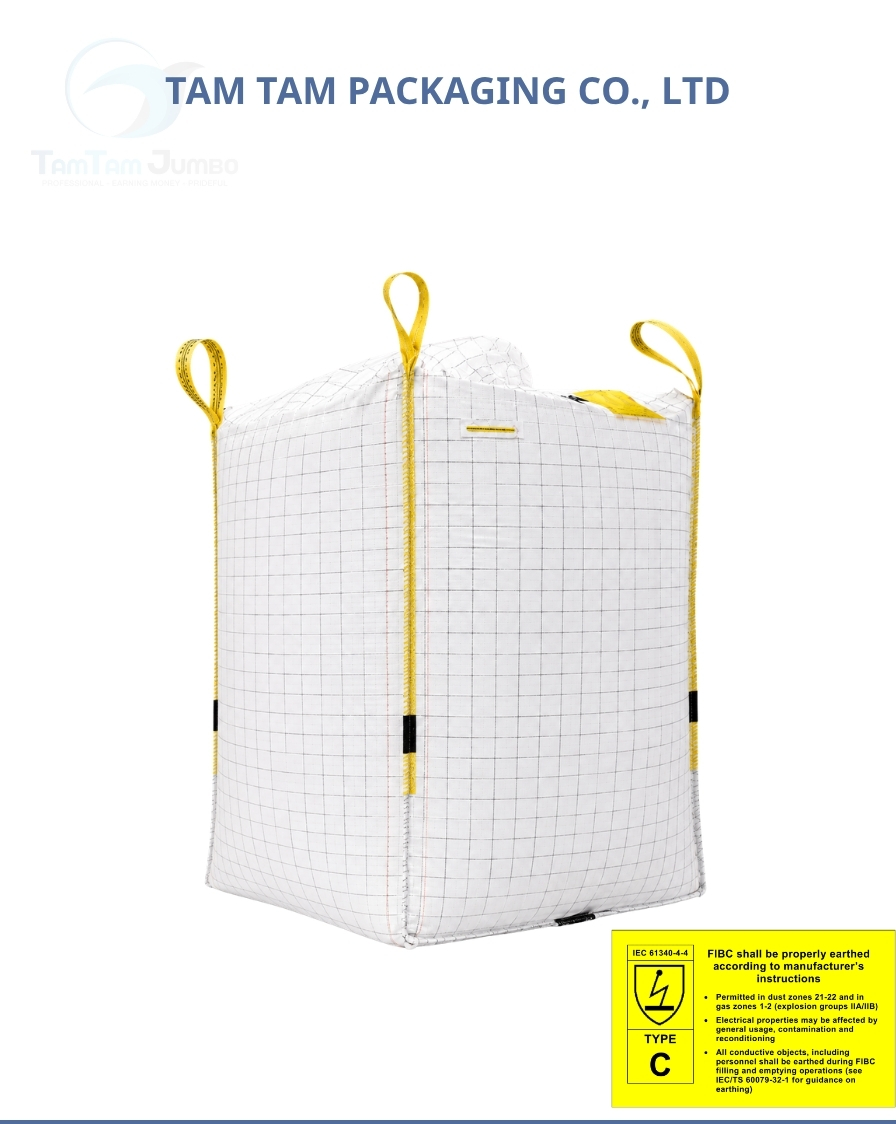
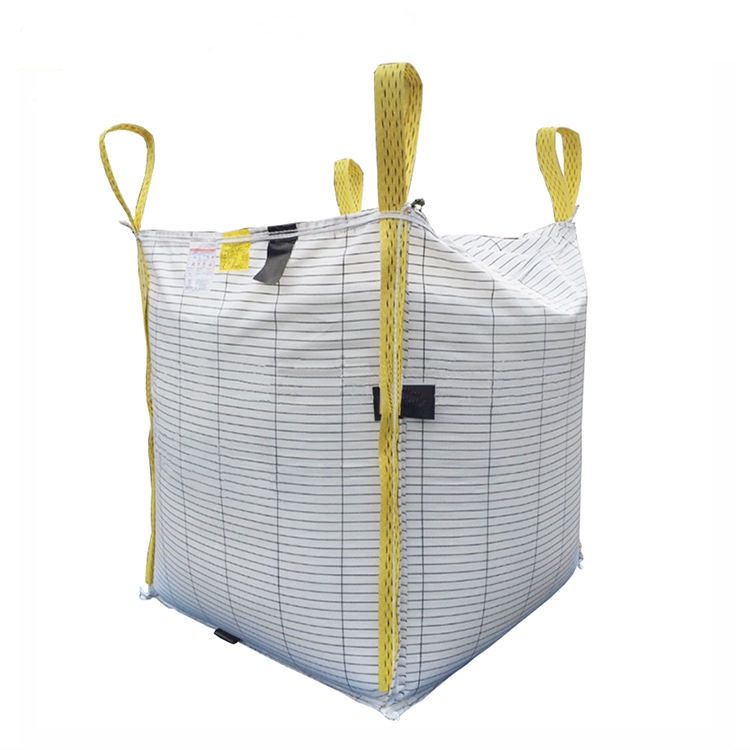
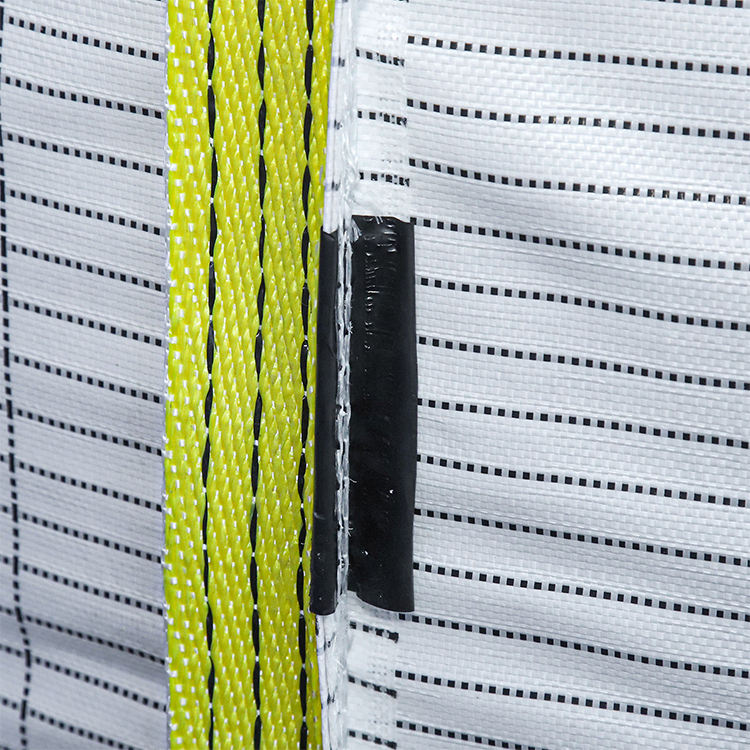
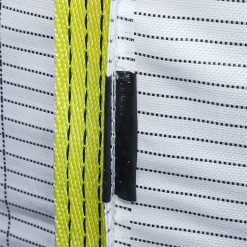
Type C FIBC bags with a conductive thread grid protect the outer fabric surface from electrostatic discharge. But when a standard non-conductive PE liner is inserted inside the bag, a critical gap appears: the inner liner surface — the surface in direct contact with the powder product — is electrically isolated from the conductive bag body. Static charge generated by powder moving against this inner PE surface has no path to ground, and can accumulate to ignition-capable levels without any of the protections provided by the Type C outer bag.
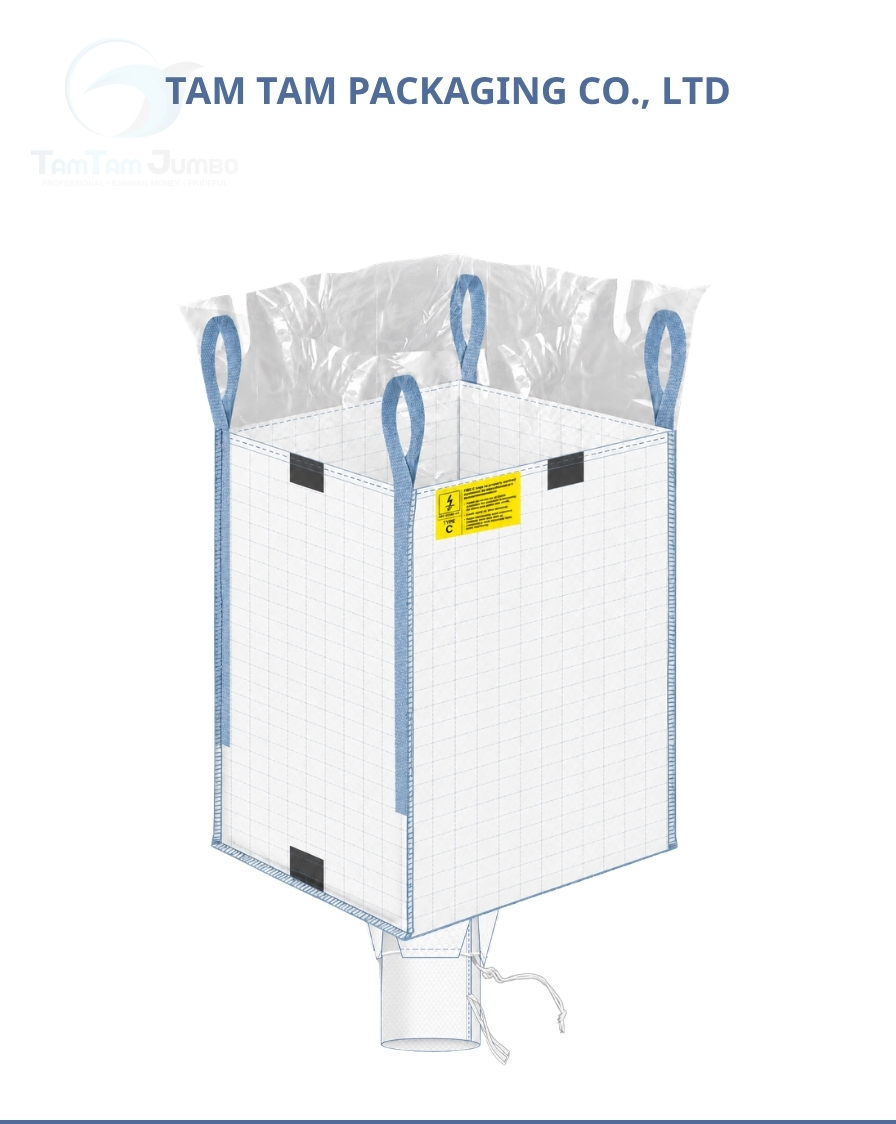
The solution is a matched system: a Type C FIBC bag combined with a conductive L1 liner. Our conductive L1 liners are manufactured from a polyethylene blend containing carbon black, giving the liner film a conductivity that connects it electrically to the Type C bag grounding path. When the bag is grounded, static charge generated at the product-liner interface dissipates through the conductive liner into the bag body and to earth — providing complete, verifiable static protection across every surface the product contacts.
Inner Liner Configuration — Electrostatic Protection Comparison
| Configuration | Inner Surface Protection | Suitable For |
| Type C bag — no liner | Outer bag surface grounded only | Dry products with no inner-surface static generation |
| Type C bag + standard PE liner | Outer bag grounded; inner liner isolated — GAP | Not recommended for sensitive flammable powders |
| Type C bag + conductive L1 liner | Outer bag AND inner liner grounded — complete system | All flammable powder applications requiring liner |
| Type C bag + antistatic L2 liner | Outer bag grounded; inner liner dissipates passively | Intermediate risk — verify with process safety engineer |
Why Choose This Bag?
- Eliminates the electrostatic gap between outer conductive bag and inner PE liner — the most common specification error in Type C bag systems
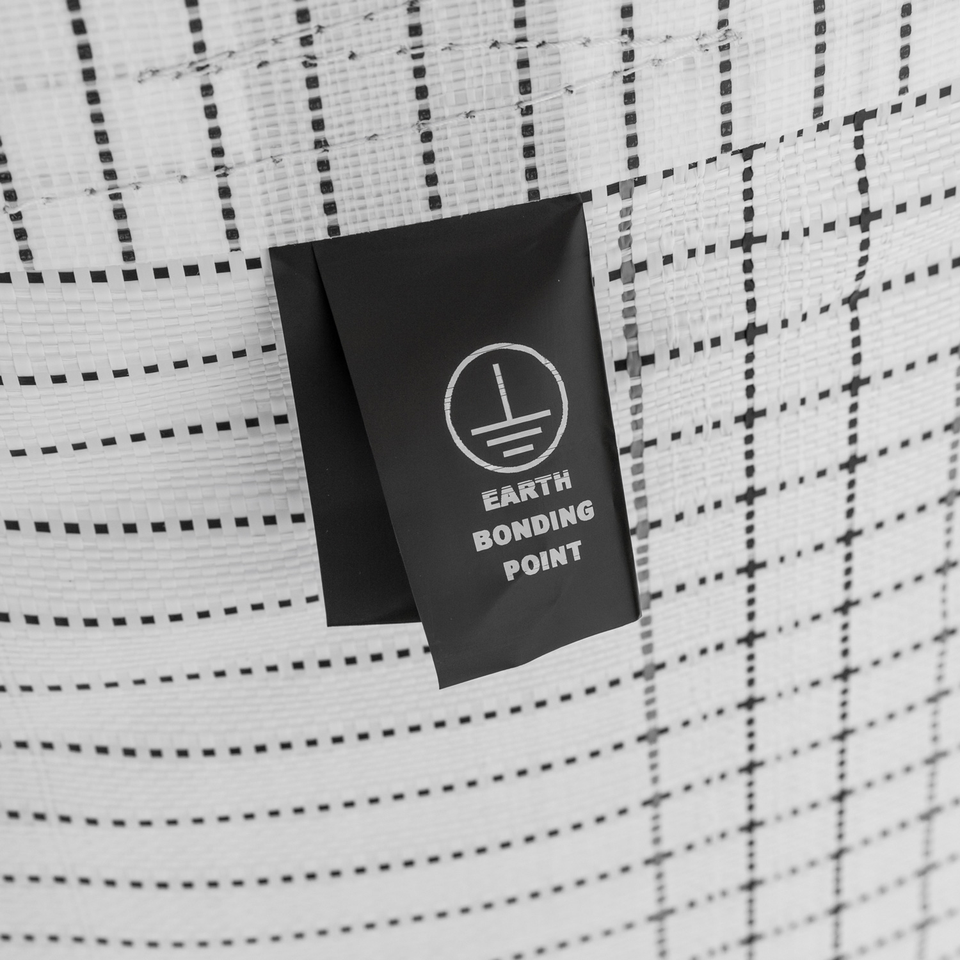
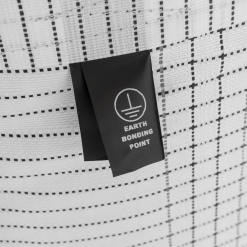
- Single grounding connection earths both the bag fabric and the conductive liner simultaneously — no additional connections required
- Factory-matched system: bag and liner manufactured together with confirmed electrical continuity between conductive thread grid and liner film
- Reduces product residue vs tube liners — form-fit construction available for complete, clean discharge on high-value materials
- Full matched-system documentation: IEC 61340-4-4 test report covers bag and liner as a combined system
| ⚠️ SAFETY REQUIREMENT: Type C bags with a standard non-conductive PE liner do NOT provide complete electrostatic protection for sensitive flammable powders. The inner liner must be conductive (L1) to complete the grounding path from the product-contact surface to earth. Always specify the conductive L1 liner alongside the Type C bag for applications requiring liner moisture or contamination protection. |
Typical Applications Industries
- Flammable chemical powders requiring a liner for moisture or contamination protection inside a Type C bag
- Pharmaceutical APIs in ATEX suites where contamination control requires a liner but electrostatic grounding is also mandatory
- Fine organic dusts (MIE < 3 mJ) where product-liner interface charge generation is the primary static source
- Hygroscopic flammable powders requiring both moisture barrier (liner) and electrostatic protection (Type C system)
- Any application where a liner is required inside a Type C bag and product sensitivity to electrostatic discharge is high
| 💡 BUYER TIP: Order Type C bags and conductive L1 liners as a matched pair from a single supplier — us. This ensures the liner conductivity is verified compatible with the bag’s conductive thread grid, and your IEC 61340-4-4 documentation covers the complete system rather than two separately tested components that may not form a proven electrical system together. |
Technical Specifications
| System | Type C FIBC bag + Conductive L1 liner (matched pair) |
| Bag Classification | Type C (IEC 61340-4-4) |
| Liner Classification | L1 Conductive liner (PE + carbon black blend) |
| Bag Grounding Resistance | < 10⁷ ohm (bag-to-ground) |
| Liner Conductivity | Connected to bag conductive grid — grounded via bag earth connection |
| System Coverage | Complete — outer fabric + inner liner both grounded through single connection |
| Liner Form | Tube liner (standard) / Form-fit liner (preferred for fine powders) |
| Liner Thickness | 80 – 200 micron (specified by product abrasiveness and weight) |
| Liner Fitting | Factory-installed: tabbed (8-point), glued, or sewn-in |
| Bag Construction | Circular / U-Panel / 4-Panel |
| Safe Working Load | 500 kg – 2,000 kg |
| Safety Factor | 5:1 (single-use) / 6:1 (multi-trip) |
| Top Options | Spout top (bag) + matching liner spout / Open top + liner cuff |
| Bottom Options | Discharge spout (bag) + liner tail / Flat bottom |
| Documentation | Matched system IEC 61340-4-4 test report; COA for both bag and liner |
| Certification | ISO 21898; IEC 61340-4-4; SGS tested |
Frequently Asked Questions
Q1: Why is a standard PE liner not safe inside a Type C bag for sensitive flammable powders?
A standard PE liner is an electrical insulator. When powder moves against its inner surface during filling or discharge, triboelectric charge accumulates on the liner film. Because the liner is not electrically connected to the Type C bag’s grounding path, this charge has no route to earth and can build up to levels capable of causing an incendiary spark or brush discharge — exactly the hazard the Type C bag is designed to prevent. Replacing the PE liner with a conductive L1 liner restores the complete grounding path from inner surface to earth and eliminates this vulnerability.
Q2: Is the grounding path through the conductive liner verified separately from the outer bag?
In a matched system, we test the conductivity of the liner film and the electrical connection between the liner and the bag’s conductive grid as part of the combined system qualification. The IEC 61340-4-4 test report covers both components together, confirming that the complete path — inner liner surface to earth — meets the < 10⁷ ohm requirement. This combined system documentation is what your process safety team needs for the ATEX risk assessment.
Q3: Does the conductive liner affect the product in terms of contamination or leachables?
Our conductive L1 liners use a carbon-black-loaded PE blend. For pharmaceutical APIs and food-contact applications, specify this requirement at the quotation stage — we will recommend the appropriate conductive liner grade and provide the necessary material declarations. For standard industrial chemical applications, the carbon black content is not typically a concern.
Q4: Can the conductive liner be supplied loose for on-line insertion, or must it be factory-fitted?
Both options are available. Factory-fitted conductive liners are tabbed or glued to the bag interior at 8 points, ensuring reliable electrical contact between liner and bag conductive grid and consistent liner positioning at the filling station.
Contact Us
| Specify the complete grounded system — Type C FIBC bag with matched conductive L1 liner. Contact us for combined system IEC 61340-4-4 documentation and pricing.
→ Request Type C + L1 Liner System Quote |