
Product Description
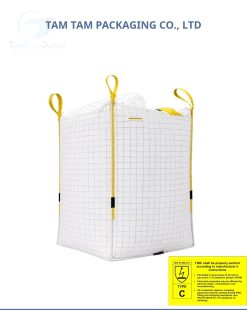
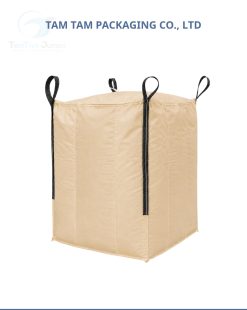
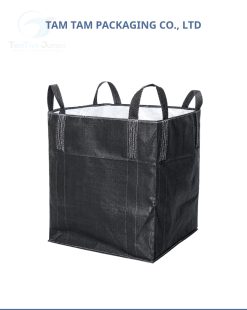
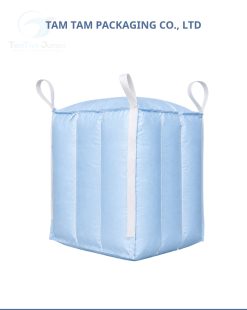
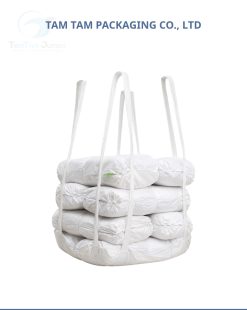
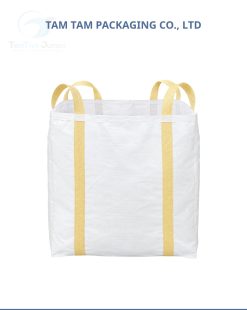
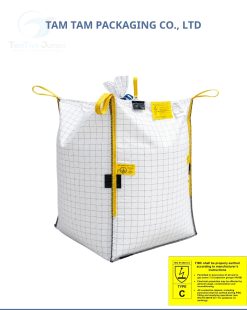
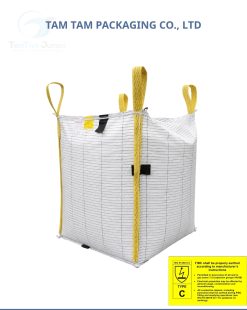
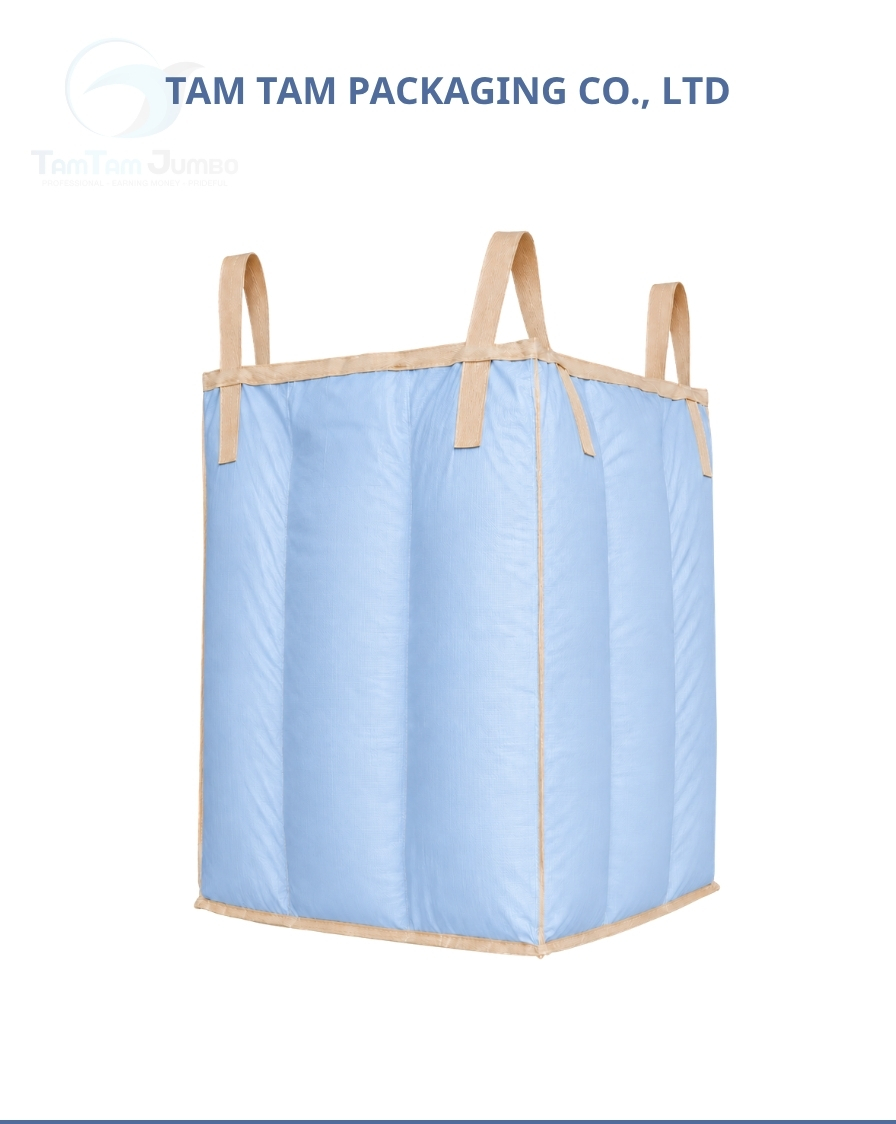
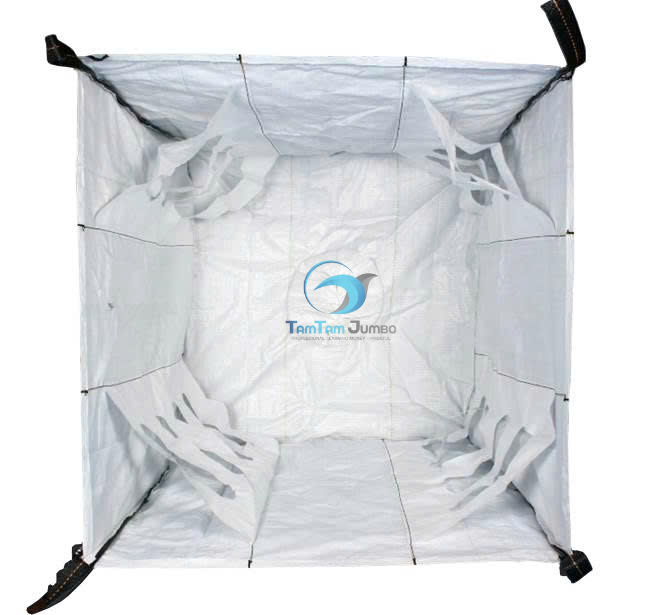
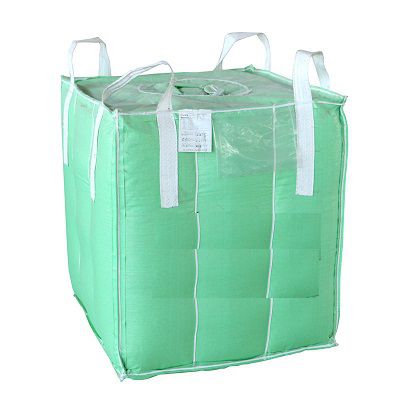
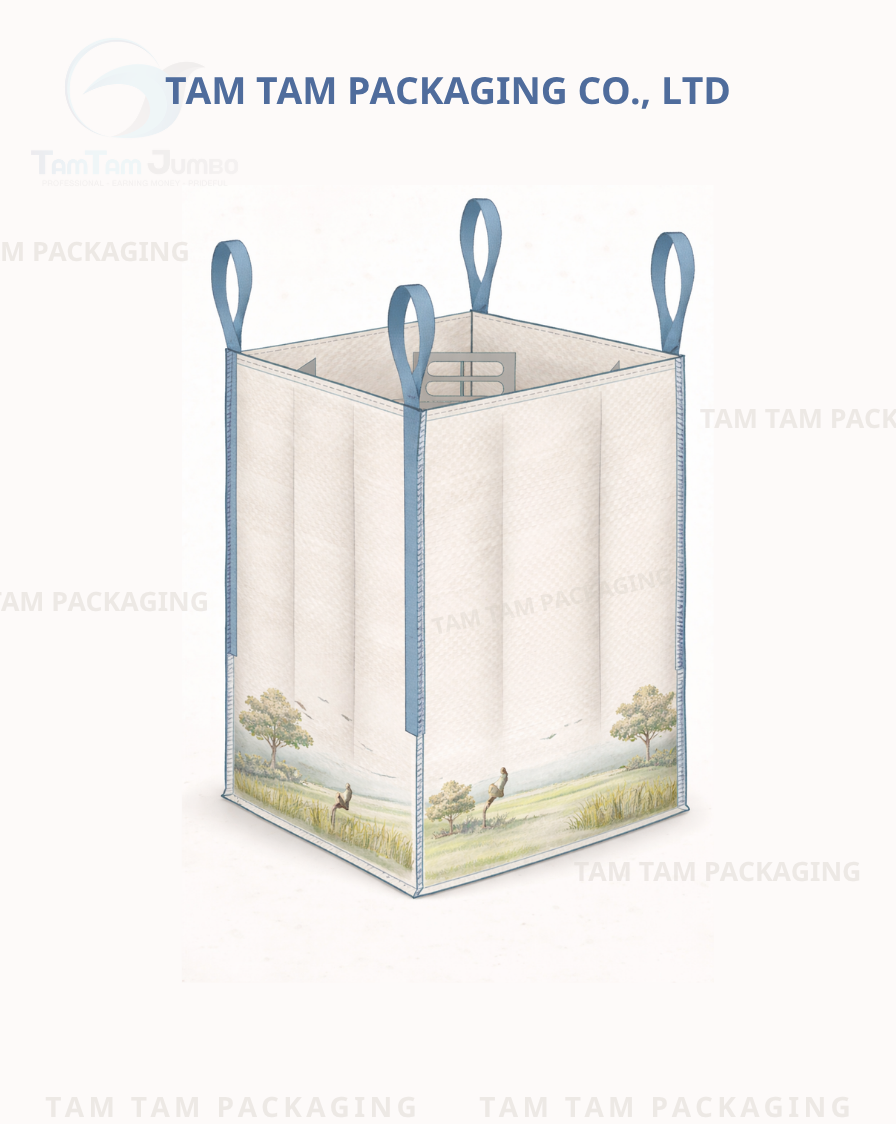
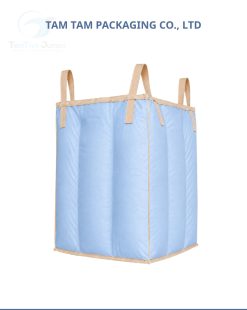
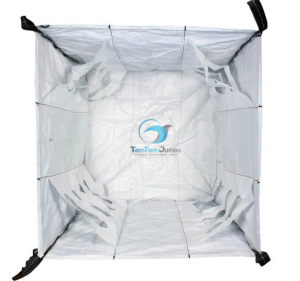
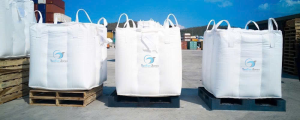
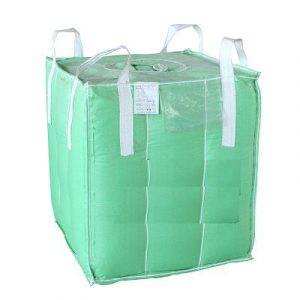
The 4-Panel Baffle FIBC Bag — widely known as a Q-Bag — is the most dimensionally stable construction available in the FIBC market. Unlike U-panel or circular bags that balloon outward under load, the 4-panel baffle design uses four individual fabric panels stitched together at every corner, with internal baffle panels sewn across each corner seam. The result is a bag that maintains a near-perfect cubic shape from base to lifting loops, regardless of how it is filled or what product it contains.
Compared to standard FIBC bags, 4-panel baffle bags hold up to 30% more product within the same floor footprint, stack more stably to greater heights, and perform consistently in automated palletising and robotic warehousing systems. At Tam Tam Packaging, we manufacture 4-panel Q-bags across the full range of sizes, SWL ratings, and top/bottom configurations, with ISO 21898 certification and SGS quality inspection as standard.
Baffle Construction Comparison
| Construction | Shape When Filled | Best For |
| Circular baffle | Square with rounded corners | Fine powders, lower cost |
| U-panel baffle | Square (slight wall curve) | Cost-effective general use |
| 4-Panel baffle | True square — straightest walls | Maximum space efficiency, export, automation |
Why Choose This Bag?
- Straightest walls of any baffle construction — 4-panel design achieves near-perfect cubic shape when filled
- Up to 30% greater product volume per container footprint vs standard FIBC bags — direct freight cost saving
- Superior stacking stability — flat faces contact evenly, enabling safer, higher stacking in warehouses and containers
- Consistent bag geometry is ideal for automated filling lines and robotic palletising systems
- Available in all electrostatic types (A, B, C, D) and with all standard top/bottom configurations
| 💡 BUYER TIP: Before finalising your 4-panel baffle bag order, ask us to run a container load simulation using your bag dimensions. We can calculate the theoretical improvement in bags-per-container for your specific size, giving you a precise ROI figure before you commit to a production order. |
Typical Applications Industries
- Export bulk commodities: rice, grains, minerals, chemical powders requiring maximum container fill
- High-density warehouse storage: resins, pellets, carbon black, calcium carbonate
- Automated manufacturing and logistics environments require consistent bag geometry
- Fine powders prone to corner bridging — baffle corners ensure complete, even fill distribution
- Any application where pallet stability and stacking height are operational priorities
Technical Specifications
| Construction | 4-Panel with internal corner baffles (Q-Bag) |
| Type Classification | Type A (standard); Type B / C / D on request |
| Safe Working Load | 500 kg – 2,000 kg |
| Safety Factor | 5:1 (single-use) / 6:1 (multi-trip) / 8:1 (heavy-duty) |
| Baffle Design | Woven PP corner baffles sewn at 6–12 attachment points per panel |
| Space Efficiency Gain | Up to 30% more product per floor footprint vs standard FIBC |
| Fabric | 100% Virgin PP woven, UV-stabilised |
| Fabric Weight (GSM) | 110 – 250 gsm |
| Coating | Coated or Uncoated |
| Lifting Loops | 4 corner loops (standard) / Cross-corner loops available |
| Top Options | Open top / Spout top / Duffle top |
| Bottom Options | Flat bottom / Discharge spout / Conical discharge |
| Liner | Optional PE tube / Form-fit / PE/AL foil liner |
| Printing | Up to 4-colour flexographic |
| Certification | ISO 21898; SGS tested |
Frequently Asked Questions
Q1: Why is the 4-panel construction better than U-panel for form stability?
A 4-panel bag has four separate side panels stitched together at all four corners — creating a rigid corner structure that naturally resists outward bulging. A U-panel bag uses a single U-shaped fabric piece for two sides and the base, leaving the corner seam areas slightly less constrained.
Q2: How do I calculate the freight saving from switching to 4-panel baffle bags?
The simplest method: count how many of your current bags fit in a 20-foot container, then order a sample pallet of 4-panel baffle bags and recount. Customers typically find 10–30% more bags per container, depending on their current bag’s bulge. Multiply the extra bags per container by your product weight per bag and your freight rate per tonne to calculate your saving per shipment.
Q3: Are 4-panel baffle bags compatible with automated filling and palletising equipment?
Yes — in fact, 4-panel baffle bags are the preferred FIBC construction for automated and robotic systems. Their consistent cubic geometry gives robotic grippers and palletising systems a predictable bag profile that does not vary with fill level, unlike rounded standard bags.
Q4: Can 4-panel baffle bags be produced with Type C conductive fabric for hazardous powders?
Yes. The baffle construction is independent of the electrostatic fabric classification. We produce 4-panel baffle bags in Type A, Type B (low breakdown voltage), Type C (conductive/groundable), and Type D (dissipative) fabrics. Specify your required electrostatic classification alongside the baffle and panel construction when requesting a quotation.
| Maximise every container you ship with 4-Panel Baffle FIBC bag. Request samples, a container load calculation, and competitive pricing today.
→ Request a Q-Bag Quote – Contact Us |