
Product Description
When a combustible powder is filled into or discharged from FIBC bags, the friction between the powder and the liner film can generate significant electrostatic charge. For products with low ignition energy, this charge poses a genuine explosion risk — and the liner itself can be the source of that hazard if it is not engineered for static control.
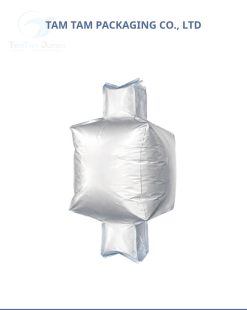
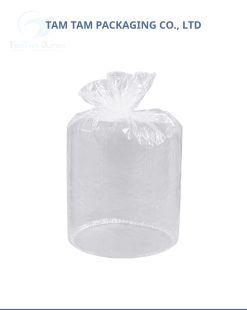
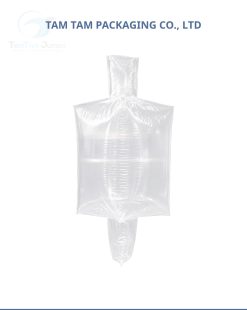
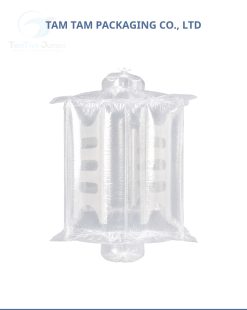
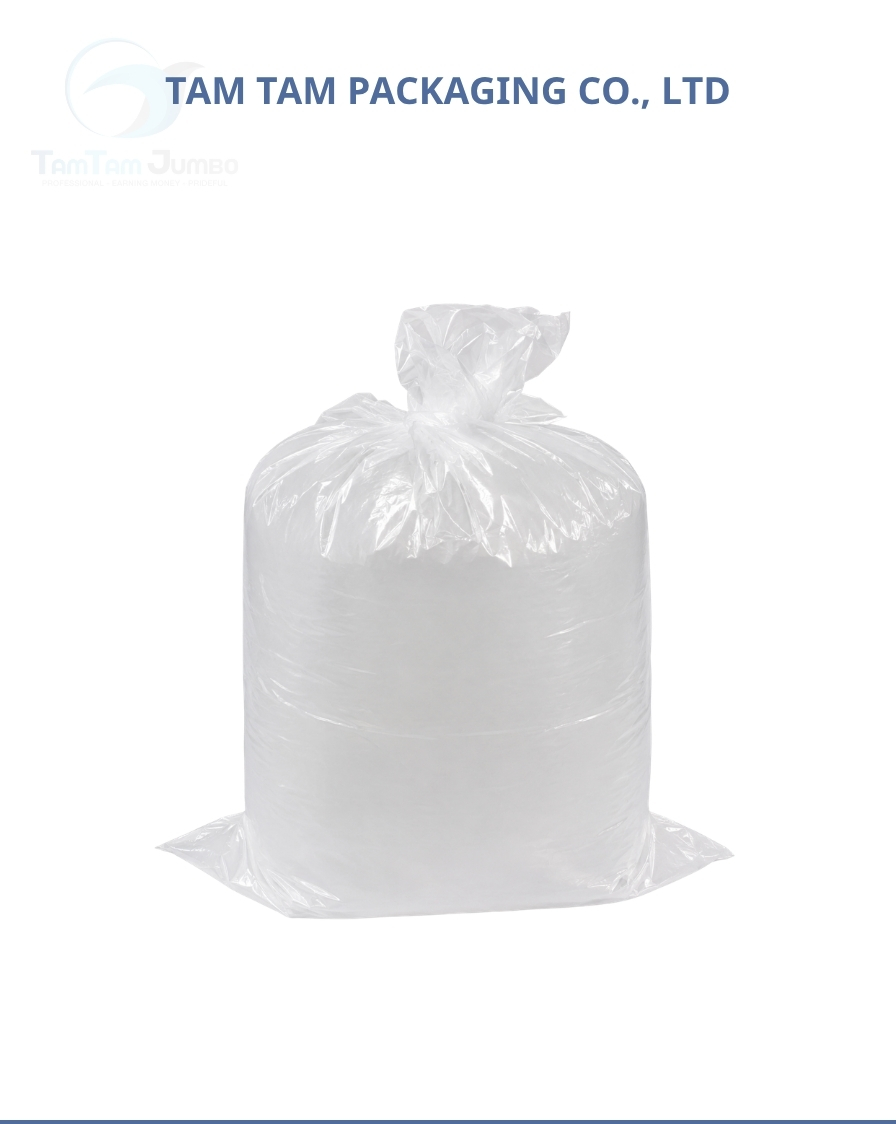
We manufacture two distinct categories of static-control liner. Conductive liners (commonly designated L1) are produced from a blend of polyethylene and carbon black, providing a continuous conductive path that allows static charge to dissipate safely to ground when used with properly earthed Type C FIBC bags. Antistatic liners (designated L2) are produced using antistatic resin additives that dissipate static charge without requiring a grounding connection, making them suitable for combustible powder applications where grounding infrastructure may not be available.
Why Choose This Liner?
- L1 conductive liners provide a verified path-to-ground for safe static dissipation in Type C FIBC systems
- L2 antistatic liners dissipate charge without grounding — simpler operational requirement than L1
- Engineered specifically to address combustible dust explosion risk during filling and discharge
- Available in both form-fit and tube liner construction to match your FIBC liner preference
- Compatible with food-grade and standard industrial powder applications
| ⚠️ TECHNICAL NOTE: Antistatic and conductive liners do not replace the need for a correctly classified outer FIBC bags (Type B or Type C). Liner and bag must be specified together as a matched system for your application’s electrostatic safety requirements. |
Typical Applications Industries
- Combustible chemical powders requiring Type C grounded FIBC systems
- Plastic resins and polymer powders with static sensitivity
- Pharmaceutical powders processed in classified (ATEX) areas
- Fine mineral powders with electrostatic discharge risk
- Food powders (flour, starch, sugar) in combustible dust environments
Technical Specifications
| L1 Conductive Liner — Material | Polyethylene + carbon black blend |
| L1 Conductive Liner — Function | Provides continuous conductive path to ground (requires earthed Type C FIBC) |
| L1 Conductive Liner — Use Case | Combustible powders in classified ATEX environments |
| L2 Antistatic Liner — Material | Polyethylene with antistatic resin additive |
| L2 Antistatic Liner — Function | Dissipates static charge without grounding requirement |
| L2 Antistatic Liner — Use Case | Combustible powders where grounding infrastructure is unavailable |
| Form Style | Form-fit / Lay-flat tube (both available) |
| Thickness Range | 80 – 200 micron |
| Shelf Life (L2 migratory film) | Typically 12 months from manufacture date |
| Fitting Method | Tabbed (8-point) / Glued / Loose insert |
| Food Grade | Available on request |
| Test Standard | IEC 61340-4-4 (conductivity/dissipation performance) |
| Certification | ISO 9001; SGS tested; conductivity test report supplied |
Frequently Asked Questions
Q1: What is the difference between an L1 and L2 liner?
L1 (conductive) liners are made from a PE and create a physical conductive path that must be connected to an earthed FIBC and grounding point. L2 (antistatic) liners use antistatic resin additives that dissipate charge through the film itself without requiring a grounding connection. L1 provides a more robust, verifiable safety mechanism for high-risk environments; L2 offers simpler operation where grounding infrastructure is impractical.
Q2: Can I use an antistatic liner inside a Type A or Type B FIBC bag instead of upgrading to Type C?
This depends on your specific risk assessment. An L2 antistatic liner reduces static generation at the product-liner interface, but the outer bag fabric’s electrostatic classification (Type A, B, or C) still governs the overall system safety rating. For combustible powders in ATEX-classified environments, consult your safety engineer — in most cases, Type C FIBC bags with L1 liner is the recommended combination for the highest-risk scenarios.
Q3: Does the antistatic property of L2 liners degrade over time?
Migratory antistatic film (where the antistatic agent migrates to the film surface) typically has an effective shelf life of around 12 months from manufacture. Permanent antistatic film, made with antistatic agents compounded into the resin itself, does not degrade over time but is typically a higher-cost option. We can advise on the right choice for your storage and usage timeline.
Q4: What documentation do you provide to support our ATEX/DSEAR risk assessment?
We provide conductivity/dissipation test reports referencing IEC 61340-4-4, material composition declarations, and where applicable, compatibility confirmation with your specified FIBC Type B or Type C bag. Additional technical consultation is available for complex ATEX zone classification projects.
Contact Us
| Specify the right static-control FIBC liner for your combustible powder application. Contact us with your FIBC type and product details for a tailored recommendation.
→ Get a Technical Consultation |